7 Biggest Yoga Mistakes Beginners Make (And How to Fix Them)
Yoga Practice Diagnostic Tool
Identify common mistakes in your yoga routine and receive instant corrections to improve alignment, safety, and effectiveness.
Yoga is supposed to be relaxing, right? You unroll your mat, take a deep breath, and feel the stress melt away. But if you’ve ever walked off your mat feeling more sore than energized, or worse, in actual pain, you’re not alone. Many people treat yoga like a gentle stretch session, but it’s actually a precise physical practice. When done incorrectly, it can lead to chronic joint issues, back pain, and frustration that keeps you from progressing.
I’ve seen this happen time and again in studios and online classes. People push too hard, ignore their bodies’ signals, or copy poses they see on social media without understanding the mechanics. The good news? Most of these errors are easy to fix once you know what to look for. Whether you are a total beginner or someone who has been practicing for years but feels stuck, avoiding these common pitfalls will transform your experience from painful to powerful.
Before we get into the specifics, remember that yoga is personal. Your body is unique, and so is your practice. If you need a break from the physical intensity, sometimes stepping away for a different kind of relaxation helps reset your mindset. For those looking for completely different ways to unwind or connect with others in a discreet setting, resources like this directory offer alternative options for companionship and leisure, though staying on the mat usually yields better long-term physical health. Let’s get back to fixing your practice.
1. Holding Your Breath (Breath Apnea)
This is arguably the number one mistake I see in every single class. You move into a challenging pose, your face turns red, and suddenly, you realize you haven’t breathed in ten seconds. In yoga, the breath (Pranayama) is the anchor. It connects the mind to the body. When you hold your breath, you signal to your nervous system that you are under threat. This triggers a fight-or-flight response, causing your muscles to tighten up instead of lengthen.
If you find yourself holding your breath, you are going too deep. Back out of the pose immediately. The rule of thumb is simple: if you cannot breathe smoothly and deeply, you are not ready for that depth. Focus on syncing your movement with your exhale and inhale. For example, lift on the inhale, fold on the exhale. This rhythmic breathing calms the heart rate and allows your muscles to relax into the stretch rather than resisting it.
2. Compromising Alignment for Depth
We live in an era of Instagram yoga, where flexibility is often mistaken for skill. You might see influencers doing extreme backbends or splits and think, "That’s what yoga looks like." So, you try to force your body into that shape. This leads to compromised alignment. In a forward fold, for instance, many people lock their knees and hunch their shoulders just to touch their toes. This puts immense strain on the lower back and hamstrings.
Proper alignment means stacking joints correctly to distribute weight evenly. In a squat (Malasana), your heels should stay grounded, and your spine should remain upright. If your heels lift, use a folded towel underneath them. If your back rounds, hold onto blocks for support. Depth comes with time and consistency, not force. Prioritize the structural integrity of the pose over how far you can go. A shallow pose done with perfect alignment is infinitely more beneficial-and safer-than a deep pose done with sloppy form.
3. Ignoring Your Body’s Signals
There is a fine line between discomfort and pain. Discomfort is the sensation of stretching; it’s unfamiliar but manageable. Pain is sharp, shooting, or localized in a joint. Too many practitioners confuse the two, thinking that "no pain, no gain" applies to yoga. It doesn’t. Yoga is about listening to your body, not conquering it.
You need to learn to distinguish between muscle fatigue and joint distress. If you feel a pinch in your knee during Warrior II, stop. If your shoulder burns in Downward-Facing Dog, widen your stance or bend your knees slightly. Every day is different. Some days your hips are open; other days your lower back is tight. Honor where you are in the moment. Pushing through pain leads to injury, which takes you off the mat for weeks or months. Patience is a core virtue of yoga, both on and off the mat.
4. Skipping Warm-Ups
Have you ever tried to fold a cold piece of paper? It creases and tears. Now imagine trying to do that with your spine or hamstrings. Jumping straight into intense backbends or deep twists without warming up is a recipe for disaster. Cold muscles are less elastic and more prone to strains and sprains.
A proper warm-up prepares your tissues for movement. Start with gentle movements like Cat-Cow stretches to mobilize the spine. Do some Sun Salutations to raise your body temperature and increase blood flow. Even five minutes of dynamic movement can make a huge difference in how safe and effective your practice feels. Think of it as oiling the hinges before opening a heavy door. It reduces friction and prevents wear and tear.
5. Comparing Yourself to Others
In a group class, it’s tempting to look around and see how everyone else is doing. "Why can she touch her toes so easily?" "His balance seems effortless." This comparison steals your focus. Yoga is an internal practice. When you look at others, you disconnect from your own body and breath. You start performing rather than practicing.
Keep your gaze soft and directed inward. Use a drishti (focal point) to help maintain concentration. Remember that everyone’s anatomy is different. Bone structure, limb length, and past injuries all affect how a pose looks. Someone with longer arms might reach further in a side angle pose, but that doesn’t mean their practice is better. Focus on how the pose feels in your body, not how it looks in the mirror or next to your neighbor.
6. Neglecting Relaxation (Savasana)
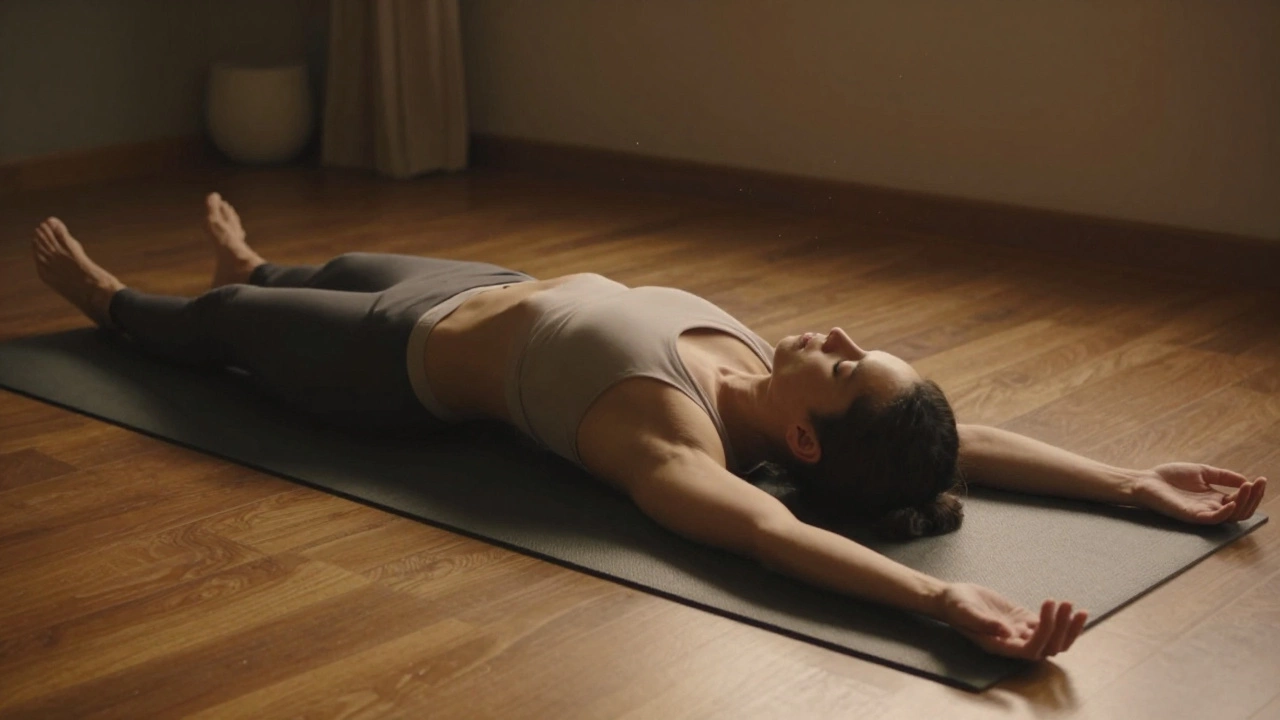
The final pose, Savasana (Corpse Pose), is often treated as an afterthought. People rush through it because they want to get up and shower, or they fall asleep because they’re exhausted. But Savasana is crucial. It’s when your body integrates the benefits of the practice. During active poses, your sympathetic nervous system is engaged. Savasana activates the parasympathetic nervous system, allowing for true rest and recovery.
Don’t skip it. Lie down flat, close your eyes, and scan your body from head to toe. Release any remaining tension. Stay there for at least five to ten minutes. If you’re in a studio, resist the urge to jump up the second the class ends. Give yourself permission to do nothing. This period of integration is where the mental and emotional benefits of yoga truly sink in.
7. Practicing on a Full Stomach
It sounds simple, but eating a heavy meal right before yoga is a major blunder. Digestion requires significant energy and blood flow. When you twist or invert your body while your stomach is full, you can cause nausea, cramping, and discomfort. It also distracts you from focusing on your breath and alignment.
Aim to practice on an empty or lightly filled stomach. Wait at least two to three hours after a large meal and one hour after a light snack. If you’re hungry, a small banana or a few crackers can provide energy without weighing you down. This ensures your practice is comfortable and focused, rather than a battle against indigestion.
| Mistake | Why It Happens | How to Fix It |
|---|---|---|
| Holding Breath | Fear of losing balance or pushing too hard | Back out of the pose until breathing is smooth |
| Bad Alignment | Trying to mimic advanced poses | Use props (blocks, straps) to maintain structure |
| Ignoring Pain | Confusing stretch with injury | Stop immediately if pain is sharp or joint-focused |
| No Warm-Up | Lack of time or knowledge | Start with 5 mins of Cat-Cow or Sun Salutations |
| Skipping Savasana | Rushing to finish | Stay for 5-10 mins to activate rest mode |
Using Props Is Not Cheating
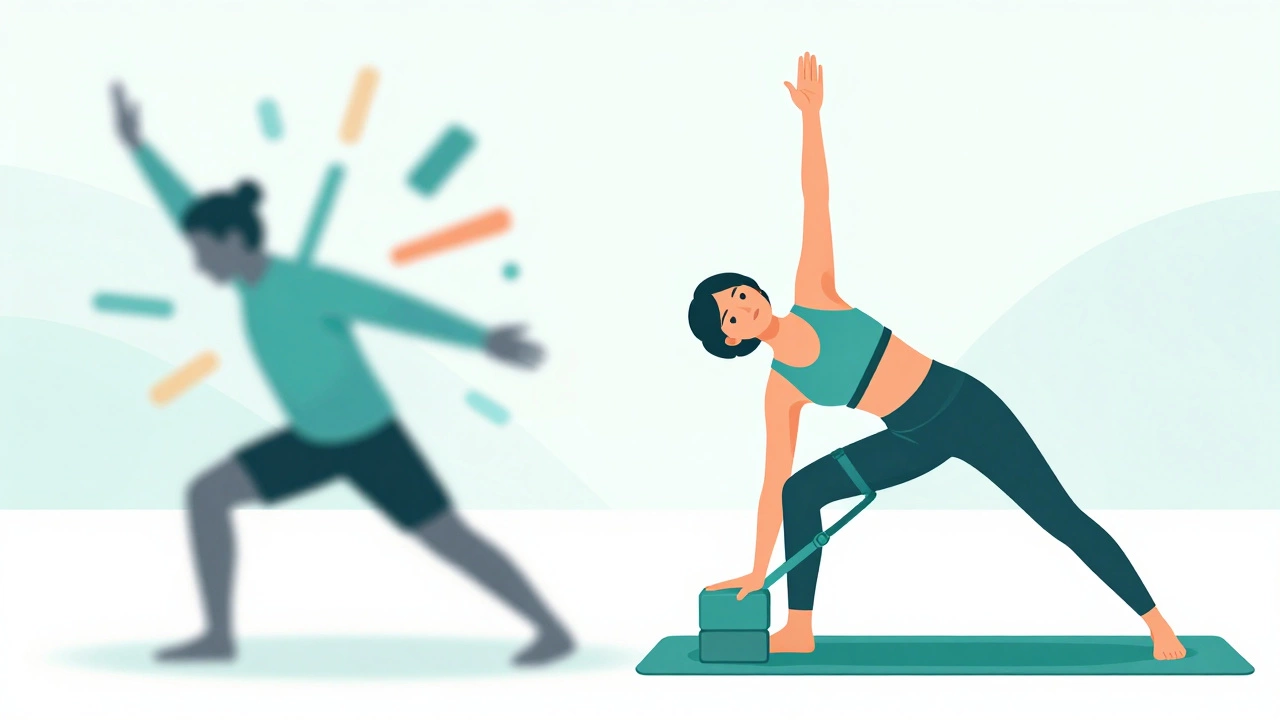
Many beginners feel embarrassed to use yoga blocks, straps, or bolsters. They think it makes them look weak or inexperienced. Nothing could be further from the truth. Props are tools that help you achieve proper alignment when your body isn’t quite there yet. Using a block in Triangle Pose allows you to keep your spine long and open, even if your hand doesn’t reach the floor. Using a strap in Seated Forward Fold lets you hinge at the hips without rounding your back.
Even advanced yogis use props. They adjust based on how their body feels that day. Embrace the props. They are your friends, not signs of failure. They allow you to practice safely and effectively, building strength and flexibility gradually over time.
Consistency Over Intensity
Another common mistake is binge-practicing. Doing a two-hour power yoga session once a week and then nothing for six days is less effective than doing twenty minutes every day. Yoga is a cumulative practice. Small, consistent efforts build neural pathways and muscular memory. It improves joint mobility and mental resilience over time.
Set realistic goals. Maybe it’s five minutes of stretching each morning. Maybe it’s three short sessions a week. The key is to show up regularly. Consistency creates habit, and habit creates transformation. Don’t worry about doing the hardest poses. Worry about being on the mat more often.
Is it bad to do yoga every day?
No, it is generally safe and beneficial to do yoga every day. However, vary the intensity. Alternate between vigorous styles like Vinyasa or Ashtanga and gentler practices like Yin or Restorative yoga. This gives your muscles time to recover while maintaining flexibility and mindfulness.
What should I wear to yoga?
Wear breathable, stretchy clothing that allows for a full range of motion. Avoid baggy shirts that might fall over your face during inversions. Barefoot is best for grip and stability, but non-slip socks are an option if you prefer coverage.
Can yoga help with back pain?
Yes, yoga can significantly alleviate back pain by strengthening the core and improving spinal flexibility. However, avoid deep forward folds and twists initially if you have acute pain. Consult a doctor or a certified yoga therapist for specific modifications.
How do I know if I’m doing a pose correctly?
Focus on alignment cues: joints stacked, spine long, breath smooth. If possible, take a beginner class with a qualified instructor who can provide hands-on adjustments. Recording yourself can also help identify misalignments.
Should I eat before yoga?
Avoid heavy meals within 2-3 hours of practice. Light snacks are okay 1 hour prior. Practicing on an empty stomach prevents nausea and allows for deeper twists and inversions.