Can You Really Lose Belly Fat in 7 Days? A Realistic Guide
7-Day Belly Reset Planner & Estimator
Your Profile
Your Daily targets
Target 10,000 steps + 20 mins HIIT to maximize EPOC effect.
Drink 3L of water daily. Avoid sodium and gas-producing raw kale/beans.
7-9 hours of sleep. No screens 1 hour before bed to lower stress hormones.
Enter your details and click calculate to generate your customized 7-day strategy.
The Honest Truth About a One-Week Timeline
You've probably seen those ads promising a flat stomach in a week. Here is the reality: you cannot surgically target fat loss in one specific spot-like your stomach-through exercise alone. That is a myth called 'spot reduction.' However, you can absolutely reduce reduce belly fat by decreasing systemic bloating and starting a metabolic shift that burns calories across your entire body. In seven days, you won't lose 10 pounds of pure fat, but you can definitely lose a few inches of waistline by flushing out excess water and reducing inflammation.
When we talk about stomach fat, we are usually dealing with two types. First, there is Subcutaneous Fat, which is the pinchable stuff right under your skin. Then there is Visceral Fat, the dangerous kind that wraps around your organs. Visceral fat is more responsive to quick lifestyle changes, especially those involving sugar reduction and stress management. If you want to see a difference by next week, you need a combined attack on your diet, movement, and hormones.
The 7-Day Nutritional Reset
You can't out-train a bad diet. To see a visible change in seven days, you have to stop the things that cause your midsection to expand. The biggest culprit is Insulin, a hormone that tells your body to store fat. When you eat refined carbs-think white bread, pasta, and sugary cereals-your insulin spikes, and your body locks your fat cells, making them nearly impossible to burn.
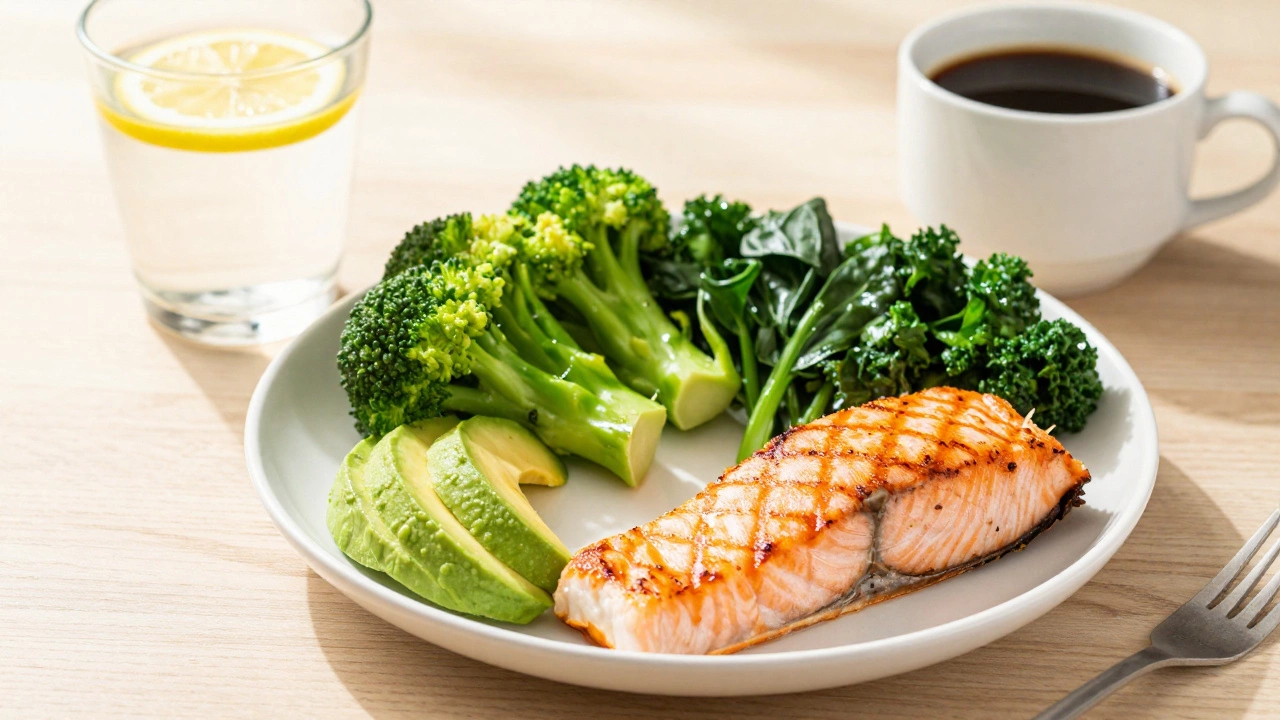
For the next week, swap all refined grains for high-fiber alternatives. Focus on leafy greens, cruciferous vegetables like broccoli, and lean proteins. A great rule of thumb is to keep your plate 50% vegetables. Why? Because fiber slows down the absorption of sugar, keeping your insulin levels stable. Also, cut out liquid calories. Soda, sweetened lattes, and even excessive fruit juices trigger a massive insulin response that specifically targets the belly area for storage. Stick to water, black coffee, or green tea to keep your metabolism humming.
Another trick is to implement Intermittent Fasting. Try a 16:8 split, where you eat all your meals within an 8-hour window and fast for 16 hours. This gives your body a chance to deplete its glycogen stores and start tapping into stored body fat for energy. It's not magic; it's just biology. By extending the period where your insulin is low, you make it easier for your body to access that stubborn belly fat.
Movement That Actually Works
If you spend an hour doing sit-ups, you'll have strong abs, but they'll be hidden under a layer of fat. To uncover them, you need exercises that burn a high amount of calories and trigger a hormonal response. HIIT (High-Intensity Interval Training) is your best bet here. Instead of a slow jog, try sprinting for 30 seconds and walking for 60 seconds. This creates an "afterburn" effect, known as EPOC (Excess Post-exercise Oxygen Consumption), which keeps your metabolism elevated long after you've left the gym.
Don't ignore strength training. Muscle is metabolically active tissue. The more you have, the more calories you burn while sitting still. Incorporate compound movements like squats, lunges, and push-ups. These recruit multiple muscle groups and require more energy than isolated movements. If you're at home, use a heavy backpack or water jugs as weights. The goal isn't to become a bodybuilder in a week, but to signal to your body that it needs to maintain muscle and burn fat instead.
For those who prefer lower impact, LISS (Low-Intensity Steady State) cardio-like a brisk 45-minute walk-is incredibly effective for fat loss. Walking keeps your heart rate in the "fat-burn zone" without stressing your body. Try to hit 10,000 steps a day. It sounds basic, but the cumulative calorie burn from walking is often higher than a short, intense workout that leaves you exhausted and snacking for the rest of the day.
Managing the 'Stress Belly'
Have you ever noticed that you gain weight around your middle during a high-stress month at work? That's not a coincidence. When you're stressed, your adrenal glands pump out Cortisol. This is the "stress hormone," and it has a direct relationship with abdominal adiposity. High cortisol levels tell your body to move fat from other areas and store it specifically in the abdomen to protect your organs during a perceived crisis.
To fight this, you need to prioritize sleep. If you get five hours of sleep, your ghrelin (the hunger hormone) goes up, and your leptin (the fullness hormone) goes down. You'll crave sugar and feel less satisfied. Aim for 7-9 hours of quality shut-eye. Try a digital detox an hour before bed-no phones, no blue light. This helps your brain transition into deep sleep, which is when your body does most of its fat-burning and muscle repair.
Simple mindfulness practices also help. Whether it's five minutes of deep breathing or a quick walk in a park, lowering your heart rate and calming your nervous system reduces the cortisol load. If you're constantly in "fight or flight" mode, your body will hold onto belly fat as a survival mechanism. Calm the mind to lean the waist.
The Bloat Factor: Instant Visual Wins
While fat takes time to burn, bloating happens instantly. You can look significantly leaner in 24 hours just by managing your digestive system. Avoid "gas-producing" foods for this specific week, even some healthy ones like raw kale or beans, if they make you feel puffy. Instead, steam your vegetables to make them easier to digest.
Watch your sodium intake. Sodium causes your body to hold onto excess water. When you eat a salty meal, your body retains water to dilute that salt, often leading to a "puffy" look around the middle. Drink plenty of water-around 3 liters a day. It sounds counterintuitive, but the more water you drink, the more your body feels safe letting go of the water it's currently hoarding.
Putting it All Together: The 7-Day Game Plan
| Focus Area | Action Item | Daily Goal |
|---|---|---|
| Nutrition | Low-carb, High-protein | No refined sugar, < 50g net carbs |
| Movement | HIIT + Walking | 20 min HIIT / 10k Steps |
| Timing | Intermittent Fasting | 16 hours fasting / 8 hours eating |
| Recovery | Deep Sleep | 7-9 hours per night |
By following this approach, you aren't just chasing a number on the scale. You are optimizing your hormonal environment. You're lowering insulin to unlock fat stores, reducing cortisol to prevent storage, and using HIIT to maximize caloric expenditure. This is the most scientific way to see a visual difference in your midsection in a short window of time.
Common Pitfalls to Avoid
Don't fall for the "detox tea" trap. Most of these products are just laxatives. They make you lose water weight and empty your bowels, which might make your stomach look flatter for a few hours, but they don't burn a single gram of fat. In fact, they can dehydrate you and mess with your electrolytes, making your workouts suffer.
Avoid extreme calorie crashing. If you eat 500 calories a day, your body enters a state of metabolic adaptation. Your thyroid slows down, and your body clings to fat because it thinks you're in a famine. Instead, eat plenty of protein (chicken, fish, tofu, eggs) to keep your muscle mass intact. Your goal is a sustainable deficit, not a starvation diet.
Frequently Asked Questions
Can I lose 5 pounds of belly fat in a week?
You can lose 5 pounds of total weight, but it's unlikely to be 5 pounds of pure fat. Most of that initial drop is water weight and glycogen. However, this is still a win because it reduces bloating and makes your stomach look visibly flatter, providing the motivation to keep going.
Are crunches and planks effective for losing belly fat?
They are great for building abdominal strength and stability, but they don't burn enough calories to significantly reduce fat. Think of them as "sculpting" the muscle. To actually see those muscles, you need the cardiovascular work and dietary changes mentioned above to strip away the fat layer.
Does drinking lemon water in the morning burn fat?
Lemon water is a healthy way to hydrate and provides a small dose of Vitamin C, but it doesn't have a chemical property that "melts" fat. Its main benefit is that it replaces sugary drinks and helps you start the day hydrated, which supports your metabolism.
How much weight loss per week is healthy?
Most health professionals recommend a loss of 1 to 2 pounds per week for long-term sustainability. Losing weight faster than this often leads to muscle loss and a slower metabolism, which makes it much easier to gain the weight back later.
Will intermittent fasting work for everyone?
It works for many, but not all. People with a history of disordered eating or those with certain medical conditions like type 1 diabetes should consult a doctor first. If you feel dizzy or excessively fatigued, a shorter fasting window (like 12 or 14 hours) is a better starting point.