How Many Minutes of Yoga Should a Beginner Do?
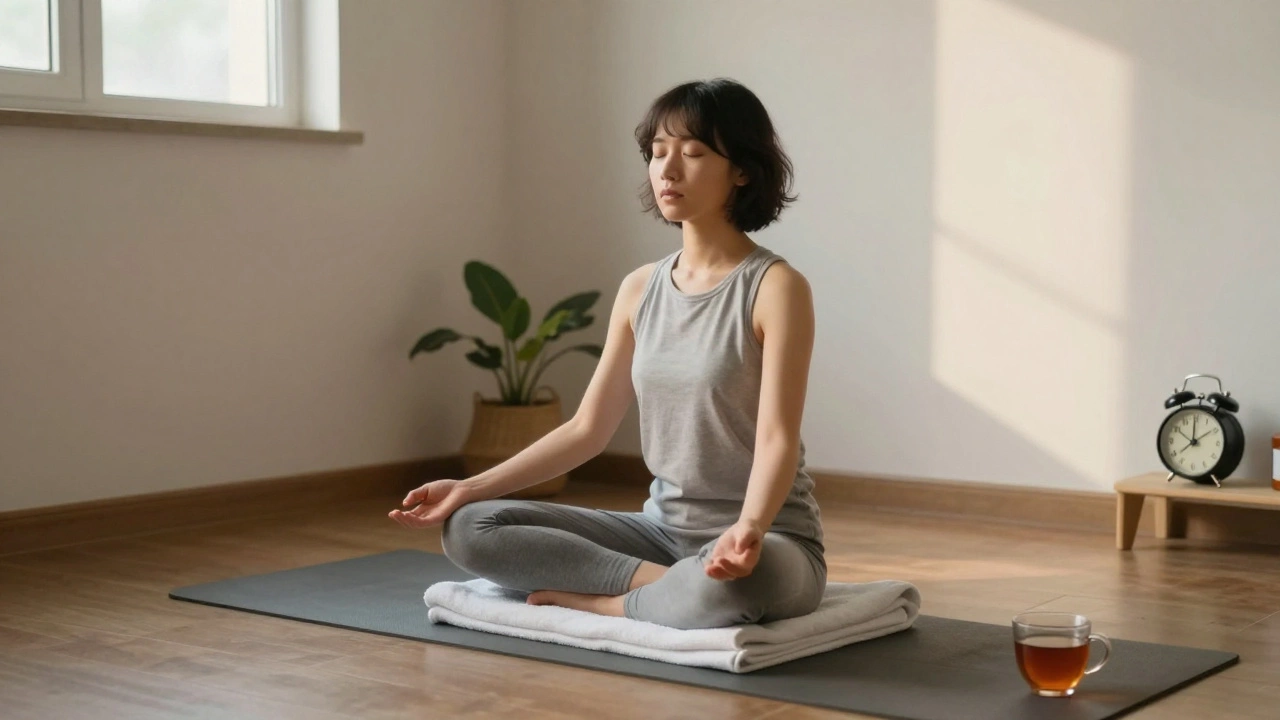
Starting yoga can feel overwhelming. You see people in videos holding complex poses for minutes, and wonder: how many minutes of yoga should a beginner do? The truth? You don’t need to start with 60-minute sessions. In fact, starting too long might make you quit before you even get used to it.
Start with 10 to 15 minutes a day
If you’ve never done yoga before, aim for 10 to 15 minutes daily. That’s it. No need to push yourself into a 30-minute flow on day one. A short session lets your body adjust to new movements without triggering soreness or frustration. Think of it like learning to walk-you don’t run a marathon on your first step.
What can you do in 15 minutes? You can complete a full-body sequence: start with gentle breathing, move through a few sun salutations, hold a downward dog for 30 seconds, try a seated forward fold, and end with a few minutes of lying relaxation. That’s enough to wake up your muscles, calm your mind, and build a habit.
Why short sessions work better for beginners
Most people quit yoga because they think they need to do it "right" or for a long time. But yoga isn’t about performance. It’s about consistency. A 2023 study from the Journal of Bodywork and Movement Therapies found that beginners who practiced just 10 minutes a day for four weeks reported better sleep, lower stress, and more body awareness than those who tried 45-minute sessions twice a week.
Why? Because short sessions are easier to stick with. You’re more likely to do 10 minutes before breakfast than to drag yourself to a mat after a long day. Small wins build confidence. And confidence keeps you coming back.
What to focus on in your first few weeks
When you’re new, don’t worry about how deep you go into a pose. Focus on three things:
- Breathing - Inhale through your nose, exhale slowly. If you’re holding your breath, you’re doing it wrong.
- Movement control - Move slowly. If you’re bouncing or jerking, slow down.
- Body awareness - Notice where you feel tension, warmth, or ease. That’s the real work of yoga.
Forget trying to touch your toes. That will come. Right now, just notice how your body feels when you bend, stretch, or lie still.
When to increase your time
After two to three weeks of doing 10-15 minutes daily, you might start craving more. That’s a good sign. When you feel ready, add 5 minutes. Go to 20 minutes. Then 25. Don’t rush. Some people stay at 20 minutes for months-and that’s perfectly fine.
You don’t need to hit 30 minutes to get benefits. A 2024 survey of over 1,200 beginner yogis showed that 68% of those who practiced 20 minutes or less daily still saw improvements in flexibility, sleep, and anxiety levels within 8 weeks.
What yoga looks like for different lifestyles
Not everyone has time for a long session. Here’s how to adapt:
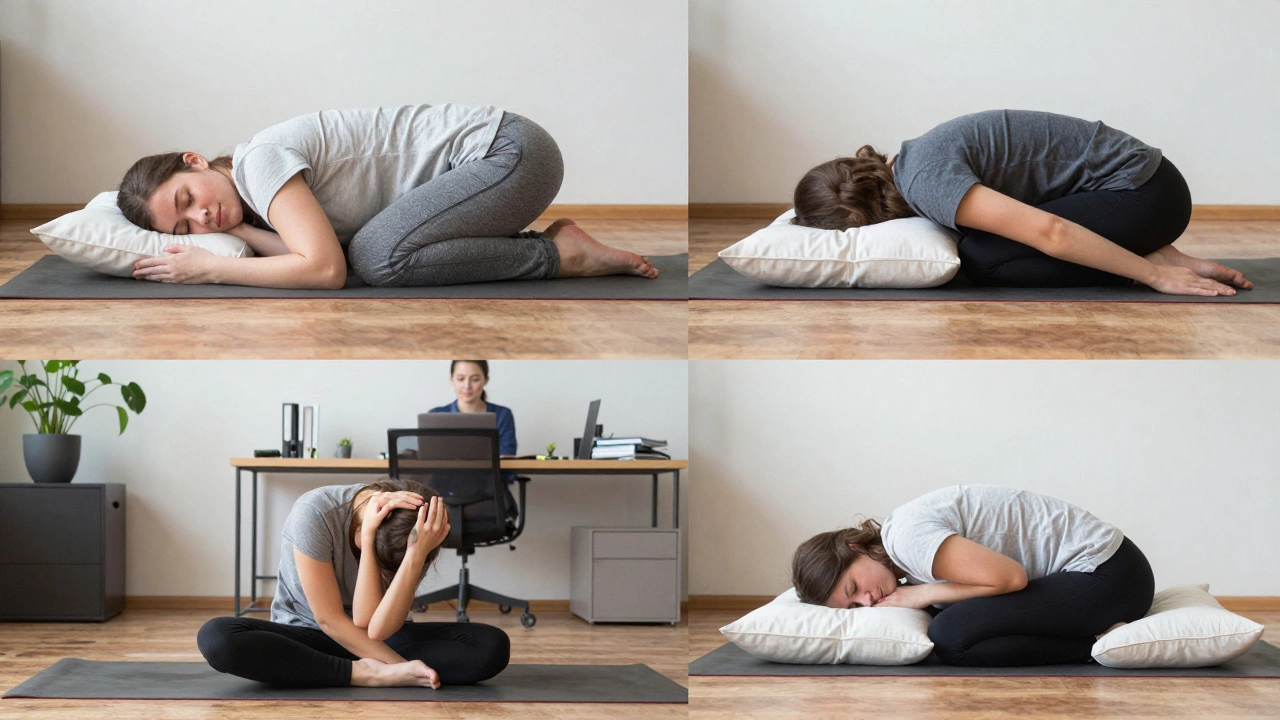
- Busy parents - Do 10 minutes while your child naps. Even 5 minutes of child’s pose and deep breathing counts.
- Office workers - Try a 7-minute desk yoga routine: neck rolls, seated twists, wrist stretches, and standing forward bend.
- People with chronic pain - Start with 5 minutes of seated breathing and gentle stretches. Listen to your body. If something hurts, stop.
Yoga isn’t one-size-fits-all. The right amount is the amount you can actually do.
Common mistakes beginners make
Here’s what to avoid:
- Doing too much too soon - Jumping into 45-minute videos leads to burnout or injury.
- Comparing yourself to others - Social media shows advanced poses. Yours doesn’t need to look like that.
- Skipping rest - Resting between poses is part of yoga. Don’t feel guilty for lying still.
- Waiting for the "perfect" time - If you wait for the right mood, you’ll never start. Just roll out the mat.
Tools to help you stick with it
You don’t need fancy gear. But a few simple things help:
- A quiet space - Even a corner of your bedroom works.
- A non-slip mat - You don’t need an expensive one. A towel on a carpet works too.
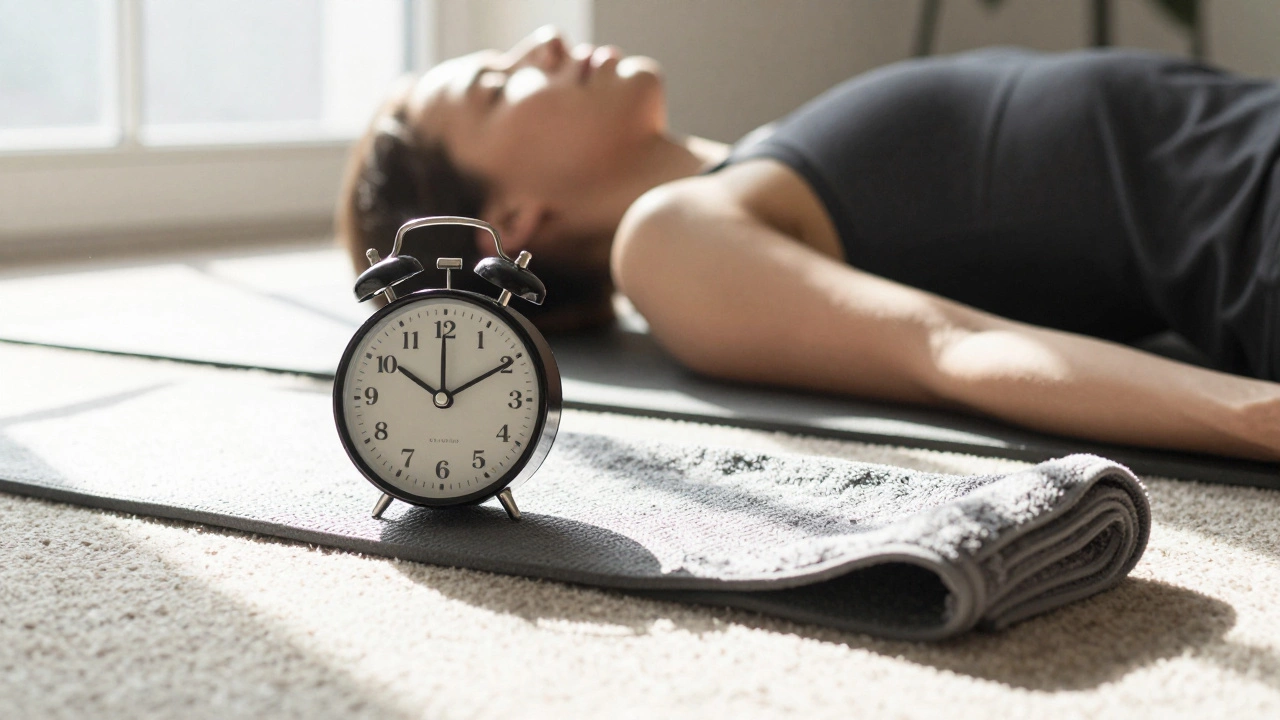
- A timer - Use your phone or a simple kitchen timer. Set it for 10 minutes. When it rings, you’re done.
- A short video - Try YouTube channels like Yoga with Adriene or Boho Beautiful. They have 10-minute beginner flows.
Real progress isn’t about time-it’s about feeling
After a few weeks, you’ll notice things you didn’t expect:
- You sleep deeper.
- You breathe easier when you’re stressed.
- You notice tension in your shoulders before it turns into pain.
- You pause before reacting to frustration-instead of snapping, you take a breath.
That’s yoga. Not the pose. The pause. The breath. The quiet moment between chaos and calm.
So how many minutes should a beginner do? Start with 10. Stay there for a week. Then add 5. Keep going until it feels like a gift-not a chore.
Can I do yoga every day as a beginner?
Yes. Daily yoga-even just 10 minutes-is safe and beneficial for beginners. It helps build consistency and body awareness. Just avoid pushing into pain. If you feel sore, take a lighter day or focus on breathing and stretching instead of movement.
Is 10 minutes of yoga enough to see results?
Absolutely. Studies show that even 10 minutes of daily yoga improves sleep, reduces stress, and increases flexibility over time. Results aren’t about how long you hold a pose-they’re about how consistently you show up. A 2023 study found that beginners who did 10 minutes daily for four weeks reported better mood and less tension than those who practiced longer but less often.
Should I do yoga in the morning or at night?
Both work. Morning yoga can energize you and set a calm tone for the day. Night yoga helps release tension and prepares your body for sleep. Choose based on your energy. If you’re tired in the evening, go for gentle stretches. If you’re sluggish in the morning, try a few sun salutations to wake up.
Do I need special equipment to start?
No. A yoga mat helps, but you can use a towel on a carpet. No blocks? Use a stack of books. No strap? Use a belt or a towel. The only thing you really need is your body and a few minutes of quiet time. Equipment is helpful, but not required.
What if I can’t do the poses perfectly?
Perfect doesn’t exist in yoga. The goal isn’t to look like someone on Instagram-it’s to connect with your body. If you can’t touch your toes, that’s fine. If your knees bend in downward dog, that’s normal. Yoga is about progress, not perfection. Focus on breathing and feeling, not form.
If you’re ready to begin, roll out a mat-or even a towel-and set a timer for 10 minutes. That’s all it takes to start changing how you feel-not just in your body, but in your mind.