How Much Weight Can I Lose in 24 Days? A Realistic Guide to Safe Fat Loss
24-Day Fat Loss Estimator
Enter your details to see how much you can safely lose in the next 24 days.
You’ve got a beach vacation, a wedding, or just a major life event coming up in exactly three weeks and four days. The scale is your enemy right now, and you want to know the magic number. How much weight can you actually drop in 24 days? It’s tempting to believe in crash diets that promise ten pounds gone by next month, but biology doesn’t care about your schedule. To give you a straight answer: losing 1 to 3 pounds of pure body fat in 24 days is realistic, safe, and sustainable. Dropping more than that usually means you’re losing water, glycogen, and potentially lean muscle tissue-not the fat you’re aiming for.
The goal isn’t just to see a lower number on the scale; it’s to look leaner and feel better without wrecking your metabolism or your mood. If you rush this process, you risk rebounding harder than where you started. Let’s break down what your body can actually handle in under a month, how to maximize fat loss while keeping your energy up, and why those first few pounds often vanish faster than the rest.
The Math Behind Fat Loss
To understand what is possible in 24 days, we have to look at the basic science of energy balance. Body fat is dense energy storage. One pound of body fat contains approximately 3,500 calories. This is a widely accepted rule of thumb in nutrition science. If you create a daily calorie deficit of 500 calories, you will lose roughly one pound of fat per week. Over 24 days (about 3.4 weeks), that math suggests a potential loss of 3.4 pounds of pure fat.
If you push the deficit harder-say, 1,000 calories per day-you might aim for two pounds of fat loss per week, totaling around 6.8 pounds in 24 days. However, creating a 1,000-calorie deficit daily is difficult for most people without extreme hunger or excessive exercise. For the average person with a moderate activity level, a daily deficit of 500 to 750 calories is the sweet spot. This leads to a realistic expectation of 2 to 4 pounds of actual fat loss over the course of three weeks.
It is crucial to distinguish between body fat and total body weight. In the first few days of any diet change, especially if you cut back on carbohydrates, you will likely see the scale drop by several pounds quickly. This is not fat loss; it is water weight. Carbohydrates are stored in your muscles and liver as glycogen, and each gram of glycogen holds about three grams of water. When you deplete glycogen stores, you flush out that water. So, while you might see 5 to 8 pounds disappear on the scale in 24 days, only a fraction of that is permanent fat loss. The rest will return as soon as you eat a normal meal.
Setting Up Your Calorie Deficit
The foundation of losing weight in 24 days is eating fewer calories than you burn. But how do you find that number without starving yourself? You need to calculate your Total Daily Energy Expenditure (TDEE). This is the total amount of energy your body uses in a day, including resting metabolic rate and physical activity.
Here is a simple way to estimate your TDEE:
- Estimate your Basal Metabolic Rate (BMR): This is what you burn doing nothing. A rough formula is multiplying your current weight in pounds by 10-12. For example, a 180-pound person has a BMR of roughly 1,800 to 2,160 calories.
- Add activity factor: Multiply your BMR by an activity multiplier. Sedentary is 1.2, lightly active is 1.375, moderately active is 1.55.
- Create the deficit: Subtract 500 to 750 calories from your TDEE.
Let’s say your TDEE is 2,500 calories. To lose weight safely, you would aim for 1,750 to 2,000 calories per day. Do not go below 1,200 calories for women or 1,500 for men unless supervised by a doctor, as this can trigger metabolic adaptation where your body slows down to conserve energy.
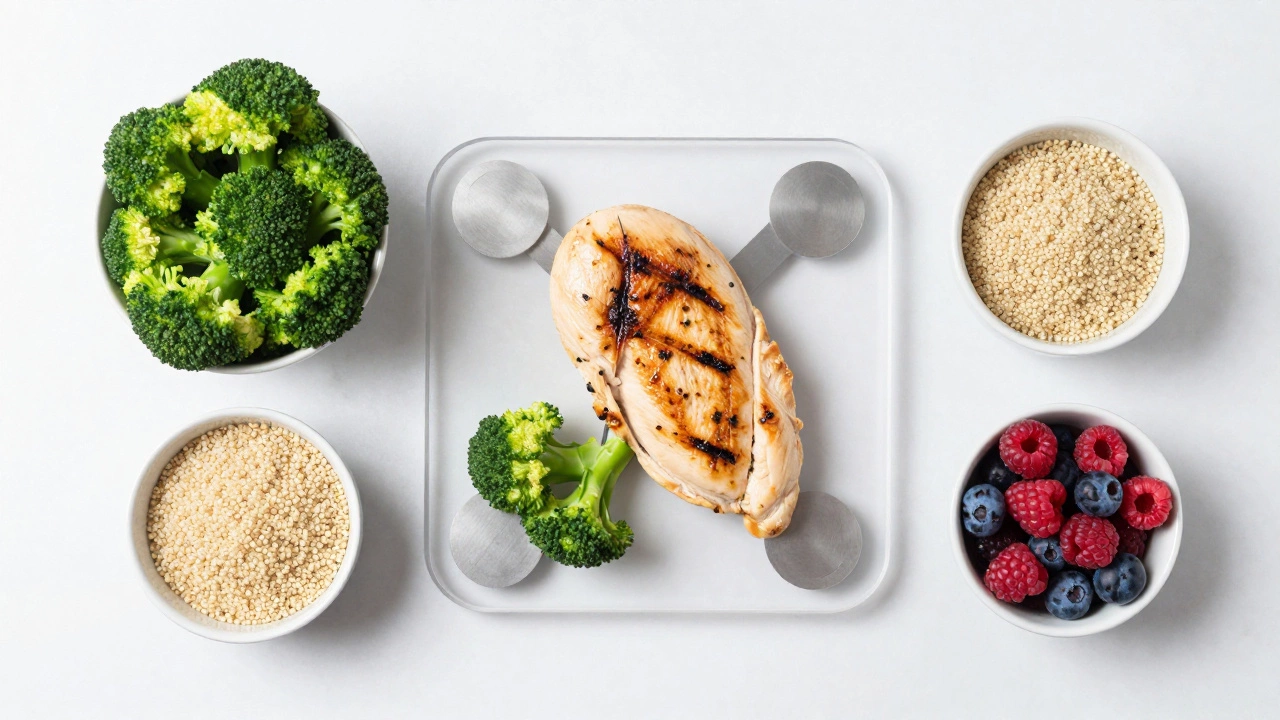
Tracking your intake accurately is non-negotiable for short-term goals. Use a food scale. We think we eat a handful of nuts, but it’s often three times that amount. Portion distortion is real. By weighing your food for these 24 days, you ensure every calorie counts toward your deficit.
The Role of Exercise in Rapid Results
Diet controls weight loss, but exercise shapes it. In a 24-day window, you cannot rely solely on cardio to burn enough calories to make a massive difference. Running five miles burns about 500-600 calories, which is less than a large bagel. Instead, focus on resistance training.
Why lift weights when you want to lose weight fast? Because preserving muscle mass is critical. When you are in a calorie deficit, your body may break down muscle for fuel. Muscle tissue is metabolically active, meaning it burns calories even at rest. Losing muscle lowers your metabolism, making future weight loss harder and leading to a "skinny fat" appearance.
Aim for 3 to 4 strength training sessions per week. Focus on compound movements like squats, deadlifts, bench presses, and overhead presses. These exercises recruit multiple muscle groups, burning more calories during the workout and increasing post-exercise oxygen consumption (EPOC), which keeps your metabolism elevated for hours after you finish.
Incorporate Low-Intensity Steady State (LISS) cardio, such as walking, into your routine. Walking 10,000 steps a day adds up to an extra 300-400 calories burned without spiking hunger hormones like cortisol or ghrelin, which high-intensity interval training (HIIT) sometimes does. HIIT is great, but it is taxing on the central nervous system. In a short, intense 24-day period, recovery matters. Too much high-intensity stress can lead to injury or burnout, derailing your plan.
Nutrition Strategies for Maximum Impact
Not all calories are equal when it comes to satiety and hormonal response. To survive a 24-day deficit without feeling miserable, prioritize protein and fiber.
Protein is the most satiating macronutrient. Aim for 0.7 to 1 gram of protein per pound of target body weight. If you weigh 180 pounds and want to be 175, aim for 175 grams of protein daily. Protein has a high thermic effect of food (TEF), meaning your body burns more calories digesting it compared to fats or carbs. It also protects muscle mass during rapid weight loss.
Fill half your plate with vegetables. They provide volume and fiber, which physically stretches the stomach lining, sending signals to your brain that you are full. Fiber also stabilizes blood sugar, preventing the crashes that lead to binge eating. Avoid liquid calories. Soda, juice, and fancy coffee drinks add hundreds of empty calories that don’t make you feel full. Stick to water, black coffee, or tea.
Consider reducing sodium and refined carbohydrates slightly. This won’t burn fat, but it will reduce bloating and water retention, helping you look flatter and leaner in clothes. This is cosmetic, but it makes a huge psychological difference in a short timeframe.
| Approach | Expected Scale Loss | Fat Loss Estimate | Muscle Retention | Sustainability |
|---|---|---|---|---|
| Moderate Deficit (500 cal) | 3-5 lbs | 2-3 lbs | High | Very High |
| Aggressive Deficit (1000+ cal) | 5-8 lbs | 3-4 lbs | Low-Medium | Low |
| Keto/Low Carb | 6-10 lbs | 2-3 lbs | Medium | Medium |
| Starvation/Crash Diet | 8-12 lbs | 1-2 lbs | Very Low | None |

Pitfalls to Avoid in a Short Timeframe
When the clock is ticking, desperation sets in. This leads to common mistakes that sabotage results. First, avoid skipping meals entirely. While intermittent fasting works for some, undereating severely can cause binges later in the day. Consistency beats intensity. Eating regular, controlled portions keeps your metabolism humming.
Second, don’t ignore sleep. Poor sleep increases cortisol, a stress hormone that promotes fat storage, particularly around the abdomen. It also disrupts leptin and ghrelin, the hormones that regulate hunger. Lack of sleep makes you crave sugary, high-carb foods. Aim for 7-9 hours of quality sleep each night. It is free, effective, and essential for recovery.
Third, beware of "detox" teas and pills. These are mostly laxatives or diuretics. They cause water loss and digestive distress, not fat loss. The weight returns immediately once you rehydrate. Save your money and stick to whole foods.
Finally, manage your expectations regarding the scale. Weight fluctuates daily based on hydration, salt intake, and hormonal cycles. For women, menstrual cycles can cause significant water retention. Don’t let a single day’s plateau discourage you. Look at the weekly trend, not the daily noise.
Sample 24-Day Action Plan
Here is a concrete framework to follow for the next 24 days:
- Days 1-3: Clean out your pantry. Remove high-calorie snacks. Buy lean proteins, vegetables, and complex carbs. Calculate your TDEE and set your daily calorie target. Start tracking every bite.
- Days 4-10: Establish a routine. Strength train 3 times. Walk 8,000-10,000 steps daily. Drink 3 liters of water. Expect initial water weight drop. Stay disciplined despite the quick wins.
- Days 11-17: The honeymoon phase ends. Hunger may increase. Increase protein and vegetable intake to stay full. Add a second cardio session if energy allows. Check progress photos, not just the scale.
- Days 18-24: Final push. Maintain protein intake. Reduce sodium slightly to minimize bloating. Ensure adequate sleep. Finish strong with consistent effort, knowing the last few days solidify the habit.
This approach ensures you lose the maximum amount of fat possible without compromising your health or long-term success. You will feel lighter, your clothes will fit better, and you will have built habits that can continue beyond day 24.
Is it safe to lose 10 pounds in 24 days?
For most people, losing 10 pounds in 24 days is not safe or sustainable. While you might see that number on the scale due to water loss and gut content reduction, a significant portion will be muscle tissue. Rapid weight loss of this magnitude can lead to nutrient deficiencies, gallstones, and a slowed metabolism. Aim for 1-2 pounds of fat loss per week instead.
Will cutting carbs help me lose weight faster in 24 days?
Yes, cutting carbohydrates can accelerate initial scale weight loss because it depletes glycogen stores, which releases bound water. This can result in dropping 3-5 pounds of water weight in the first week. However, this is not fat loss. Once you reintroduce carbs, the water weight returns. For true fat loss, a calorie deficit is required regardless of macronutrient composition.
How much cardio should I do to lose weight in 3 weeks?
Moderate cardio like walking 10,000 steps daily is highly effective and sustainable. You can add 2-3 sessions of higher-intensity cardio per week, but do not overdo it. Excessive cardio can increase hunger and fatigue, making it harder to stick to your calorie deficit. Prioritize strength training to preserve muscle mass.
Can I lose belly fat specifically in 24 days?
No, spot reduction is a myth. You cannot choose where your body loses fat from. Fat loss occurs systemically across the entire body. However, reducing overall body fat through a calorie deficit will eventually reduce belly fat. Additionally, reducing bloating through lower sodium and higher fiber intake can make your midsection appear flatter more quickly.
What happens to my metabolism if I diet for 24 days?
A short-term calorie deficit of 24 days will not permanently damage your metabolism. Your body may adapt slightly by reducing non-exercise activity thermogenesis (NEAT), meaning you might fidget less or move slower unconsciously. However, as long as you maintain adequate protein intake and engage in resistance training, metabolic slowdown is minimal and reversible upon returning to maintenance calories.