How to Lose Weight Fast in 2 Weeks: A Cardio-Focused Guide

2-Week Cardio Weight Loss Estimator
Your Stats & Plan
Projected Outcome (Day 14)
Enter your details and click calculate to see your estimated weight loss.
Two weeks is a tight deadline for significant physical change. You won't transform your body shape or drop ten stone, but you can definitely shed water weight, reduce bloating, and kickstart a fat-loss habit that sticks. If you are looking at the calendar and thinking, "How do I lose weight fast in 2 weeks?" the answer isn't magic pills or starving yourself. It's about strategic movement and smart fueling. Specifically, it's about leveraging cardio exercises to maximize calorie burn while keeping your metabolism humming.
Here is the reality check: most of the rapid drop you see on the scale in the first fourteen days comes from glycogen depletion and water loss. But don't dismiss that. Reducing inflammation and shedding that initial bulk makes you feel lighter, look leaner, and gives you the momentum to keep going. This guide breaks down exactly how to use cardio, nutrition tweaks, and recovery protocols to get the best possible result by day fourteen.
The Two-Week Reality Check
Before you lace up your trainers, let's set expectations. Healthy, sustainable weight loss usually sits between 1-2 pounds per week. In two weeks, aiming for 3-5 pounds is aggressive but achievable if you combine intense activity with strict dietary control. Anything more than that is likely muscle loss or dehydration, which will rebound quickly once you start eating normally again.
Your goal here isn't just to be smaller; it's to be efficient. You want to burn calories without crashing your energy levels so hard that you quit on day five. The key is consistency over intensity in the beginning, then ramping up as your body adapts. Think of this as a sprint, not a marathon, but one where pacing matters immensely.
Cardio Strategy: HIIT vs. Steady State
When people ask about cardio for quick results, they often picture endless hours on a treadmill. That's boring and time-consuming. For a two-week window, efficiency is king. This is where High-Intensity Interval Training (HIIT) shines. HIIT involves short bursts of near-maximal effort followed by brief rest periods. Why does it work better for short-term goals? Because it triggers Excess Post-exercise Oxygen Consumption (EPOC). Simply put, your body continues burning calories at an elevated rate for hours after the workout ends as it works to return to homeostasis.
Steady-state cardio-like jogging at a conversational pace-still has its place. It helps with active recovery and builds endurance without stressing your central nervous system too much. A balanced approach for these two weeks might look like alternating days: three days of HIIT, two days of steady-state cardio, and two rest days. This mix keeps your heart rate varied and prevents your body from adapting too quickly to a single stressor.
| Feature | High-Intensity Interval Training (HIIT) | Low-Intensity Steady State (LISS) |
|---|---|---|
| Duration | 15-20 minutes | 45-60 minutes |
| Calorie Burn During | Moderate-High | Moderate |
| Afterburn Effect (EPOC) | High (up to 24 hours) | Low |
| Impact on Joints | High | Low |
| Best For | Rapid fat loss & metabolic boost | Active recovery & endurance |
Your 14-Day Workout Plan
You don't need a gym membership to crush this. Bodyweight movements and running are effective tools. Here is a simple structure you can follow. Adjust the intensity based on your current fitness level, but try to push hard during the work intervals.
- Day 1: Full Body HIIT. 30 seconds burpees, 30 seconds jump squats, 30 seconds mountain climbers, 30 seconds rest. Repeat for 15 minutes.
- Day 2: LISS Walk/Run. 45 minutes brisk walking or light jogging. Keep your heart rate around 60-70% of your max. Focus on breathing.
- Day 3: Tabata Style. 20 seconds all-out sprint (cycling, rowing, or running), 10 seconds rest. Repeat 8 times for each exercise (sprints, push-ups, lunges).
- Day 4: Active Recovery. Yoga or a long, slow walk. No heavy sweating. Just movement to flush out lactic acid.
- Day 5: Hill Intervals. Find a hill or set your treadmill to an incline. Sprint up for 30 seconds, walk down for 60 seconds. Do this for 20 minutes.
- Day 6: Circuit Training. Combine strength and cardio. Squats, plank jacks, bicycle crunches, and high knees. Minimal rest between sets.
- Day 7: Rest. Complete rest. Sleep well. Let your muscles repair.
Repeat this cycle for the second week, but try to increase the intensity slightly. Maybe add 5 minutes to your LISS sessions or reduce rest time in your HIIT blocks. Progressive overload applies to cardio too.
Nutrition: The Silent Partner to Cardio
You cannot out-train a bad diet, especially in two weeks. If you spend 30 minutes doing HIIT, you might burn 300-400 calories. One large muffin can undo that instantly. To lose weight fast, you need a caloric deficit. Aim for a moderate deficit-about 500 calories below your maintenance level. This ensures you lose fat, not muscle.
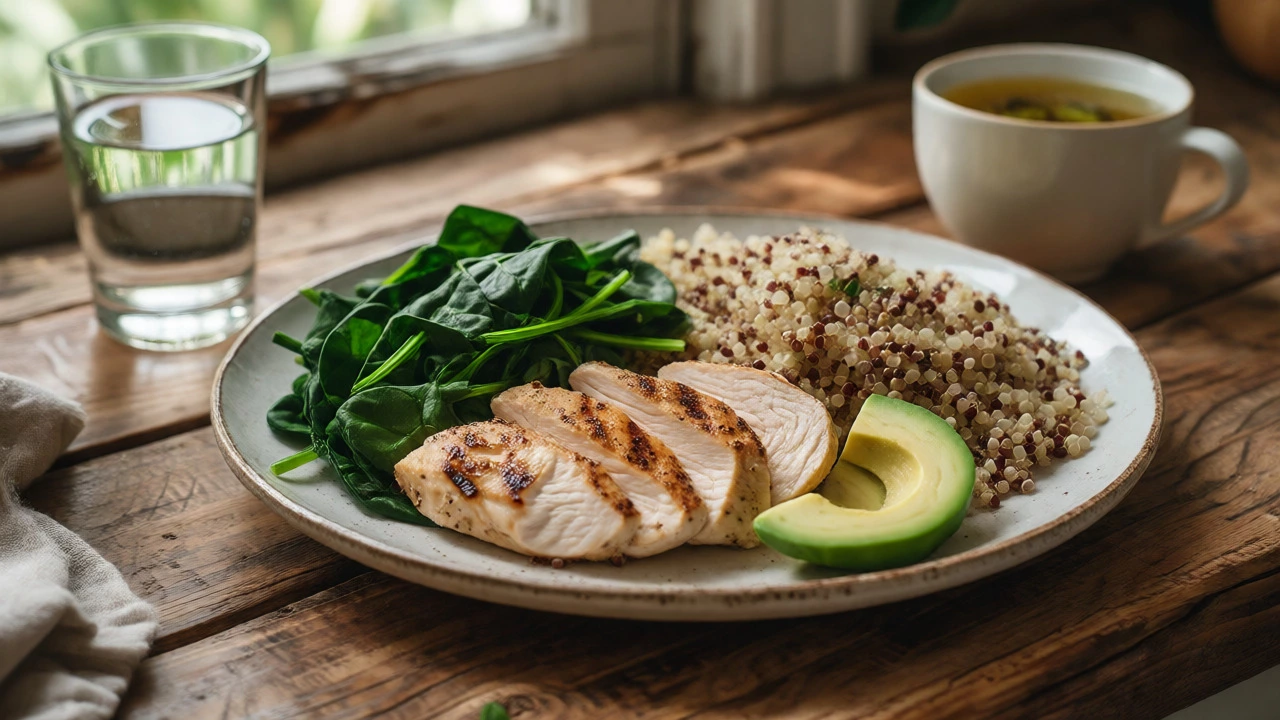
Focus on protein. It keeps you full longer and preserves muscle mass during a deficit. Include eggs, chicken, fish, tofu, or legumes in every meal. Cut back on refined carbs and sugars. These cause insulin spikes that promote fat storage and water retention. Instead, eat complex carbs like oats, quinoa, or sweet potatoes around your workouts when your body needs fuel.
Hydration is non-negotiable. Drinking water helps metabolize stored fat and reduces hunger signals. Often, we mistake thirst for hunger. Aim for at least 2-3 liters a day. Adding green tea can also provide a slight metabolic boost due to its catechin content, though don't expect miracles from tea alone.
Managing Water Retention and Bloating
A lot of the "fast" weight loss comes from dropping water weight. Sodium causes your body to hold onto water. If you eat a salty takeout meal, you might wake up two pounds heavier the next day, even if you didn't gain fat. For these two weeks, watch your salt intake. Avoid processed foods, canned soups, and deli meats.
Potassium helps balance sodium levels. Eat bananas, avocados, spinach, and sweet potatoes. Magnesium is another helpful mineral for reducing water retention and improving sleep quality. Consider a magnesium supplement or eat dark chocolate and nuts. Also, limit alcohol. It dehydrates you initially but leads to rebound water retention and adds empty calories.

Sleep and Stress: The Hidden Factors
If you are sleeping four hours a night and stressed out of your mind, your body produces cortisol. High cortisol levels encourage fat storage, particularly around the midsection, and make it harder to lose weight regardless of how much cardio you do. Prioritize seven to nine hours of quality sleep. This is when your body repairs tissue and regulates hunger hormones like ghrelin and leptin.
Stress management doesn't have to be complicated. Ten minutes of deep breathing, meditation, or simply stepping outside for fresh air can lower cortisol. Remember, this is a two-week sprint. Protect your mental space as fiercely as you protect your workout time.
Tracking Progress Beyond the Scale
Weighing yourself every morning can be misleading due to hormonal fluctuations and hydration changes. Weigh yourself only twice a week, first thing in the morning after using the bathroom and before eating. Better yet, take measurements. Measure your waist, hips, and thighs on Day 1 and Day 14. You might lose inches even if the scale hasn't moved much.
Pay attention to how your clothes fit. Are your jeans looser? Do you have more energy? These are tangible signs of progress. Taking photos in the same lighting and pose can also reveal changes the mirror hides because you see yourself every day.
Can I really lose 10 pounds in 2 weeks?
Losing 10 pounds in two weeks is very aggressive and mostly feasible only for those with higher starting weights or significant water retention. For most people, 3-5 pounds is a realistic and healthy target. Rapid loss beyond this often includes muscle mass and water, which returns quickly upon resuming normal eating.
Is fasting good for losing weight fast in 2 weeks?
Intermittent fasting can help create a caloric deficit by restricting your eating window, making it easier to control portion sizes. However, it is not necessary. Consistency with whole foods and controlled portions is more important than the timing of meals. If you try fasting, ensure you still meet your protein needs to prevent muscle loss.
What is the best cardio exercise for belly fat?
You cannot spot-reduce fat, meaning no specific exercise targets only belly fat. However, high-intensity cardio like HIIT is effective for overall fat loss, including visceral fat. Combining cardio with strength training and a clean diet yields the best results for reducing abdominal girth.
Should I do cardio on an empty stomach?
Some studies suggest fasted cardio may burn slightly more fat during the session, but total daily calorie expenditure matters more. If you feel dizzy or weak exercising without food, eat a small snack like half a banana beforehand. Listen to your body rather than forcing a protocol that feels unsustainable.
Why did my weight stall after 5 days?
Weight stalls are common and often caused by water retention due to increased inflammation from new exercise routines or minor dietary deviations. It does not mean you stopped burning fat. Stick to the plan, stay hydrated, and trust the process. The scale will likely resume dropping after a few days.