How to Slim Your Stomach in 2 Weeks: A Realistic Guide
Flat Stomach 2-Week Tracker
Nutrition & Hydration
Core & Movement
Perform these every other day for best results.
Lifestyle & Recovery
Start Tracking!
Check off items on the left to see your daily score.
0% Goal Completion
Quick Tip:
Focus on reducing salt intake today to minimize water retention.
- Days 1-3: Withdrawal phase. Less bloat, possible irritability.
- Days 4-7: Energy stabilizes. Clothes feel looser.
- Days 8-14: Habits form. Posture improves. Visible definition.
Let’s be honest: you probably clicked this because you have an event coming up. Maybe it’s a wedding, a beach holiday, or just the sudden urge to feel confident in that pair of jeans hanging in your wardrobe. You want results now. But here is the hard truth about slimming your stomach: you cannot spot-reduce fat. Doing five hundred crunches won’t melt away the layer covering your abs if there’s still fat on top. However, you absolutely can look and feel significantly slimmer in fourteen days by tackling bloating, tightening your core muscles, and reducing overall body fat percentage slightly.
This isn’t about crash dieting until you’re dizzy. It’s about smart adjustments. As someone who has spent years helping people navigate the confusing world of weight loss exercises, I’ve seen what works and what is just hype. We are going to focus on three pillars: nutrition tweaks to reduce water retention, specific movements to engage deep core muscles, and lifestyle habits that support digestion. If you stick to this plan for two weeks, you will likely see a difference in how your clothes fit and how your midsection feels.
The Bloat Factor: Why Your Stomach Looks Larger Than It Is
Before we talk about burning fat, we need to address size. Often, what looks like stubborn belly fat is actually digestive distress or water retention. In the UK, where our diets can sometimes be heavy on processed carbs and dairy, bloating is incredibly common. Reducing bloat can instantly make your waistline appear smaller-sometimes by an inch or more-without losing any actual fat tissue.
Bloating is caused by gas trapped in the intestines or excess fluid held in the tissues. To combat this, start by auditing your salt intake. Sodium holds onto water. One teaspoon of table salt contains about 2,300 milligrams of sodium, which is the daily upper limit recommended by health authorities. If you’re eating ready meals, sauces, or breads, you’re likely exceeding this without realizing it. Cut back on these for two weeks and watch the puffiness around your midsection subside.
Next, look at your fiber. While fiber is essential for health, suddenly increasing it from 10 grams to 30 grams a day can cause massive gas production as your gut bacteria adjust. Instead, increase fiber gradually. Focus on soluble fiber sources like oats, bananas, and apples, which help regulate digestion without causing excessive fermentation compared to some cruciferous vegetables like broccoli or cauliflower, which might be better limited during these intense two weeks.
Nutrition Adjustments That Flatten The Midsection
You don’t need a complex meal plan. You need consistency. The goal here is to create a slight calorie deficit while keeping blood sugar stable. Spikes in insulin-the hormone that stores fat-can encourage abdominal fat storage. So, prioritize protein and healthy fats over simple carbohydrates.
Breakfast sets the tone. Skip the sugary cereals or pastries. Try Greek yogurt with berries or eggs with spinach. Protein keeps you full longer, preventing those mid-morning snack attacks that add up. For lunch and dinner, aim for a palm-sized portion of lean protein (chicken, fish, tofu) paired with plenty of non-starchy vegetables. This combination provides volume and nutrients with fewer calories, allowing you to eat satisfying meals while staying within your energy needs.
| Common Food | The Problem | Better Alternative |
|---|---|---|
| White Bread | High glycemic index, causes insulin spikes | Sourdough or Rye (lower GI) |
| Fruit Juice | Liquid sugar, no fiber, easy to overconsume | Whole Fruit or Water with Lemon |
| Diet Soda | Artificial sweeteners may disrupt gut bacteria | Sparkling Water or Herbal Tea |
| Cheese | High in saturated fat and often salty | Feta or Goat Cheese (stronger flavor, less needed) |
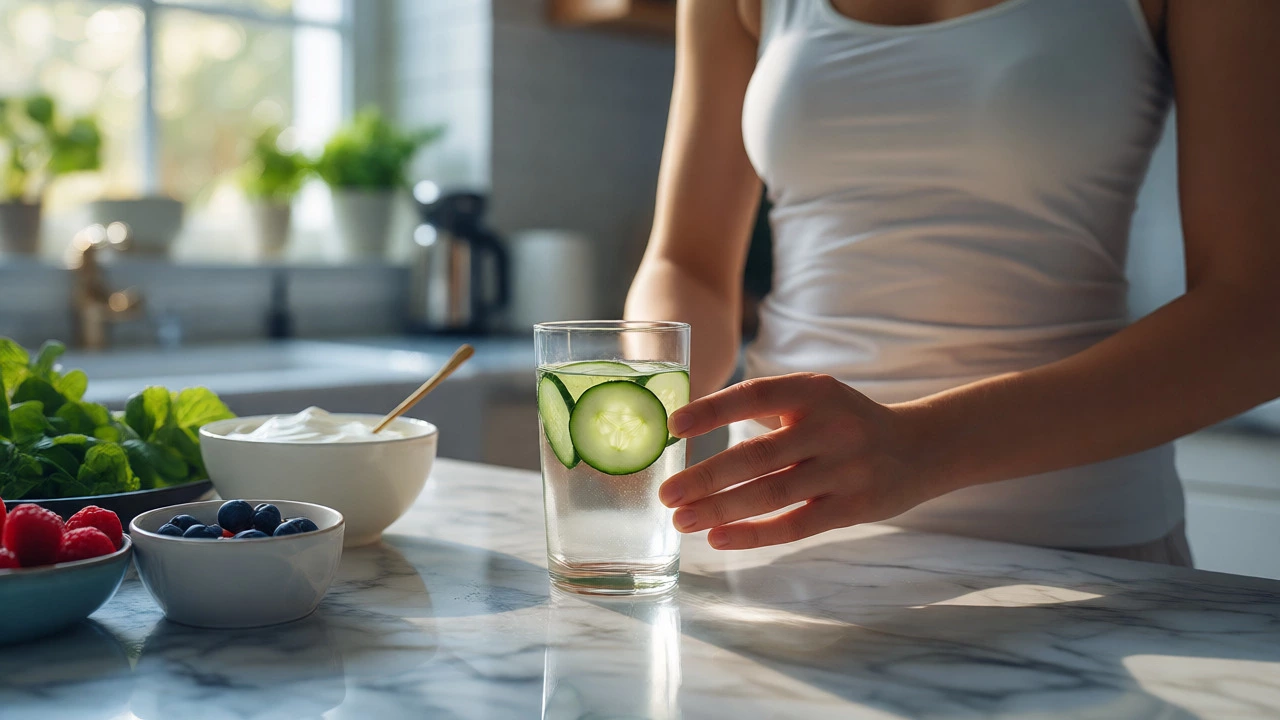
Hydration plays a critical role too. It sounds counterintuitive, but drinking more water helps flush out retained water. Aim for at least 2-3 liters a day. Add cucumber or mint slices if plain water feels boring. Avoid carbonated drinks; the bubbles introduce gas into your system, expanding your stomach physically.

Exercises That Actually Work for Core Definition
Now, let’s move. Traditional sit-ups are not the best tool for flattening the stomach. They primarily work the superficial rectus abdominis (the "six-pack" muscle) and can strain the lower back. To get a tighter, flatter look, you need to target the transverse abdominis. Think of this muscle as your body’s natural corset. When it’s strong, it pulls your internal organs inward and holds your spine steady.
Here are three low-impact, high-efficacy moves to include in your routine. Perform them every other day for twenty minutes.
- Stomach Vacuums: This is the gold standard for waist reduction. Stand on all fours or stand upright. Exhale all your air. Pull your belly button toward your spine as hard as you can, imagining you’re trying to touch your spine with your navel. Hold this squeeze for 15-30 seconds while taking shallow breaths. Repeat 5 times. This directly trains the transverse abdominis.
- Dead Bugs: Lie on your back with arms extended toward the ceiling and knees bent at 90 degrees. Slowly extend one arm overhead and the opposite leg straight out, keeping your lower back pressed firmly into the floor. Return to start and switch sides. This teaches you to maintain core stability while moving your limbs, which translates to better posture and a tighter midsection.
- Planks: Forget long holds. Quality beats quantity. Get into a forearm plank position. Squeeze your glutes and quads. Ensure your hips aren’t sagging or piking up. Hold for 30-45 seconds. If your form breaks, stop. Bad form shifts the load to your shoulders and back, missing the core entirely.
In addition to core-specific work, incorporate compound movements like squats and lunges. These exercises recruit large muscle groups, which burns more calories per minute than isolation exercises. A higher metabolic rate helps reduce overall body fat, including visceral fat stored around the abdomen.
Lifestyle Hacks: Sleep and Stress Management
You can do everything right in the kitchen and gym, but if you’re stressed and sleep-deprived, your stomach might still hold onto fat. Cortisol, the stress hormone, has a direct link to abdominal fat storage. Evolutionarily, when we’re stressed, our bodies prepare for "fight or flight" by storing quick-energy fuel in the belly area. Modern life doesn’t require us to run from predators, so that fuel stays put.
Prioritize sleep. Studies suggest that getting less than seven hours of sleep increases hunger hormones like ghrelin and decreases satiety hormones like leptin. This means you’ll crave sugary, fatty foods the next day. Aim for 7-9 hours of quality rest. Create a wind-down routine: dim the lights, put the phone away, and maybe try some light stretching or reading.
Manage stress actively. You don’t need to meditate for an hour. Even ten minutes of deep breathing exercises can lower cortisol levels. Box breathing is simple: inhale for four counts, hold for four, exhale for four, hold for four. Do this before meals to aid digestion and calm the nervous system.

What to Expect Day by Day
Managing expectations is key to sticking with the plan. Here is a realistic timeline for your two-week sprint:
- Days 1-3: You might feel hungry or irritable as you cut processed sugars and salts. This is withdrawal. Drink water and stay busy. You might notice less bloating after the first few days as sodium levels drop.
- Days 4-7: Energy levels should stabilize. Your digestion will likely improve, meaning less post-meal discomfort. You might notice your clothes feeling slightly looser around the waist.
- Days 8-14: Habits start to feel normal. Your core strength will improve, making you stand taller. Posture alone can make your stomach look flatter. Any fat loss will be subtle but visible in mirror comparisons.
Remember, this is a kickstart, not a permanent fix. After two weeks, you can reintroduce some favorite foods in moderation. The skills you learn-reading labels, prioritizing protein, engaging your core-should become part of your long-term lifestyle.
FAQ
Can I lose belly fat only by doing cardio?
Cardio helps burn calories, which contributes to overall fat loss, but it doesn't specifically target belly fat. Combining cardio with strength training and core exercises is more effective for shaping the midsection and maintaining muscle mass.
Is it possible to lose 5 pounds in 2 weeks?
Yes, especially in the first week due to water weight loss from reduced carbohydrate and sodium intake. However, sustainable fat loss is typically 1-2 pounds per week. The initial rapid drop is mostly water, not fat.
Do ab machines work for slimming the stomach?
Ab machines strengthen the abdominal muscles underneath the fat. They do not remove the fat covering them. Without a calorie-controlled diet, using an ab machine alone will not result in a visibly slimmer stomach.
Should I avoid gluten to flatten my stomach?
Only if you have celiac disease or gluten sensitivity. For most people, gluten does not cause bloating. Cutting gluten often leads to cutting whole grains, which are beneficial for digestion. Focus on reducing processed foods instead.
How does alcohol affect belly fat?
Alcohol stops fat burning because the liver prioritizes metabolizing alcohol over fat. It also lowers inhibitions, leading to poor food choices, and can cause dehydration and bloating. Limiting alcohol is one of the fastest ways to see changes in the midsection.