How to Stop Being Lazy and Start Working Out: A Realistic Guide
Workout Habit Streak Tracker
Last 7 Days
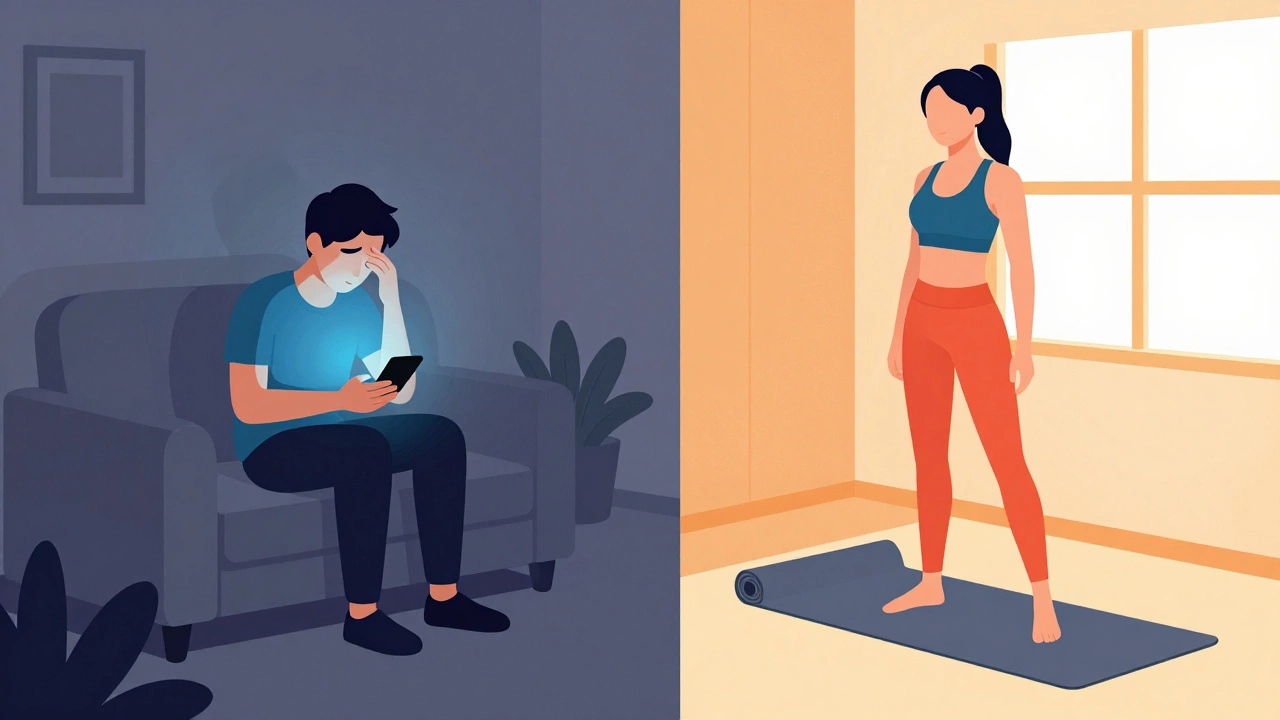
Today isYou’ve bought the leggings. You’ve downloaded three different workout apps. You’ve even cleared a corner of your living room for yoga. And yet, here you are, scrolling through social media on the couch, feeling that familiar mix of guilt and inertia. It’s not just you. The gap between wanting to get fit and actually moving your body is one of the widest chasms in human behavior. But here is the good news: laziness isn’t a character flaw. It’s usually a strategy error.
Most people fail at starting an exercise routine because they try to become a marathon runner overnight. They rely on willpower, which is a finite resource, instead of building systems that make movement inevitable. If you want to stop being lazy and start working out, you need to lower the barrier to entry so low that it feels ridiculous to say no. This guide breaks down how to hack your psychology, structure your environment, and build a sustainable habit without burning out.
The Myth of Motivation
We are sold a lie that we need to feel motivated to move. We wait for that spark of inspiration to hit us before we lace up our shoes. The problem? Motivation is fleeting. It comes and goes like the weather. On days when you’re tired, stressed, or bored, motivation vanishes. If your plan depends on feeling excited, you will quit within two weeks.
Instead of chasing motivation, focus on discipline and momentum. Think of exercise like brushing your teeth. You don’t wait until you’re inspired to brush your teeth; you do it because it’s part of your routine. Your goal right now isn’t to fall in love with sweating; it’s to show up. Action often precedes motivation, not the other way around. Once you start moving, even for five minutes, your brain releases dopamine and endorphins that make you want to continue. You have to trick your body into starting before it can convince you to keep going.
Lower the Bar Until It’s on the Floor
The biggest mistake beginners make is setting goals that are too big. “I’m going to work out for an hour every day” is a recipe for failure if you haven’t moved in months. That sounds exhausting. It triggers your brain’s resistance mechanisms. Instead, use the concept of micro-habits. Make your first goal so small that it requires almost zero effort.
- Don’t aim for a full gym session. Aim to put on your workout clothes.
- Don’t aim for 30 minutes of cardio. Aim for two minutes of stretching.
- Don’t aim to cook a healthy meal. Aim to drink one glass of water before dinner.
This technique, popularized by behavioral psychologists, works because it eliminates the friction of decision-making. When the task is tiny, there’s no excuse. You can always do two push-ups. You can always stand up and walk around the room. Most of the time, once you’ve started those two push-ups, you’ll do ten. But even if you only do two, you’ve kept the habit alive. Consistency matters more than intensity in the beginning.
Design Your Environment for Success
Willpower is overrated. Your environment does the heavy lifting. If your workout clothes are buried at the back of a closet and your phone is charging next to the TV, you will choose the path of least resistance. You need to redesign your space to make working out the default option and procrastination the difficult one.
Try these environmental tweaks:
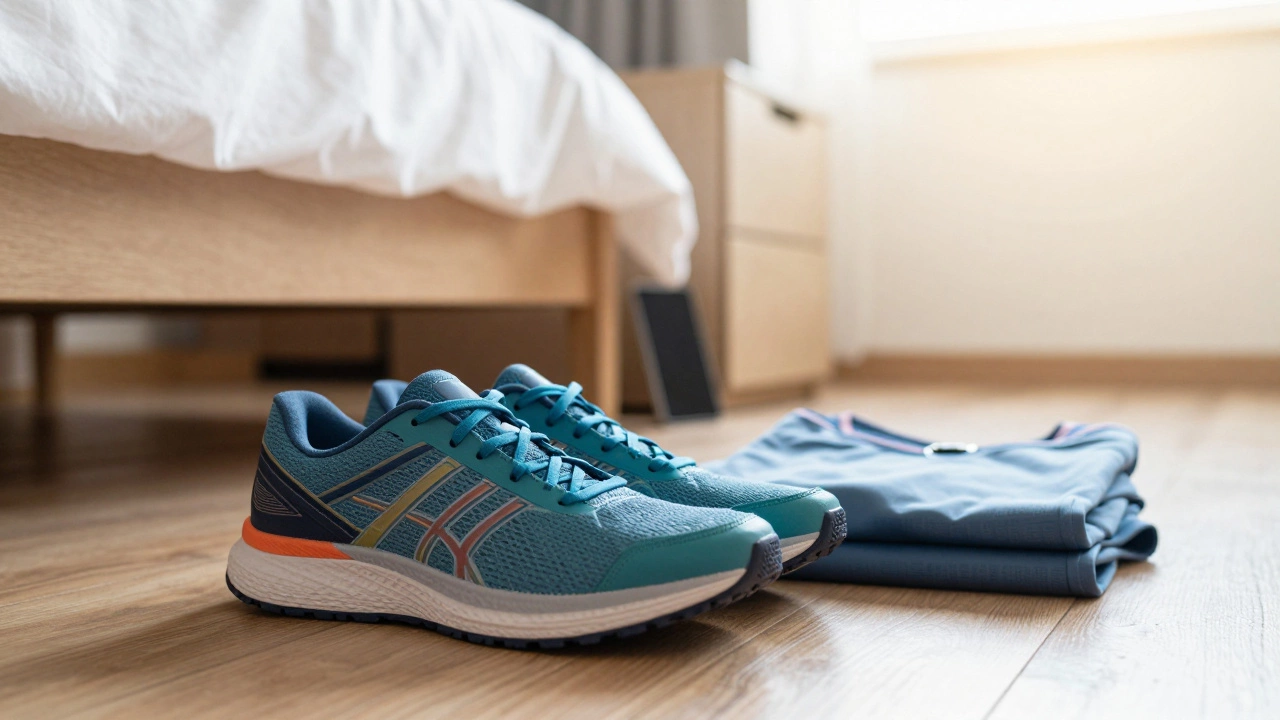
- Lay out your gear the night before. Put your sneakers, shirt, and shorts right next to your bed or where you sit in the morning. Seeing them acts as a visual cue.
- Hide the distractions. If you scroll on your phone to avoid moving, put the phone in another room during your designated workout window.
- Create a dedicated zone. Even if it’s just a yoga mat in the corner of your bedroom, having a specific spot for movement signals to your brain that this is where action happens.
When you reduce the number of steps required to start exercising, you remove the opportunity for negotiation. You don’t decide to work out; you just follow the cues your environment provides.
Find Movement You Don’t Hate
If running makes you miserable, don’t run. If lifting weights feels intimidating, don’t lift. One of the main reasons people label themselves as “lazy” is that they associate exercise with punishment or boredom. You need to find physical activity that feels like play, or at least tolerable.
Experiment with different types of movement. Try dancing in your kitchen while cooking. Go for a brisk walk while listening to a podcast. Do a bodyweight circuit in your living room. The type of exercise doesn’t matter as much as the fact that you are doing it. The American College of Sports Medicine recommends a mix of cardiovascular activity and strength training, but for someone just starting out, any movement is better than none. Find what keeps you coming back. Maybe it’s high-energy dance videos online. Maybe it’s quiet yoga flows. The best workout is the one you will actually do consistently.
Use Temptation Bundling
Coined by behavioral economist Katy Milkman, temptation bundling is a powerful tool for sticking to new habits. The idea is simple: pair something you want to do with something you should do. For example, only allow yourself to watch your favorite Netflix series while you’re walking on a treadmill or cycling. Only listen to that addictive true-crime podcast while you’re folding laundry or doing stretches.
This creates a positive association with the activity. Instead of dreading the workout, you start looking forward to the entertainment that accompanies it. It shifts the focus from the discomfort of exercise to the enjoyment of the reward. Over time, your brain starts to link movement with pleasure, making it easier to overcome initial resistance.
Track Your Progress Visually
What gets measured gets managed. If you don’t track your workouts, you won’t realize how far you’ve come. Human memory is flawed; we tend to forget the good days and remember the bad ones. A visual tracker helps you see the pattern of your consistency.
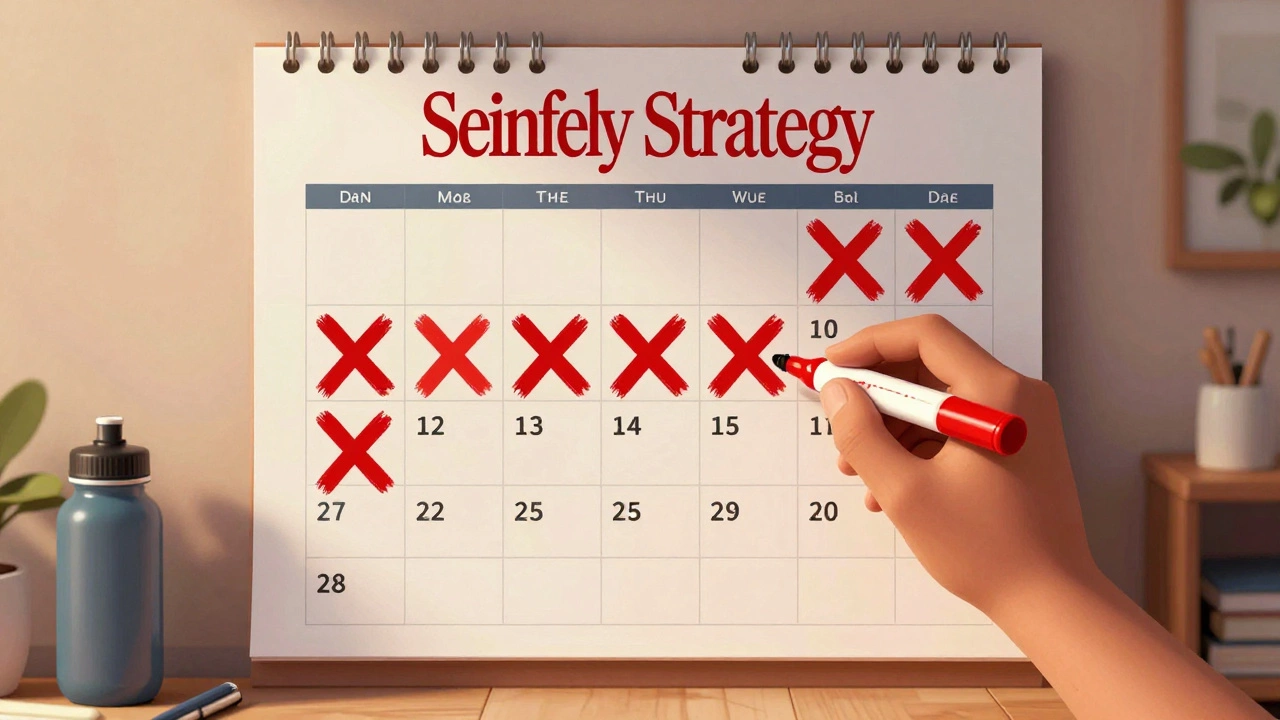
You don’t need fancy software. A simple calendar on your wall works wonders. Every day you complete your micro-habit-whether it’s two minutes of stretching or a full home workout-put a big red X on that day. After a few days, you’ll have a chain of Xs. Your only job becomes: don’t break the chain. This psychological effect, known as the Seinfeld Strategy, leverages our desire for completion and order. Seeing a streak of successful days motivates you to add another X rather than leave a blank space.
| Pitfall (Why You Stay Lazy) | Effective Strategy (How to Start) |
|---|---|
| Relying on motivation | Building automatic routines |
| Setting huge goals (1 hour/day) | Micro-habits (2-5 minutes) |
| Waiting for the perfect time | Scheduling specific times |
| Focusing on weight loss | Focusing on energy and mood |
| Isolating yourself | Using accountability partners |
Forgive Yourself Quickly
Let’s be real: you will miss a day. Maybe you’ll miss three. This is normal. The danger isn’t missing a workout; the danger is the “what the hell” effect. This is when you miss one day, feel guilty, think you’ve ruined everything, and then give up entirely for the month. Perfection is the enemy of progress.
If you skip a day, don’t beat yourself up. Acknowledge it, forgive yourself, and get back to it the next day. Never miss twice. Missing once is an accident; missing twice is the start of a new, bad habit. Be kind to yourself. Self-compassion has been shown to lead to greater persistence than self-criticism. Treat yourself like a friend who is trying to change, not an employee who failed a KPI.
Start Today, Not Monday
“I’ll start on Monday” is the most dangerous phrase in fitness. It pushes the discomfort into the future, allowing your brain to rationalize inaction. Start today. Right now. Stand up. Walk around your house. Do ten squats. It doesn’t have to be perfect. It just has to happen. The momentum you build today is worth more than the perfect plan you imagine for next week.
Remember, you are not lazy. You are just stuck in a cycle of high expectations and low execution. Break the cycle by lowering the bar, designing your environment, and showing up consistently. Small actions compound over time. In six months, you won’t recognize the person who couldn’t get off the couch. You’ll be someone who moves regularly, feels stronger, and trusts their own word.
How long does it take to form a workout habit?
Research suggests it takes anywhere from 18 to 254 days to form a new habit, with an average of 66 days. However, this varies based on the complexity of the habit. Simple actions like putting on workout clothes may take less time, while complex routines like a full gym session take longer. Focus on consistency rather than speed.
Is it better to work out in the morning or evening?
The best time to work out is the time you can stick to consistently. Morning workouts help establish discipline early in the day and prevent daily stressors from derailing your plans. Evening workouts can help relieve stress after work. Experiment with both to see which fits your energy levels and schedule.
What should I do if I have no equipment at home?
You don’t need equipment to start. Bodyweight exercises like squats, lunges, push-ups, and planks are highly effective. You can also use household items like water bottles for weights or chairs for step-ups. Many free online resources offer excellent no-equipment home workouts suitable for all fitness levels.
How do I stay motivated when I don't see results?
Physical changes take time, often several weeks or months. Focus on non-scale victories like improved energy, better sleep, and increased strength. Track your performance (e.g., how many push-ups you can do) rather than just appearance. Celebrate small wins to maintain momentum.
Can I really build muscle without going to the gym?
Yes, you can build significant muscle at home using bodyweight exercises and progressive overload. By increasing reps, slowing down movements, or reducing rest times, you can challenge your muscles effectively. Resistance bands and dumbbells can further enhance home strength training if you choose to invest later.