Is 1 Hour in the Gym Enough? The Truth About Workout Duration and Results

Workout Efficiency Optimizer
Configure Your Session
- Select your goal and duration to generate a plan.
You walk into the gym, clock in at 6:00 PM, and step out at 7:00 PM. You feel like you crushed it. But then you see someone else still lifting weights or running on the treadmill an hour later. Doubt creeps in. Did you do enough? Is that extra time necessary to see real changes in your body?
The short answer is yes. For the vast majority of people, one hour is not just enough; it is often the sweet spot for maximizing results while minimizing burnout. In fact, staying longer can sometimes work against you by increasing stress hormones and fatigue.
Key Takeaways
- One hour is sufficient: Most effective workouts, whether for strength or cardio, fit comfortably within a 60-minute window.
- Quality beats quantity: Intensity and consistency matter far more than the total minutes spent in the building.
- Risks of overtraining: Working out longer than 90 minutes can spike cortisol levels, potentially leading to muscle breakdown rather than growth.
- Structure matters: A balanced 1-hour session includes warm-up, focused training, and cool-down.
- Individual variation: Your specific goals (weight loss vs. powerlifting) may slightly adjust the ideal duration, but rarely exceed 75-90 minutes.
The Science Behind the One-Hour Window
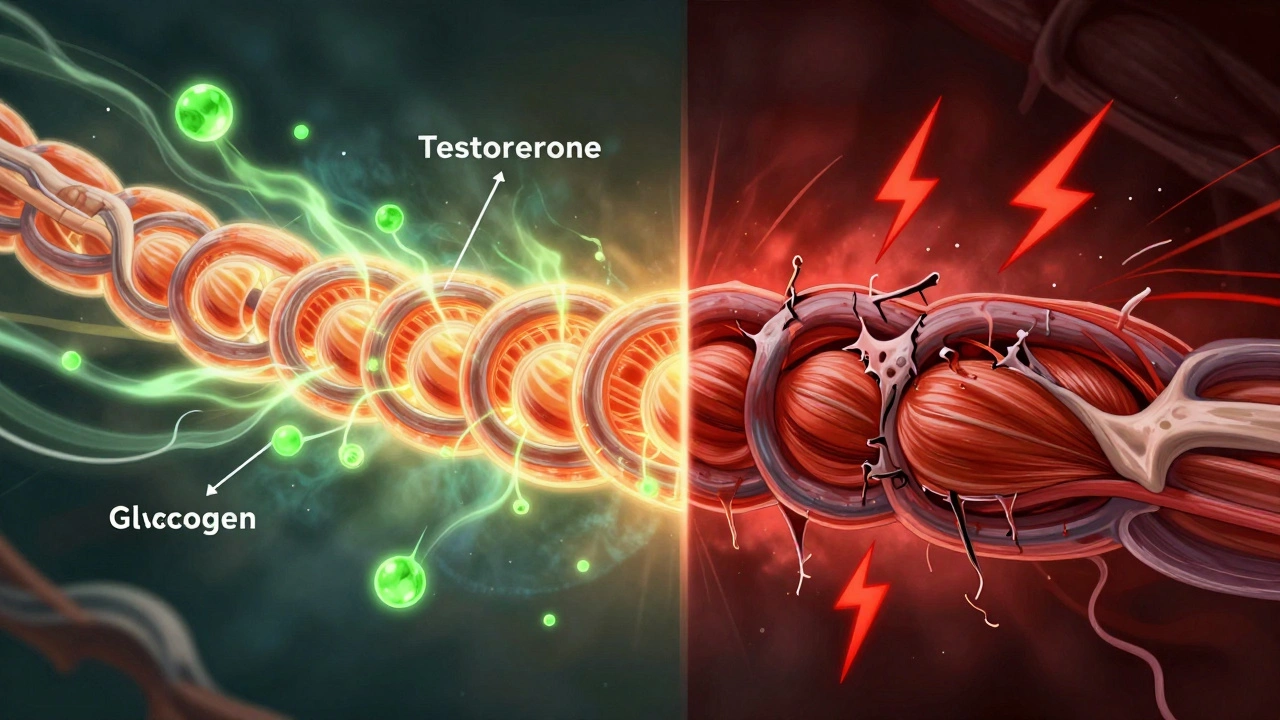
To understand why an hour works so well, we need to look at how your body handles energy and recovery. When you start exercising, your body taps into stored glycogen for fuel. This is the primary energy source for high-intensity efforts like weightlifting or sprinting.
Research suggests that most people have enough glycogen stores to sustain intense effort for about 60 to 90 minutes. After that point, your performance naturally drops. You might find yourself lifting lighter weights or jogging slower because your fuel tank is empty. Pushing through this fatigue doesn't make you stronger; it just makes you tired.
There is also the hormonal angle. Exercise triggers the release of testosterone and human growth hormone, which help build muscle. However, prolonged exercise-specifically sessions lasting longer than 90 minutes-can cause a significant spike in cortisol, the stress hormone. High cortisol levels are catabolic, meaning they can break down muscle tissue for energy. So, ironically, spending too much time at the gym can actually hinder your progress toward a muscular physique.
For context, studies published in journals like the Journal of Strength and Conditioning Research have shown that resistance training sessions lasting between 45 and 60 minutes yield similar hypertrophy (muscle growth) results as longer sessions, provided the intensity is high. The key variable here is intensity, not duration.
Breaking Down an Effective 60-Minute Session
If you have exactly one hour, every minute counts. You cannot afford to scroll through social media for 20 minutes before you lift a single weight. Here is how you should structure that hour to get maximum value.
- Warm-up (5-10 minutes): Never skip this. Dynamic movements like arm circles, leg swings, or light cardio prepare your joints and muscles for heavy loading. This prevents injury and improves performance during the main workout.
- Main Workout (40-45 minutes): This is where the magic happens. Whether you are doing strength training, HIIT (High-Intensity Interval Training), or circuit training, keep rest periods short. Aim for 60-90 seconds of rest between sets for strength, or minimal rest for cardio intervals.
- Cool-down and Stretching (5-10 minutes): Static stretching helps reduce muscle stiffness and aids in recovery. It signals to your nervous system that the stressor (exercise) is over, helping your heart rate return to normal.
Let’s say you are focusing on upper body strength. You might spend 10 minutes warming up, 40 minutes performing compound lifts like bench presses, rows, and overhead presses, and 10 minutes stretching your chest and back. That is a complete, highly effective session.
Does Your Goal Change the Answer?
While one hour is a great baseline, your specific fitness goals might tweak the ideal duration slightly. Let’s look at three common scenarios.
Weight Loss and Fat Burning
If your primary goal is losing fat, many people believe they need hours of steady-state cardio. This is a myth. High-intensity interval training (HIIT) can be incredibly effective in just 20-30 minutes. When combined with 30 minutes of strength training to maintain muscle mass, a 60-minute session is perfect. Muscle tissue burns more calories at rest than fat tissue, so preserving muscle while creating a calorie deficit is crucial for long-term weight management.
Muscle Building (Hypertrophy)
For building size, volume (total reps and sets) matters. However, quality volume is better than junk volume. If you can perform 10 hard sets of a movement in 45 minutes, that is superior to 15 easy sets in 90 minutes. The "mind-muscle connection" fades after a certain point due to mental fatigue. Keeping sessions under 60 minutes ensures you stay focused and aggressive with your lifts.
Endurance and Cardiovascular Health
Runners or cyclists might need more time. If you are training for a marathon, your long runs will obviously exceed an hour. However, for general cardiovascular health and endurance maintenance, 45-60 minutes of moderate-to-vigorous activity is sufficient. The American Heart Association recommends at least 150 minutes of moderate aerobic activity per week, which breaks down to just 30 minutes a day, five days a week. An hour gives you plenty of buffer for progression.
The Trap of "More is Better"
We live in a culture that glorifies suffering. We think that if we aren't exhausted, sweaty, and sore, we didn't work hard enough. This mindset leads to overtraining syndrome. Symptoms include persistent fatigue, decreased performance, mood disturbances, and frequent injuries.
Consider the concept of diminishing returns. The first 45 minutes of your workout provide 80% of the benefits. The next 15 minutes might give you another 10%. The final 30 minutes? Maybe 5%, but with a high risk of injury or excessive stress. As a fitness professional, I’ve seen countless clients stall in their progress because they were trying to do too much, too often. They cut their workout time in half, increased their intensity, and saw faster results.
Consistency is the true driver of success. A person who goes to the gym for 45 minutes, four times a week, will always beat the person who goes for two hours once a week. Life gets busy. A shorter, efficient workout is easier to stick with long-term.
Factors That Influence Your Ideal Workout Length
While one hour is a solid rule of thumb, individual factors play a role. Here is what you should consider when planning your schedule.
| Factor | Impact on Duration | Recommendation |
|---|---|---|
| Fitness Level | Beginners recover slower; advanced athletes handle higher volume. | Beginners: 30-45 mins. Advanced: 60-75 mins. |
| Training Frequency | More frequent sessions require less time per session. | 6x/week: 45 mins. 3x/week: 60-75 mins. |
| Rest Periods | Long rests increase total time without adding stimulus. | Keep rests under 90 seconds unless lifting maximal weights. |
| Nutrition Status | Fasted training may limit endurance. | Eat a small carb/protein snack 1 hour before working out. |
If you are a beginner, your body is new to the stress of exercise. Starting with 30-45 minute sessions allows you to learn proper form without burning out. As you advance, you can gradually increase the duration or intensity. Conversely, if you train six days a week, keeping each session to 45 minutes prevents cumulative fatigue from building up.

How to Maximize Efficiency in Less Time
If you are short on time but want to ensure your one-hour session is packed with value, try these strategies.
- Supersets: Perform two exercises back-to-back with no rest. For example, do a set of squats, immediately followed by a set of push-ups. Then rest. This doubles your density of work.
- Compound Movements: Focus on exercises that use multiple muscle groups. Squats, deadlifts, bench presses, and pull-ups recruit more fibers than isolation exercises like bicep curls. You get more bang for your buck.
- Plan Ahead: Have your workout written down before you arrive. Deciding what to do next while standing in the gym wastes precious minutes and breaks your focus.
- Limit Distractions: Put your phone on silent. Avoid chatting with friends during your active sets. Save the socializing for the cool-down.
Efficiency isn't about rushing; it's about eliminating waste. Every second spent waiting for equipment or checking notifications is a second stolen from your progress.
When Might You Need More Than an Hour?
There are exceptions. Competitive bodybuilders in prep phase, marathon runners during peak training, or strongman competitors might train for 90 minutes or more. These individuals have specialized needs, extensive recovery protocols, and years of adaptation. For the average person seeking health, fitness, and aesthetic improvements, this level of volume is unnecessary and potentially harmful.
If you find yourself consistently needing more than 90 minutes to feel like you've done "enough," ask yourself: Am I resting too long between sets? Am I distracted? Or am I simply addicted to the gym environment? Sometimes, the gym becomes a comfort zone, and leaving feels wrong. Recognizing this psychological trap can help you prioritize results over ritual.
Listening to Your Body
Ultimately, the best workout length is the one you can sustain consistently while recovering well. Pay attention to your energy levels. If you leave the gym feeling energized and accomplished, you did enough. If you leave feeling drained, shaky, and dreading your next session, you may have done too much.
Recovery is where the actual physical changes happen. Sleep, nutrition, and stress management are just as important as the time you spend lifting weights. An hour in the gym is only part of the equation. How you treat your body outside those walls determines your success.
Is 30 minutes in the gym enough to build muscle?
Yes, 30 minutes can be enough if the intensity is high. Focus on compound exercises and minimize rest periods. For beginners, 30 minutes of focused resistance training three to four times a week can stimulate significant muscle growth. The key is progressive overload-gradually increasing weight or reps over time-rather than spending hours on low-effort tasks.
What happens if I work out for 2 hours?
Working out for 2 hours regularly can lead to overtraining, increased cortisol levels, and diminished returns. After 90 minutes, your glycogen stores are likely depleted, causing performance to drop and the risk of injury to rise. Unless you are an elite athlete with specific periodization plans, 2-hour sessions are generally inefficient and counterproductive for general fitness goals.
Should I stretch before or after my workout?
You should do dynamic stretching (movement-based) before your workout to warm up muscles and joints. Static stretching (holding a position) is best saved for after your workout. Static stretching before lifting can temporarily reduce muscle strength and power output. Post-workout static stretching helps improve flexibility and aid in recovery.
Can I lose weight with just 1 hour of gym time per week?
One hour per week is insufficient for significant weight loss on its own. Weight loss primarily comes from a calorie deficit achieved through diet. While exercise supports metabolic health and preserves muscle, relying solely on one hour of weekly activity will not create a large enough calorie burn to drive substantial fat loss. Aim for at least 150 minutes of moderate activity per week, combined with dietary changes.
How often should I go to the gym if I only have 1 hour?
If you can dedicate 1 hour per session, aiming for 3 to 5 days per week is ideal for most people. This frequency allows for adequate stimulus while providing enough rest days for recovery. Splitting your routine (e.g., upper body/lower body splits) can help manage fatigue and ensure all muscle groups are trained effectively within the time constraint.