Is a 30 Minute Home Workout Enough to Lose Weight? Evidence-Based Guide

30-Minute Workout Effectiveness Calculator
Discover how effective your 30-minute session can be. Weight loss is about consistency and intensity, not just duration. Enter your details below to estimate your results.
Based on a 30-minute session at your estimated effort level.
If performed 5 times per week.
What This Means For Your Goals
Analysis will appear here...
You’ve heard the myth: if you’re not sweating for an hour at the gym, it doesn’t count. But here’s the truth that might save your schedule-and your waistline. Yes, a 30-minute home workout is enough to lose weight, provided you manage intensity and consistency correctly. The problem isn’t the clock; it’s the effort.
Most people fail not because they ran out of time, but because they treated those 30 minutes like a casual stroll. If you want to drop pounds without spending half your day commuting to a fitness center, you need to understand how short-duration training actually triggers metabolic changes. It’s not about magic pills or extreme starvation diets. It’s about leveraging physiology.
The Math Behind Weight Loss and Time Constraints
Let’s cut through the noise. Weight loss fundamentally comes down to energy balance. You need a caloric deficit. But here is where most beginners get confused: they think a longer workout automatically burns more calories. Not necessarily.
A 30-minute session can burn anywhere from 150 to 400+ calories, depending entirely on what you do. Walking at a moderate pace might burn 150 calories in that timeframe. High-Intensity Interval Training (HIIT) could burn 300-400. The difference? Intensity.
When you compress your activity into 30 minutes, you remove the option of "junk volume"-those low-effort moments where you scroll on your phone between sets. Every second counts. This forces higher heart rate zones, which is crucial for two reasons:
- Excess Post-exercise Oxygen Consumption (EPOC): Also known as the "afterburn effect." High-intensity efforts require more oxygen to recover than steady-state cardio. Your body keeps burning calories for hours after the workout ends to restore homeostasis.
- Muscle Preservation: Short, intense sessions often involve resistance elements, helping you keep lean muscle mass while shedding fat. Muscle tissue is metabolically active; keeping it means your resting metabolic rate stays higher.
Why Short Workouts Often Beat Long Ones for Busy People
Consistency beats perfection every single time. Think about it: How many times have you skipped a one-hour gym session because traffic was bad, work ran late, or you just felt drained? Now compare that to squeezing in 30 minutes before breakfast or during lunch.
Psychological friction is lower with shorter workouts. The barrier to entry is minimal. You don’t need to pack a bag, drive, change clothes twice, or shower immediately afterward if you’re efficient. This reduces the "decision fatigue" that kills habits. According to behavioral science principles, smaller commitments are easier to stick to long-term. And weight loss is a marathon, not a sprint.
Moreover, shorter workouts reduce cortisol spikes associated with overtraining. Long, grueling sessions can sometimes elevate stress hormones, leading to water retention and stubborn belly fat. A focused 30-minute burst gives you the hormonal benefits of exercise without the chronic stress load.
Structuring Your 30 Minutes for Maximum Fat Burn
You cannot waste time warming up for ten minutes and cooling down for another five if you only have thirty total. You need structure. Here is a proven framework that balances safety, intensity, and efficiency.
| Phase | Duration | Activity Type | Goal |
|---|---|---|---|
| Dynamic Warm-up | 3 Minutes | Arm circles, leg swings, light jogging | Raise body temperature, lubricate joints |
| Main Block A | 10 Minutes | Compound Movements (Squats, Push-ups) | Muscle activation, strength endurance |
| Main Block B | 10 Minutes | High-Intensity Cardio (Burpees, Jump Squats) | Maximize calorie burn, spike heart rate |
| Cool Down | 7 Minutes | Static stretching, deep breathing | Lower heart rate, improve flexibility |
In this model, notice there is no dead time. Transitions between exercises should be quick. If you are doing squats, move straight into push-ups. This keeps your heart rate elevated throughout the main blocks, turning your strength training into cardiovascular conditioning simultaneously.

Best Exercises That Fit Into 30 Minutes
Not all exercises are created equal when time is tight. Isolation movements like bicep curls or calf raises are inefficient for weight loss in short windows because they recruit small muscle groups and burn fewer calories per rep. You need compound movements that hit multiple large muscle groups at once.
Here are the top contenders for your home arsenal:
- Goblet Squats: Hold a dumbbell or heavy book close to your chest. This engages quads, glutes, core, and upper back. It’s safer than barbell squats for home setups and highly effective.
- Push-Up Variations: From knees to full push-ups, or even decline push-ups using a chair. They build upper body strength while demanding core stability.
- Burpees: The ultimate calorie burner. Yes, they are hated. But they combine a squat, plank, push-up, and jump into one fluid motion. Doing them for 45 seconds burns massive amounts of energy.
- Kettlebell Swings (or Dumbbell Swings): These target the posterior chain (glutes, hamstrings, lower back). They are explosive, building power and burning significant calories due to the high demand on large muscles.
- Mountain Climbers: A dynamic core exercise that doubles as cardio. Keep your hips low and drive knees toward the chest rapidly.
Combine these into circuits. For example: 40 seconds of work, 20 seconds of rest. Repeat each exercise three times before moving to the next. This method ensures you never fully recover, keeping the metabolic fire burning.
The Role of Diet: Can You Out-Train a Bad Diet in 30 Minutes?
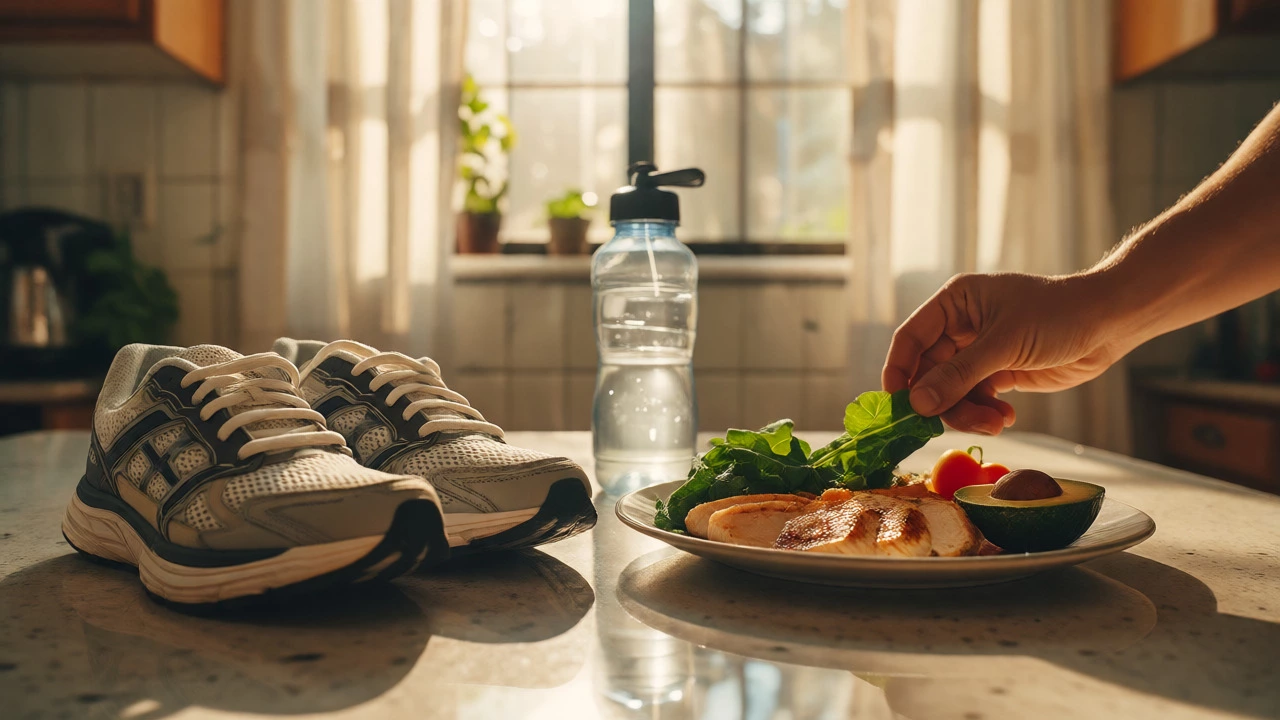
This is the hard pill to swallow. No amount of 30-minute workouts will fix a diet filled with processed sugars and excess calories. Exercise creates a deficit, but food controls the supply line.
If you burn 300 calories in your workout but eat an extra 500-calorie snack because you feel you "earned it," you’ll gain weight. The key is mindful eating. Focus on protein-rich foods to support muscle repair from your intense sessions. Protein has a high thermic effect, meaning your body uses more energy digesting it compared to fats or carbs.
Try pairing your workout with intermittent fasting or simply stopping snacking after dinner. Many people find that combining a morning 30-minute fasted cardio session with controlled evening meals accelerates results significantly more than working out randomly throughout the day.
Common Mistakes That Sabotage Short Workouts
Even with the best intentions, people make errors that render their 30 minutes useless. Watch out for these traps:
- Over-resting: Checking social media for two minutes between sets kills the intensity. Use a timer app to strictly limit rest periods.
- Ignoring Progressive Overload: If you do the same 30-minute routine for six months, your body adapts. You must increase difficulty by adding weight, reducing rest time, or increasing reps.
- Skipping the Warm-up: With less time, people rush into high intensity cold. This increases injury risk. Spend those first 3 minutes seriously.
- Focusing Only on Cardio: Pure cardio loses effectiveness over time as the body becomes efficient. Resistance training builds muscle, which raises your basal metabolic rate permanently.
Sample Weekly Plan for Sustainable Results
You don’t need to train 30 minutes every day. In fact, recovery is part of growth. Aim for 4-5 sessions per week. Here is a balanced approach:
- Monday: Full Body Strength Circuit (Focus on squats, push-ups, rows)
- Tuesday: HIIT Cardio (Intervals of burpees, mountain climbers, jumping jacks)
- Wednesday: Active Recovery (Light walking or yoga, optional)
- Thursday: Lower Body & Core (Lunges, planks, glute bridges)
- Friday: Upper Body & Cardio Mix (Push-ups, dips, fast-paced step-ups)
- Saturday/Sunday: Rest or Light Activity
This variety prevents boredom and targets different muscle groups, ensuring comprehensive development without overuse injuries.
Can I lose weight with only 30 minutes of exercise a day?
Yes, absolutely. Weight loss depends on creating a caloric deficit. A consistent 30-minute high-intensity workout, combined with a controlled diet, can create a sufficient deficit to lose 1-2 pounds per week safely. Consistency matters more than duration.
Is HIIT better than steady cardio for short workouts?
For time-constrained individuals, HIIT (High-Intensity Interval Training) is generally more efficient. It burns more calories in less time and boosts metabolism post-workout via EPOC. However, steady cardio is good for recovery and mental health, so a mix is ideal.
Do I need equipment for a 30-minute home workout?
No, bodyweight exercises are highly effective for weight loss. However, having basic equipment like dumbbells, kettlebells, or resistance bands allows for progressive overload, which helps maintain results as you get fitter.
How soon will I see results from 30-minute workouts?
You may feel stronger and have more energy within 2-3 weeks. Visible physical changes typically appear after 6-8 weeks, assuming diet is aligned. Individual results vary based on starting point, genetics, and adherence.
What if I miss a day?
Don't panic. One missed workout won't ruin your progress. Just resume the next scheduled session. Avoid trying to "make up" the time by doubling up excessively, as this can lead to burnout or injury. Consistency over the month matters most.