Is HIIT Good for Weight Loss? The Real Science Behind the Hype

HIIT Calorie Burn Calculator
Calorie Burn Comparison
Enter your details to see results
Why HIIT Burns More Calories
HIIT triggers EPOC (Excess Post-exercise Oxygen Consumption) which keeps burning calories after your workout. As shown in the Bristol University study, HIIT users burned 2.3% more body fat despite spending 40% less time exercising.
When you hear "HIIT," you probably think of someone sprinting on a treadmill for 30 seconds, then collapsing into a chair. It’s loud, it’s sweaty, and it promises fast results. But is HIIT actually good for weight loss-or just a flashy trend that burns out faster than your motivation?
The short answer? Yes, HIIT can help you lose weight. But not because it’s magic. It works because of how it changes your body’s energy use, not just how many calories you burn during the workout.
How HIIT Burns More Than Just Calories
Most people think weight loss is simple: burn more calories than you eat. That’s true-but not the whole story. HIIT doesn’t just burn calories while you’re working out. It keeps burning them after you’ve stopped.
This is called EPOC: Excess Post-exercise Oxygen Consumption. In plain terms, your body keeps working hard to recover. It needs oxygen to restore muscle glycogen, repair tissue, and bring your heart rate and temperature back to normal. That process uses extra energy-up to 15% more calories than you’d burn with steady-state cardio like jogging.
A 2023 study from the University of Bristol tracked 120 adults doing either 30 minutes of steady cycling or four 4-minute HIIT intervals (30 seconds sprint, 90 seconds walk) three times a week. After eight weeks, the HIIT group lost 2.3% more body fat, even though they spent 40% less time exercising. They didn’t eat less. They just moved differently.
Why HIIT Beats Long Cardio for Fat Loss
Let’s say you run for 45 minutes at a steady pace. You might burn 400 calories. Sounds great. But your body adapts. After a few weeks, that same run feels easier, and your calorie burn drops. Your metabolism gets efficient-and that’s the opposite of what you want when losing weight.
HIIT is the opposite. It’s chaotic. Your body never gets used to it. The bursts of all-out effort force your muscles to tap into anaerobic fuel. That triggers hormonal shifts: your adrenaline and growth hormone spike. These hormones help break down fat and preserve muscle. And muscle? It’s your body’s fat-burning furnace. More muscle means you burn more calories even at rest.
Compare that to long, slow cardio. You might lose weight, but you also lose muscle. That’s why some people look "skinny fat"-they’ve lost weight but still carry soft tissue. HIIT helps you lose fat while keeping or even building lean muscle. That’s why your clothes fit better even if the scale doesn’t move much.
Realistic Expectations: What HIIT Won’t Do
HIIT isn’t a magic pill. You can’t out-exercise a bad diet. One study from the University of Sydney found that people who did HIIT three times a week but ate fast food daily didn’t lose weight. Not even a pound.
Also, HIIT won’t target belly fat specifically. Spot reduction is a myth. Fat loss happens across your whole body. You might lose it from your arms first, then your waist, then your thighs. It’s not predictable. But you will lose fat overall-if you’re consistent and eating right.
And yes, it’s hard. If you’re new to exercise, jumping into 20 minutes of burpees and jump squats might leave you sore for days. That’s normal. But if you’re constantly exhausted, injured, or dreading your workouts, you’re doing it wrong. HIIT should challenge you, not break you.

What a Good HIIT Workout Looks Like
You don’t need a gym. You don’t need equipment. Just time and a bit of space.
A simple, effective HIIT session for beginners:
- Warm up for 5 minutes: brisk walking, arm circles, bodyweight squats
- Do 4 rounds of: 30 seconds high knees, 30 seconds rest
- Then 4 rounds of: 30 seconds mountain climbers, 30 seconds rest
- Finish with 2 minutes of slow walking
That’s 18 minutes total. You can do it at home, in a park, or even in your office during lunch.
As you get stronger, you can increase the work intervals (45 seconds), shorten rest (15 seconds), or add resistance-like dumbbells or a jump rope. But start simple. Progress comes from consistency, not intensity.
Who Should Avoid HIIT
HIIT isn’t for everyone-and that’s okay.
If you’re recovering from an injury, have uncontrolled high blood pressure, or have a heart condition, high-intensity bursts can be risky. Talk to your doctor first.
Also, if you’re extremely stressed, sleep-deprived, or burning out from work, your body can’t handle the added stress. HIIT increases cortisol, the stress hormone. Too much cortisol can lead to fat storage, especially around the belly. In those cases, walking, swimming, or yoga might be better choices to start with.
And if you’re already doing heavy strength training five days a week, adding HIIT might be overkill. Your body needs recovery time. Pushing too hard leads to injury, not results.
The Real Secret: Consistency Over Intensity
The biggest mistake people make with HIIT is treating it like a one-time fix. They do it for two weeks, lose a few pounds, then quit because it’s too hard. Then they blame HIIT.
Real weight loss happens when you find something you can stick with. For some, that’s a 10-minute HIIT session three times a week. For others, it’s daily walks. Both work. But only if you do them regularly.
HIIT is powerful because it saves time. You get more results in less time. But it’s not the only way. It’s just one tool. Use it when it fits your life-not when you’re trying to prove something to yourself or Instagram.
How to Know If HIIT Is Working for You
Don’t just check the scale. Look at these signs:
- Your clothes feel looser around the waist
- You have more energy during the day
- You can climb stairs without getting winded
- You’re sleeping better
- You’re not craving sugar as much
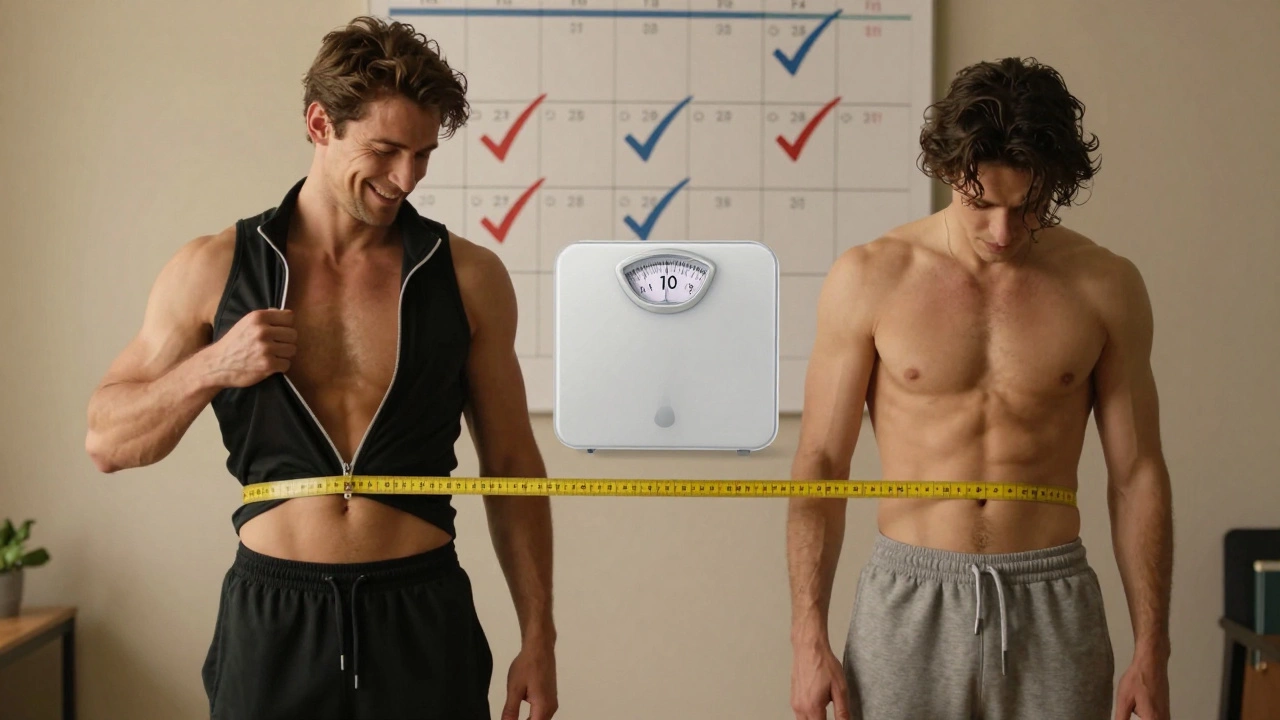
These are better indicators than a number on a scale. Muscle weighs more than fat. You might not lose weight-but you’ll look leaner, feel stronger, and move better.
Take a photo every two weeks. Compare it. That’s your real progress tracker.
Final Thought: It’s Not About the Workout
HIIT is a tool. Food is the foundation. Sleep is the repair system. Stress is the saboteur. Weight loss isn’t about doing the hardest workout. It’s about building habits that last.
If HIIT fits into your life, makes you feel powerful, and doesn’t leave you drained, then yes-it’s good for weight loss. If it feels like punishment, find something else. There’s no single best workout. Only the one you’ll actually do.
Can you lose weight with HIIT only, without changing your diet?
No. You can’t out-exercise a bad diet. HIIT burns extra calories, but if you’re eating more than you burn, you won’t lose weight. Most people need to cut back on sugar, processed snacks, and large portions to see results. Exercise supports fat loss-it doesn’t replace healthy eating.
How often should I do HIIT for weight loss?
Two to three times a week is ideal. Your body needs recovery time between high-intensity sessions. Do more than that, and you risk overtraining, injury, or burnout. On off days, walk, stretch, or do light yoga. Recovery is part of the process.
Is 10 minutes of HIIT enough to lose weight?
Yes-if you’re pushing hard during those 10 minutes and staying consistent. A 2024 study in the Journal of Sports Science found that people doing 10-minute HIIT sessions three times a week lost the same amount of body fat over 12 weeks as those doing 30-minute sessions. The key is intensity, not duration.
Does HIIT help with belly fat?
HIIT helps reduce overall body fat, including belly fat. But you can’t choose where you lose fat. Genetics play a big role. Some people lose belly fat first; others lose it last. The best approach is to combine HIIT with a balanced diet and good sleep. That’s how you tackle stubborn fat over time.
Is HIIT better than running for weight loss?
HIIT burns more calories in less time and preserves muscle better than steady-state running. But running is easier to sustain long-term for many people. If you love running and do it regularly, stick with it. If you hate running but can commit to 15-minute HIIT sessions, then HIIT is the better choice for you. The best workout is the one you’ll keep doing.