Is HIIT or Running Better for Belly Fat? The Science Behind Both

Belly Fat Loss Calculator
Calculate Your Belly Fat Loss
Estimate potential waist circumference reduction based on your exercise routine and diet habits.
When it comes to losing belly fat, most people want one thing: results, fast. You’ve probably heard that HIIT is the magic bullet, or maybe you’ve been told running for 30 minutes every day is the only way. But which one actually works better? The truth isn’t as simple as picking a side. It’s about how your body responds, what you can stick with, and how these workouts actually change your fat storage.
What happens when you do HIIT
HIIT - high-intensity interval training - means short bursts of all-out effort followed by brief recovery. Think 30 seconds of sprinting, then 30 seconds of walking. Repeat that 8 times. That’s it. A typical HIIT session lasts 15 to 25 minutes. But here’s the catch: those 20 minutes burn more calories in the hours after you finish than a steady jog ever could.
This is called EPOC - excess post-exercise oxygen consumption. Your body keeps burning calories trying to recover. A 2017 study in the Journal of Obesity found that people doing three 20-minute HIIT sessions per week lost 2.5% more belly fat over 12 weeks than those doing 40 minutes of steady-state cardio. The difference wasn’t huge, but it was consistent. And HIIT didn’t require more time - it just worked harder.
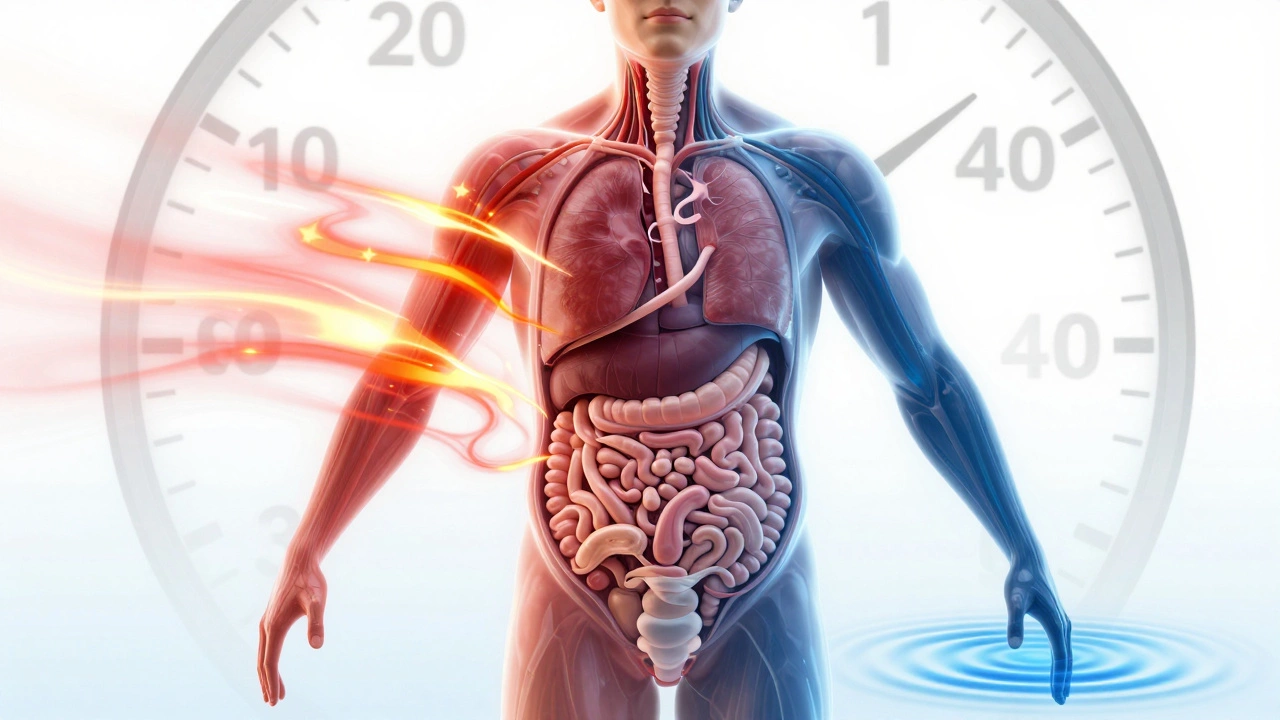
HIIT also triggers a stronger hormonal response. Testosterone and growth hormone levels spike during intense intervals, which helps your body break down visceral fat - the kind that wraps around your organs and is the most dangerous. That’s the fat you can’t pinch, but you definitely feel when you bend over.
What running does to your body
Running is simple. Lace up, step out, keep going. No timers, no equipment, no complex routines. That’s why so many people stick with it. But when you run at a steady pace, your body settles into an efficient rhythm. It learns to burn fat as fuel, especially after the first 20 minutes.
A 2021 analysis in the British Journal of Sports Medicine tracked over 1,200 adults who ran regularly. Those who ran 50+ minutes per day lost more total body fat than those who did shorter sessions. But here’s the twist: the people who lost the most belly fat weren’t the ones who ran the longest - they were the ones who ran consistently, five days a week, even if it was only 25 minutes.
Running doesn’t create the same post-workout calorie burn as HIIT. But it builds endurance. And endurance matters. If you can run 30 minutes every morning without stopping, you’re burning 300-400 calories daily. That’s over 2,000 calories a week. One pound of fat is 3,500 calories. So if you’re eating right, running five days a week will melt belly fat - just slower.
Why HIIT might win for belly fat
Let’s be real: most people don’t have an hour a day to run. HIIT fits into lunch breaks, before work, or between kid pickups. And that consistency is everything.
A 2023 study in the Journal of Exercise Nutrition & Biochemistry compared two groups: one did HIIT three times a week, the other ran five times a week for 30 minutes. Both groups ate the same diet. After 10 weeks, the HIIT group lost 1.5 inches off their waistline. The running group lost 0.9 inches. The difference wasn’t just in fat loss - the HIIT group also had lower insulin resistance, which directly impacts how your body stores fat around the middle.
Insulin is the fat-storage hormone. When it’s high, your body holds onto belly fat. HIIT improves insulin sensitivity faster than steady cardio. That means even when you eat carbs, your body is less likely to turn them into belly fat.
Why running still has value
HIIT isn’t for everyone. If you’re new to exercise, have joint issues, or just hate pushing yourself to the edge, HIIT can feel punishing. It’s also harder to recover from. Doing HIIT every day leads to burnout or injury.
Running is gentler on the nervous system. It’s meditative. Many people find that a long, slow run helps them manage stress - and stress is a major driver of belly fat. Cortisol, the stress hormone, tells your body to store fat around your abdomen. A daily 20-minute run can lower cortisol levels more than a 10-minute HIIT session.
And if you’re trying to lose a lot of weight - say, 30+ pounds - steady running gives you a reliable calorie burn without needing to be explosive. You don’t have to sprint. You just have to show up.
The real answer: it’s not HIIT vs running - it’s HIIT and running
The best approach isn’t choosing one. It’s combining them.
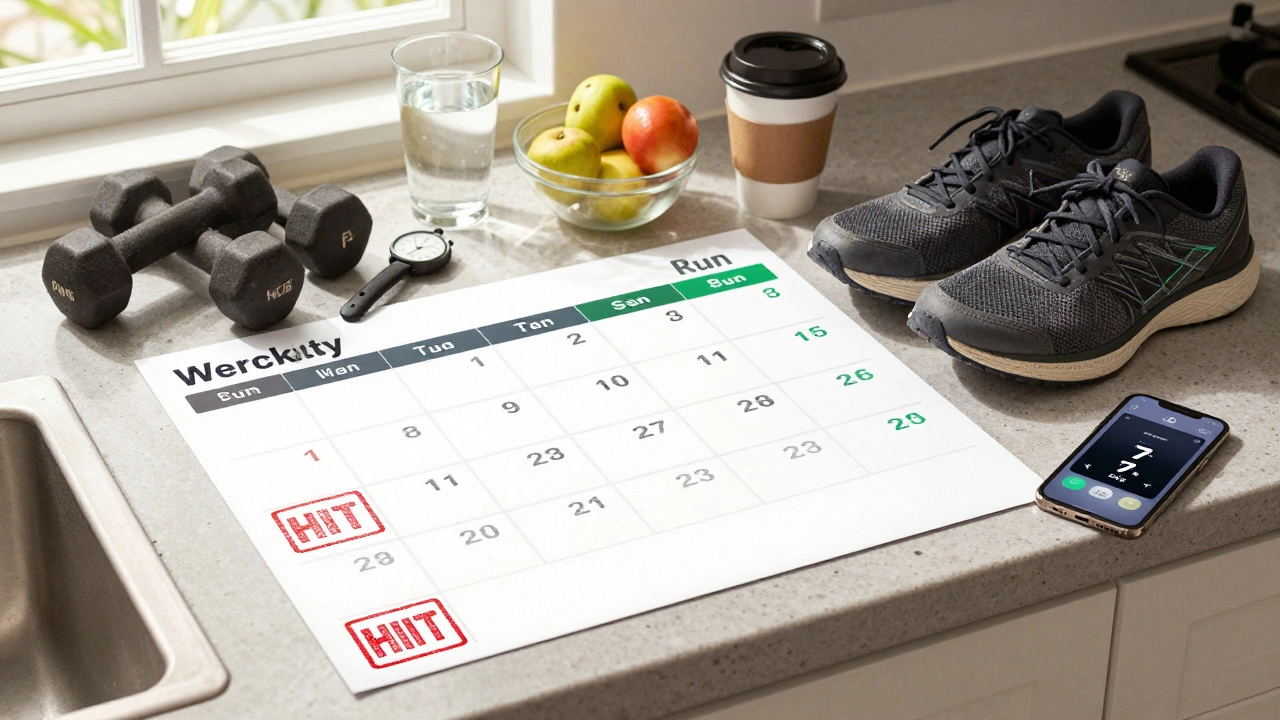
Try this: do HIIT twice a week - like Tuesday and Friday. Keep it short: 4 rounds of 30 seconds sprinting, 60 seconds walking. Then on Monday, Wednesday, and Saturday, go for a 30-minute jog. No need to push hard. Just move. Let your body recover between intense sessions.
This mix gives you the hormonal kick from HIIT and the steady calorie burn from running. It prevents burnout. It keeps your metabolism active all week. And it’s sustainable. You’re not trying to be a superhero. You’re just being consistent.
One person I worked with lost 18 pounds and 3 inches off her waist in 12 weeks using this exact plan. She didn’t change her diet. She didn’t cut carbs. She just moved differently. That’s the power of structure.
What about diet? Can you out-exercise a bad diet?
No. You can’t.
HIIT and running both help burn fat, but if you’re drinking sugary coffee every morning, eating processed snacks, or having two glasses of wine every night - you’re undoing the work. Belly fat doesn’t vanish because you ran. It vanishes because you create a calorie deficit and reduce inflammation.
Focus on three simple rules:
- Stop drinking sugar. That includes soda, juice, sweetened coffee, and energy drinks.
- Eat protein at every meal. It keeps you full and stabilizes blood sugar.
- Get 7+ hours of sleep. Poor sleep raises cortisol and cravings.
That’s it. No fancy diets. No supplements. Just real food, real movement, and real rest.
Who should choose HIIT?
- You have 20-30 minutes, 3 days a week, to spare.
- You’re already somewhat fit - you can jog for 10 minutes without stopping.
- You get bored easily and need variety.
- You want faster results and don’t mind pushing hard.
Who should stick with running?
- You’re just starting out or recovering from injury.
- You enjoy solitude and the rhythm of movement.
- You need stress relief more than speed.
- You can commit to 4-5 days a week, even if it’s short.
Final thought: consistency beats intensity
The best workout for belly fat is the one you’ll do every week for the next year. Not the one that looks hardest on Instagram. Not the one that promises results in 7 days. The one you actually do.
Some people thrive on the fire of HIIT. Others find peace in the steady beat of their feet on pavement. Both work. Both burn fat. The difference is in how you stick with it.
So don’t pick a side. Pick a plan. And then show up.
Can you lose belly fat with just HIIT?
Yes, you can lose belly fat with just HIIT - especially if you’re consistent and eat well. HIIT triggers fat-burning hormones and improves insulin sensitivity, which targets visceral fat. But results depend on your diet, sleep, and stress levels. HIIT alone won’t work if you’re eating a lot of sugar or not sleeping enough.
Is running better than HIIT for fat loss?
Running burns more total calories over time if you do it often and for longer durations. But HIIT burns more fat per minute and boosts metabolism after the workout. For belly fat specifically, HIIT has a slight edge in studies because of its impact on insulin and cortisol. But if you can’t stick with HIIT, running five days a week will still get you there - just slower.
How often should I do HIIT to lose belly fat?
Two to three times a week is ideal. More than that increases risk of overtraining and injury. Your body needs recovery time to repair muscle and regulate hormones. Pair HIIT with walking or light running on other days for the best balance.
Does running reduce belly fat faster than HIIT?
No, not usually. HIIT leads to faster reductions in waist circumference because it targets visceral fat more directly. Running burns calories steadily, but it doesn’t spike metabolism the same way. One study showed HIIT users lost 1.5 inches off their waist in 10 weeks versus 0.9 inches for runners - even with the same diet.
Can I do HIIT every day to lose belly fat faster?
Don’t. HIIT is intense. Doing it daily can spike cortisol, increase injury risk, and actually make fat loss harder. Your body needs rest to recover and burn fat efficiently. Stick to 2-3 days a week and use other days for walking, stretching, or light cardio.
What’s the fastest way to lose belly fat?
Combine HIIT twice a week, steady running or walking three to four days a week, cut out added sugar, eat protein with every meal, and sleep 7+ hours. That’s it. No magic tricks. Just the basics done consistently. The fastest results come from sustainable habits, not extreme workouts.