Is It Better to Do Yoga in the Morning or at Night? The Real Difference
Yoga Timing Recommendation Tool
Find Your Best Yoga Time
Take this 30-second quiz to discover whether morning or night yoga works best for your body and lifestyle. Your answers will be kept private.
Your Personal Recommendation
Most people start yoga with good intentions-reduce stress, move better, sleep deeper. But soon they hit a wall: morning yoga or night yoga? Which one actually works better? There’s no one-size-fits-all answer, but the difference isn’t just about preference. It’s about your body, your schedule, and what you’re trying to fix.
What morning yoga actually does to your body
Morning yoga isn’t just about stretching before coffee. It’s about resetting your nervous system after hours of stillness. When you wake up, your cortisol levels are naturally high. That’s your body’s way of saying, "Time to get up." Yoga in the morning doesn’t add stress-it helps your body transition from sleep mode to alert mode in a controlled, gentle way.
Studies show that people who practice yoga within an hour of waking up report better focus throughout the day. Why? Because movement activates the parasympathetic nervous system, which balances out the stress hormones. You’re not just waking up your muscles-you’re waking up your brain. A 20-minute session of sun salutations, cat-cow, and seated forward folds can make your mind feel clearer than three cups of coffee.
And if you’re trying to build a habit? Morning yoga wins. It’s harder to skip when it’s the first thing you do. Once you roll out your mat, the rest of your day feels more intentional. People who stick with morning yoga say they feel more in control of their time, less reactive to stressors, and more likely to eat well and move more later in the day.
Why night yoga might be your secret weapon
But what if you’re not a morning person? What if your day ends with back-to-back meetings, a screaming kid, or a heavy dinner? Night yoga isn’t a backup plan-it’s a powerful reset button.
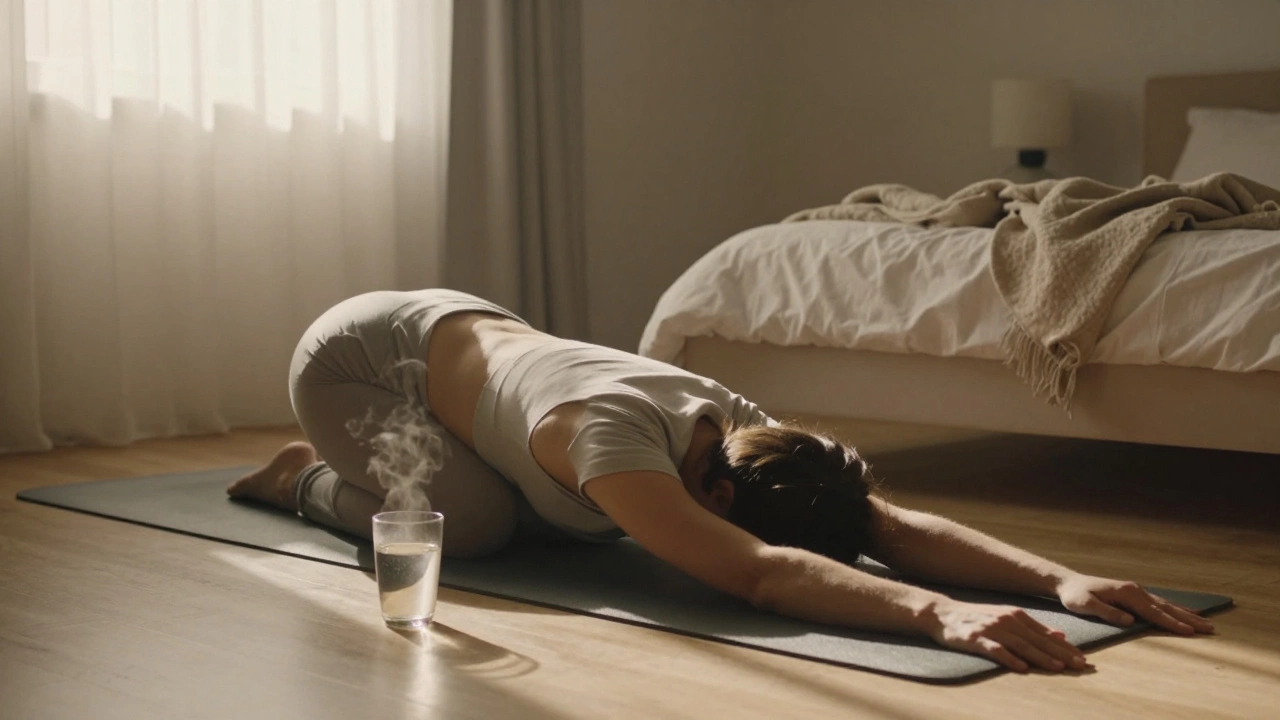
Your body starts winding down around 9 p.m. Melatonin rises. Your core temperature drops. Yoga at night helps you lean into that natural rhythm instead of fighting it. Gentle poses like legs-up-the-wall, child’s pose, and reclined bound angle release tension stored in your hips, shoulders, and lower back from sitting all day.
Research from the University of California found that people who did 20 minutes of restorative yoga before bed fell asleep 30% faster and reported fewer nighttime awakenings. That’s not magic. It’s physiology. Slow, deep breathing activates the vagus nerve, which tells your heart to slow down and your digestion to relax. No pills. No apps. Just breath and stillness.
And here’s the quiet benefit: night yoga gives you space to process your day. Without screens. Without noise. Just you and your breath. That mental cleanup matters more than you think.
The hidden trade-offs no one talks about
People think morning yoga is "better" because it’s more "disciplined." But discipline isn’t about forcing yourself out of bed at 5 a.m. It’s about consistency. If you drag yourself through a half-hearted session because you feel guilty for skipping, you’re not helping yourself. You’re just burning out.
On the flip side, night yoga can backfire if you do something too energizing. Power yoga, vinyasa flows, or intense core work right before bed? That’s like drinking espresso at midnight. Your heart rate spikes. Your mind races. You end up lying there thinking about the pose you couldn’t hold.
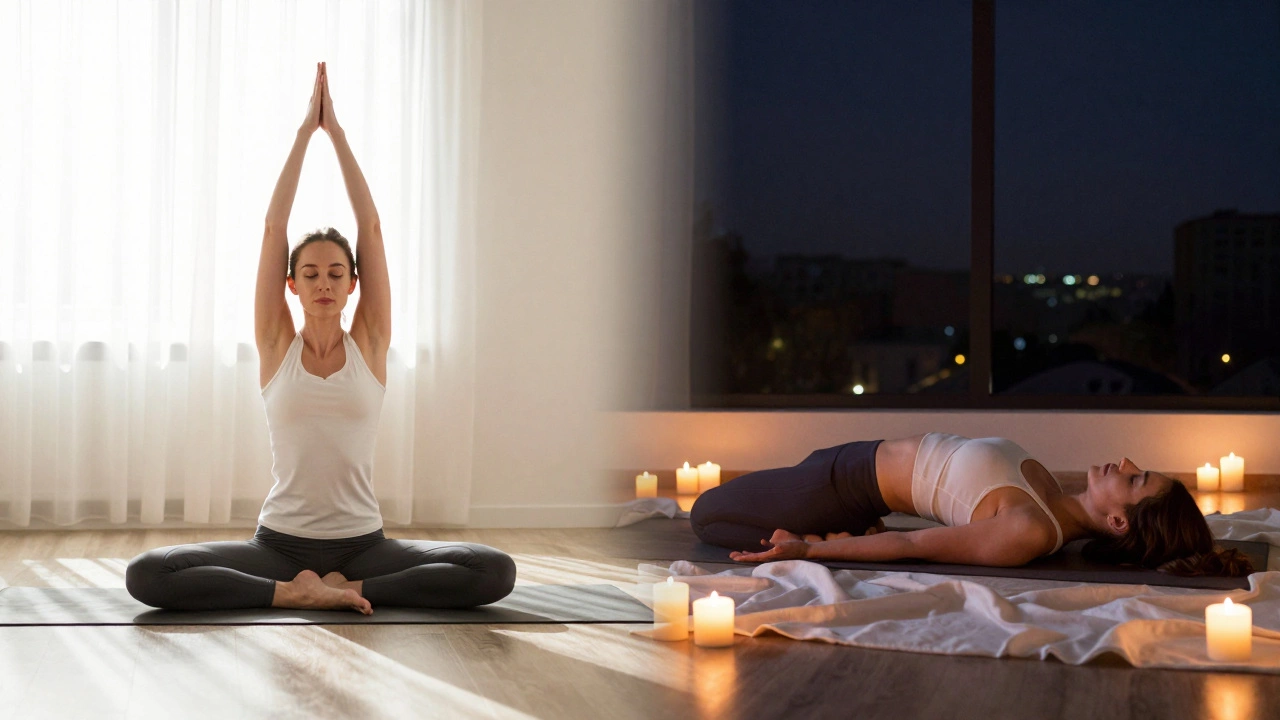
The key is matching intensity to time. Morning? Go for movement. Sun salutations, standing balances, gentle backbends. Night? Go for stillness. Yin poses, breathwork, guided relaxation. One isn’t superior. They’re just different tools.

Who should do yoga in the morning
You should try morning yoga if:
- You struggle with brain fog or low energy in the first half of the day
- You want to build a consistent habit without relying on willpower
- You have a busy evening and know you’ll skip it if you wait
- You’re trying to improve posture or reduce lower back pain from sitting all day
Many office workers in Bristol report fewer headaches and less neck tension after switching to morning yoga. It’s not because they’re stronger-it’s because they started the day aligned.
Who should do yoga at night
You should try night yoga if:
- You have trouble falling asleep or wake up often during the night
- Your stress levels spike in the evening (think: traffic, kids, work emails)
- You feel physically tight after a long day
- You’re recovering from injury or chronic pain
People with anxiety or PTSD often find night yoga more helpful than therapy alone. Why? Because it teaches the body to feel safe again. Movement becomes a language of calm, not chaos.
What if you can’t do it every day?
You don’t need to choose one forever. Most people who stick with yoga long-term mix both. Weekdays? Morning. Weekends? Night. Or maybe you do 10 minutes of breathing in the morning and 15 minutes of stretching at night.
One woman I know, a nurse working night shifts, does yoga only at 3 a.m. before her nap. It’s not ideal-but it’s hers. The goal isn’t perfection. It’s presence.
What to avoid in each session
Here’s what doesn’t work:
- Morning: Don’t push into deep backbends or intense twists on an empty stomach. Your spine is stiff. Go slow.
- Night: Don’t do fast-paced flows or hot yoga. Your body is cooling down. Don’t rev it up.
- Both: Don’t scroll through your phone right after. Sit still for two minutes. Let the calm settle.
Also, avoid comparing yourself to others. Instagram shows sunrise yoga on beaches. Real life? It’s you in pajamas on a rug, trying not to fall over in tree pose. That’s still yoga.
The bottom line
There’s no "best" time for yoga. There’s only the time that works for you right now. If you’re tired, stressed, or overwhelmed, yoga at night might save your sleep. If you’re sluggish, unfocused, or stuck in a rut, yoga in the morning might be the spark you need.
Try both for two weeks. Track how you feel-not how you look. Do you sleep better? Are you calmer during your commute? Do you feel less reactive to small annoyances? Those are the real wins.
Yoga isn’t about doing it perfectly. It’s about showing up-on your mat, at your time, in your body. That’s where the change happens.
Is it better to do yoga on an empty stomach?
For morning yoga, it’s best to wait 30-60 minutes after drinking water before starting. Eating a heavy meal right before yoga can cause discomfort. At night, a light snack like a banana or a handful of nuts 30 minutes before yoga is fine if you’re hungry-just avoid greasy or spicy food.
Can I do yoga both morning and night?
Yes, and many people do. Morning yoga can be more active-sun salutations, standing poses. Night yoga should be restorative-gentle stretches, breathing exercises. Just make sure the intensity matches the time of day. Two short sessions (10-15 minutes each) are better than one long, exhausting one.
How long should a yoga session be to see benefits?
You don’t need an hour. Even 10 minutes of consistent yoga-focusing on breath and simple movements-can reduce stress and improve flexibility over time. The key is regularity, not duration. Five days a week for 15 minutes beats one 90-minute session once a week.
Does yoga help with weight loss?
Yoga alone won’t burn enough calories to cause major weight loss. But it helps in other ways: it reduces stress-related eating, improves body awareness, and builds muscle tone. When combined with healthy eating, yoga supports sustainable weight management better than intense cardio alone.
What if I’m too stiff to do yoga?
Yoga isn’t about touching your toes. It’s about moving within your own range. Use blocks, straps, or pillows to support your body. Even seated breathing and gentle neck rolls count. Progress comes from consistency, not flexibility. Start where you are.
What to try next
If you’re still unsure, start small. Pick one day this week. Set your alarm 15 minutes earlier-or turn off the TV 15 minutes earlier. Roll out your mat. Do nothing fancy. Just three deep breaths, a slow cat-cow, and a few minutes of lying still. Notice how you feel afterward. That’s your answer.
You don’t need to choose morning or night forever. You just need to choose today.