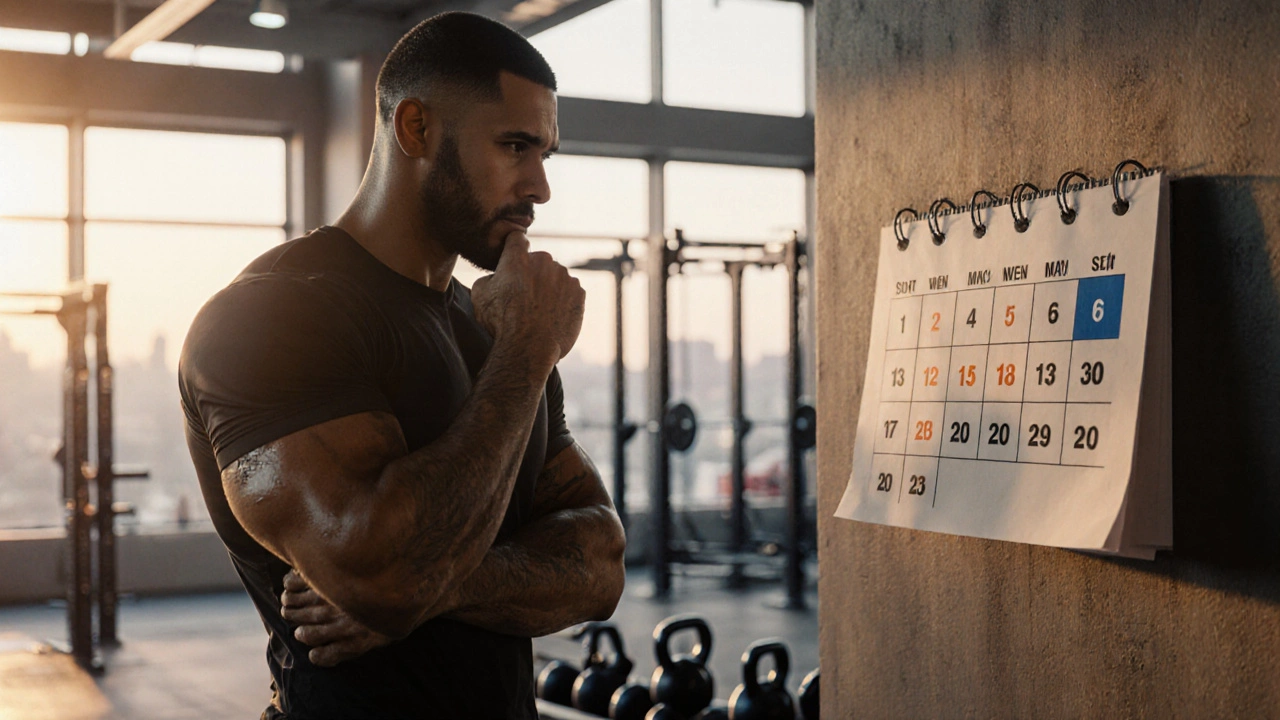
Are Two Consecutive Rest Days Harmful for Strength Training?
Explore whether two consecutive rest days hurt strength gains, learn when they're helpful, and get practical guidelines to plan recovery for optimal muscle growth.
Read MoreWhen it comes to training frequency, how often you show up for your workouts. Also known as workout frequency, it’s not about squeezing in the most sessions—it’s about finding the sweet spot where your body recovers, adapts, and grows stronger. Too little and you won’t move the needle. Too much and you’ll feel drained, sore, or worse—stuck. The right training frequency depends on your goals, your body, and how well you rest.
For strength training, lifting weights to build muscle and increase power, most people see real gains with 2–4 days a week. Beginners can start with just two full-body sessions, giving muscles time to recover. As you get stronger, you might split routines—upper body one day, lower body another—but even then, you still need at least one full rest day between sessions. Pushing hard every day doesn’t speed things up. In fact, science shows muscle grows when you rest, not when you’re sweating.
yoga frequency, how often you practice yoga for health and flexibility works differently. You don’t need to sweat to benefit. Doing yoga just 2–3 times a week can improve mobility, reduce stress, and ease back pain. Some people swear by daily 20-minute sessions, not because they’re pushing limits, but because consistency rewires the nervous system. It’s not about flipping into a handstand—it’s about showing up, breathing, and feeling your body move.
And let’s talk about recovery days, the unsung heroes of any fitness plan. They’re not lazy days. They’re when your body repairs itself, builds new tissue, and gets ready for the next session. Skip them, and you risk injury, burnout, or plateauing. Walking, stretching, or just resting counts. You don’t need a fancy gadget to know you need a break—your body tells you. Fatigue, soreness that doesn’t fade, or losing motivation? That’s your signal.
There’s no magic number that works for everyone. A 60-year-old woman starting yoga needs a different rhythm than a 30-year-old lifting weights. But the rules stay the same: listen to your body, prioritize consistency over volume, and never treat rest like an afterthought. The posts below cover exactly this—how often to train for muscle, fat loss, flexibility, and long-term health. You’ll find real timelines, no-fluff advice, and what actually works for curvy bodies. No gimmicks. Just what helps you feel stronger, calmer, and more in control—day after day.
Explore whether two consecutive rest days hurt strength gains, learn when they're helpful, and get practical guidelines to plan recovery for optimal muscle growth.
Read More
Learn how often you should schedule personal training sessions based on goals, fitness level, recovery, and lifestyle. Get practical tips, a goal‑wise frequency guide, and warning signs of overtraining.
Read More