The #1 Exercise for Senior Balance: Why Single-Leg Stands Beat Everything Else
Senior Balance Trainer & Timer
Current Instruction:
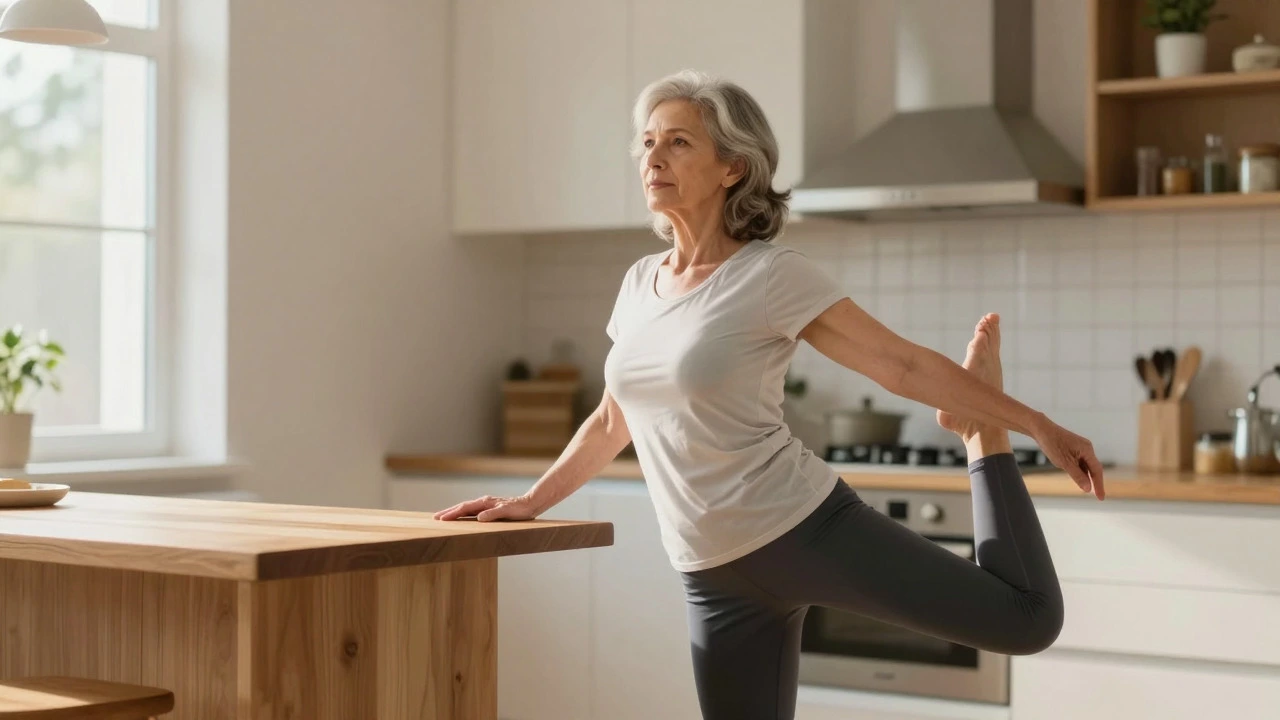
Stand next to a sturdy counter or wall for support. Prepare to lift one foot off the ground.
Session Stats
Form Checklist
- ✓ Find support nearby
- ✓ Engage your core
- ✓ Look straight ahead
- ✓ Breathe normally
Falling is the silent thief of independence for older adults. One slip on a wet floor or a trip over a rug can turn a normal Tuesday into a hospital stay and months of rehabilitation. The fear of falling often leads seniors to move less, which ironically makes them weaker and more likely to fall. It’s a vicious cycle that needs to be broken with the right movement strategy.
You might be looking for a magic bullet-a single exercise that fixes everything. While no one move solves every problem, there is a clear winner when it comes to building the specific neuromuscular control needed for daily stability. That exercise is the single-leg stand. It sounds simple, almost too simple, but its effectiveness in retraining your brain-body connection is unmatched.
The Science Behind the Single-Leg Stand
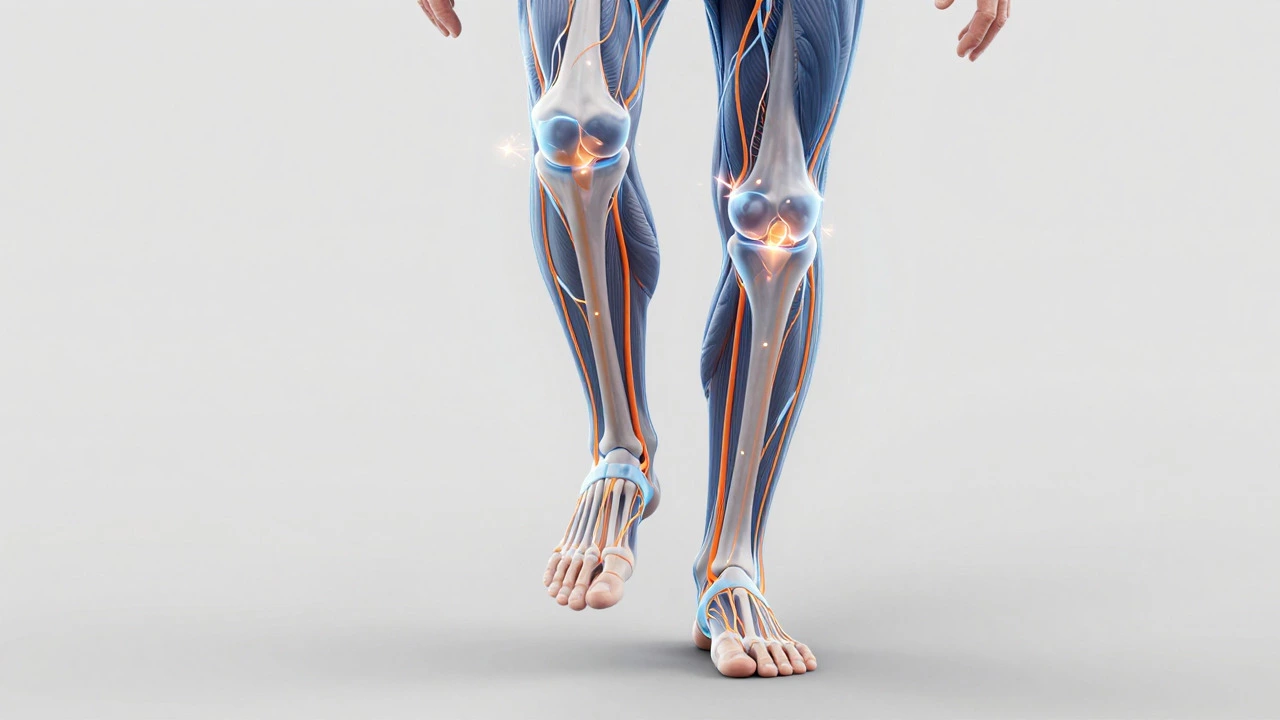
Why does standing on one leg work better than complex yoga poses or heavy weightlifting for immediate balance improvement? It comes down to proprioception. This is your body's ability to sense its position in space without looking at it. When you lift one foot off the ground, you are forcing your nervous system to wake up. Your ankles, knees, hips, and core must communicate rapidly to keep you upright.
Proprioception is the sensory mechanism that allows the body to detect position and movement, crucial for maintaining balance and preventing falls in older adults. As we age, these signals degrade. The single-leg stand directly targets this degradation by creating an unstable environment that demands constant micro-adjustments from your muscles.
Unlike walking, which is a predictable, rhythmic motion, standing on one leg is static but unstable. It forces the small stabilizer muscles around your ankle and hip-muscles that often get ignored-to fire repeatedly. Over time, this builds the reflex speed needed to catch yourself if you stumble while walking down the street.
How to Perform the Single-Leg Stand Correctly
Technique matters more than duration. Doing it wrong can lead to bad habits or even injury. Here is how to execute it safely and effectively:
- Find Support: Start next to a sturdy kitchen counter, a wall, or a chair. You should be able to touch it lightly with one hand if you feel wobbly. This safety net reduces anxiety and allows you to focus on the movement.
- Stance Alignment: Stand with your feet hip-width apart. Keep your weight evenly distributed. Engage your core slightly-imagine pulling your belly button toward your spine.
- Lift Slowly: Raise one foot off the ground. You don’t need to lift it high; just enough so the toes aren't touching the floor. Bend the knee of the lifted leg slightly for comfort.
- Focus Forward: Look straight ahead at a fixed point. Don’t look down at your feet. Looking down disrupts your vestibular system (inner ear balance) and can make you dizzy.
- Hold and Breathe: Hold the position for as long as you can maintain good form. Aim for 10 to 30 seconds initially. Breathe normally; holding your breath increases blood pressure and tension.
- Switch Sides: Lower the foot gently and switch legs. Repeat.
If you can hold for 30 seconds on each side with eyes open, it’s time to progress. Close your eyes. This removes visual cues and forces your proprioceptive system to do all the work. If closing your eyes is too hard, try doing the exercise on a softer surface, like a carpet or a folded towel, to increase instability.
Integrating Fitness Apps for Consistency
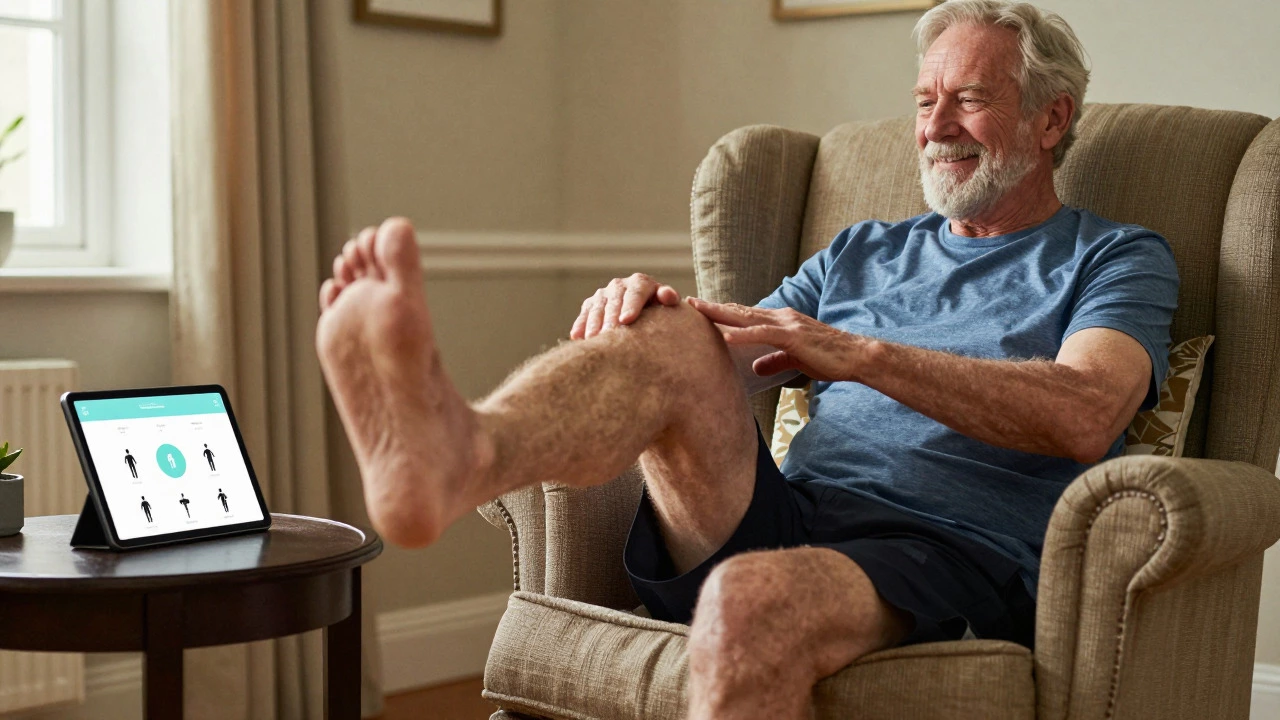
Knowing the exercise is only half the battle. The other half is doing it consistently. This is where Fitness apps for seniors are digital tools designed to provide guided workouts, progress tracking, and motivation specifically tailored to the physical limitations and goals of older adults. These apps bridge the gap between knowledge and action.
Many seniors struggle with remembering their routine or feeling unsure if they are performing movements correctly. A good fitness app acts as a personal trainer in your pocket. It provides video demonstrations, audio cues, and structured plans that gradually increase difficulty. For example, an app might start you with seated balance exercises and slowly introduce standing variations as your confidence grows.
| Feature | Benefit for Balance Training | Why It Matters |
|---|---|---|
| Video Demonstrations | Visual guidance on form | Reduces risk of incorrect posture leading to strain |
| Progress Tracking | Records hold times and frequency | Provides tangible evidence of improvement, boosting motivation |
| Adaptive Difficulty | Adjusts workout intensity automatically | Prevents plateauing and ensures continuous challenge |
| Reminders | Sends notifications to exercise | Combats forgetfulness and establishes routine |
When choosing an app, look for ones that emphasize functional movement rather than aesthetic fitness. You want exercises that mimic real-life activities like stepping over curbs or reaching for high shelves. Avoid apps that push high-impact cardio if your joints are sensitive. The goal is longevity and mobility, not burning maximum calories.
Complementary Exercises for Total Stability
While the single-leg stand is the king of balance exercises, it works best when supported by strength training. Balance requires muscle power. If your legs are weak, your balance will suffer regardless of how well-trained your nerves are.
Incorporate these two complementary movements into your weekly routine:
- Heel-to-Toe Walks (Tandem Walking): Place the heel of one foot directly in front of the toes of the other foot. Walk in a straight line for 10 steps. This challenges your dynamic balance-the ability to stay stable while moving. It mimics the act of walking along a curb or through a crowded room.
- Seated Marches: Sit in a sturdy chair and march in place, lifting your knees as high as comfortable. This strengthens the hip flexors and improves coordination without the risk of falling. It’s an excellent warm-up before attempting standing balances.
Strength training for the lower body is non-negotiable. Squats (even partial squats holding onto a chair) build the quadriceps and glutes. Strong legs act as shock absorbers. When you trip, strong legs can react faster to stabilize your center of gravity before you hit the ground.
Common Mistakes to Avoid
Even with the right exercise, pitfalls exist. Many seniors rush into advanced variations too quickly. Ego has no place in balance training. If you are wobbling violently, step back to a supported version. Consistency beats intensity.
Another common error is neglecting the upper body. Your arms play a crucial role in balance. They act as counterweights. Practice swinging your arms naturally while walking or balancing. Keeping your arms stiff at your sides limits your ability to correct your posture mid-fall.
Finally, ignore footwear. Thick, cushioned running shoes can actually hinder balance training because they dampen the sensory feedback from your feet. Barefoot training (on safe surfaces) or thin-soled shoes allow your feet to feel the ground, enhancing proprioception.
Creating a Sustainable Routine
To see results, you need to integrate balance work into your daily life. It doesn’t have to be a dedicated gym session. Try this approach:
Every time you brush your teeth, perform single-leg stands. Two minutes of brushing is enough time for several sets. This habit-stacking technique ensures you practice twice a day without needing extra time. Use your fitness app to track these mini-sessions. Seeing a streak of days completed can be surprisingly motivating.
Aim for three days a week of dedicated strength and balance training, plus daily incidental practice. Give it eight weeks. Most people notice a significant difference in their confidence and stability within this timeframe. Your gait will become steadier, and you’ll feel less anxious about uneven surfaces.
Safety First: When to Seek Help
If you experience dizziness, pain, or severe unsteadiness during these exercises, stop immediately. Consult a physical therapist. They can assess for underlying conditions like vestibular disorders or neuropathy that might require specialized treatment beyond general exercises. A professional can also customize a program based on your specific medical history, ensuring you avoid movements that could exacerbate joint issues.
How many times a day should I do balance exercises?
Aim for short, frequent sessions. Practicing balance exercises once or twice a day for 5-10 minutes is more effective than one long session per week. Consistency helps retrain your nervous system.
Can fitness apps replace a physical therapist?
No, fitness apps are supplements, not replacements. They are great for maintenance and general improvement, but a physical therapist provides personalized assessment and hands-on correction for specific injuries or severe balance deficits.
Is it safe to do single-leg stands if I have arthritis?
Yes, but modify the range of motion. Keep the bend in your standing knee minimal to reduce joint stress. Focus on stability rather than deep stretching. Always consult your doctor if pain occurs.
How long does it take to see improvements in balance?
Most people notice subtle improvements within 2-4 weeks. Significant changes in confidence and stability typically occur after 8-12 weeks of consistent practice.
What should I wear during balance training?
Wear thin-soled shoes or go barefoot on safe surfaces. This allows your feet to sense the ground better, improving proprioception. Avoid thick, cushioned sneakers which can numb sensory feedback.