What Are the 7 Steps to Creating a Workout Plan?

Workout Plan Builder
Build Your Personalized Plan
Answer a few questions and get a 4-week workout schedule tailored to your needs.
Your Personalized 4-Week Workout Plan
What to Expect
Your First Week
Creating a workout plan isn’t about copying Instagram routines or following the latest trend. It’s about building something that fits your life, your body, and your goals. Too many people start strong, then quit after a week because their plan was too vague, too intense, or just didn’t match their schedule. The good news? A solid workout plan doesn’t need fancy equipment or hours of free time. It just needs structure. Here are the seven real steps to build one that actually sticks.
Step 1: Define Your Goal Clearly
You can’t plan a route if you don’t know where you’re going. What are you trying to achieve? Lose fat? Build muscle? Get stronger? Improve endurance? Or just feel better moving every day? Each goal requires a different approach.If your goal is weight loss, you’ll focus more on calorie-burning cardio and full-body strength. If you want to build muscle, you’ll need progressive overload with weights and enough protein. If you’re training for a 5K, your plan will include running intervals and recovery days. Write your goal down. Not “get fit” - too vague. Try “lose 8 pounds in 10 weeks” or “do 10 pull-ups without assistance by June.” Specific goals keep you on track.
Step 2: Assess Your Current Fitness Level
Don’t start at Level 5 if you’re still on Level 1. That’s how injuries happen. Take five minutes to test yourself:- Can you do 10 bodyweight squats without pain?
- How long can you hold a plank?
- Can you walk up two flights of stairs without getting winded?
- What’s your current weekly activity? Zero days? Three days of walking?
This isn’t about judging yourself. It’s about knowing where to begin. If you can’t do 10 squats yet, start with 5 and build up. If you’ve never lifted weights, begin with resistance bands or light dumbbells. Your plan should challenge you - but not break you.
Step 3: Choose the Right Types of Exercise
A balanced workout plan includes four key components:- Strength training - lifting weights, using resistance bands, or bodyweight exercises like push-ups and lunges. Do this at least twice a week.
- Cardio - walking, jogging, cycling, swimming, or even dancing. Aim for 150 minutes a week of moderate activity, or 75 minutes of vigorous.
- Flexibility and mobility - stretching after workouts or doing yoga. Helps prevent injury and keeps you moving freely.
- Recovery - rest days aren’t lazy days. They’re when your body repairs and gets stronger.
Most beginners focus only on cardio or only on lifting. That’s a mistake. You need both. Even if your main goal is weight loss, skipping strength training means you’ll lose muscle along with fat. And that slows your metabolism.

Step 4: Schedule Your Workouts Like Appointments
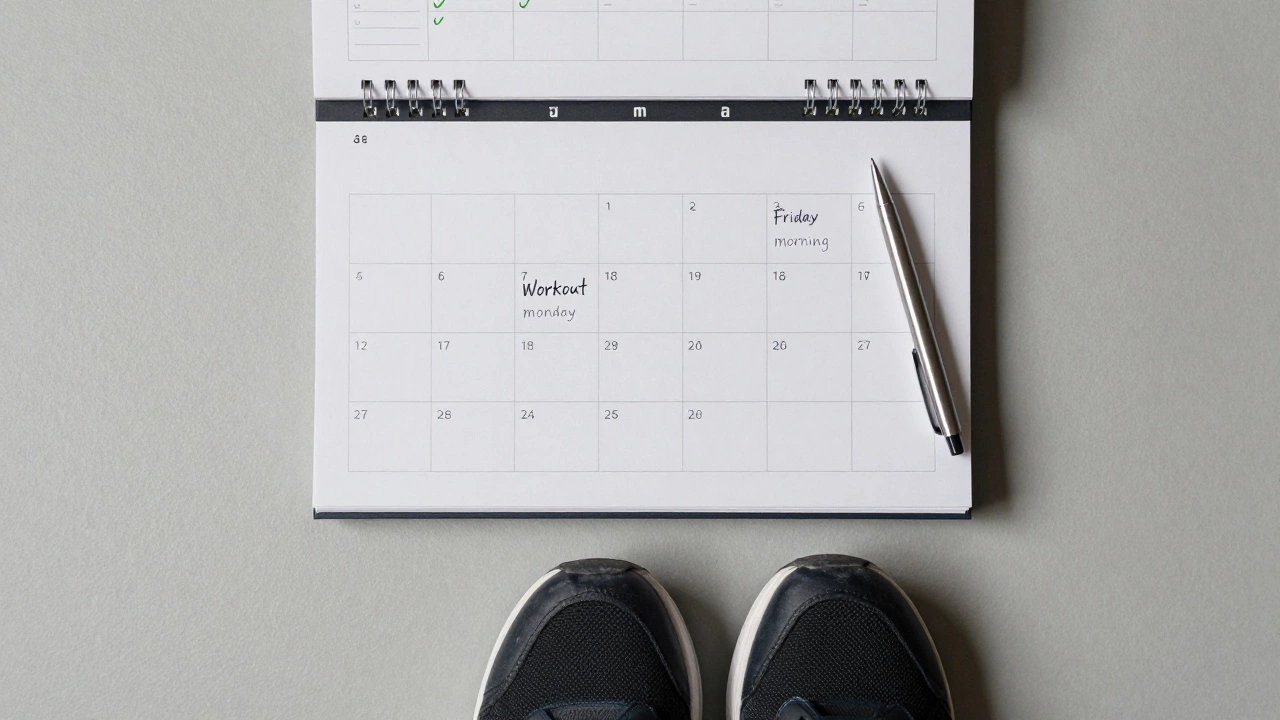
You wouldn’t miss a doctor’s appointment. Don’t treat your workout any differently. Look at your calendar. When do you actually have time?Maybe you can only squeeze in 30 minutes on Monday, Wednesday, and Friday mornings. That’s fine. Build your plan around that. If you’re a night person, schedule workouts after dinner. If you have kids, plan for when they’re napping or at school.
Don’t say “I’ll work out when I have time.” That never happens. Block out the time. Treat it like a meeting with your future self. Consistency beats intensity every time. Three 30-minute sessions a week are better than one 90-minute session you never do.
Step 5: Pick Exercises You Can Actually Do
No need to copy elite athletes. If you hate the treadmill, don’t force yourself to run. Walk outside. Use the elliptical. Try swimming. If you don’t like dumbbells, use resistance bands or bodyweight circuits.Here’s a simple starter list that works for most people:
- Strength: Bodyweight squats, push-ups (on knees if needed), bent-over rows with dumbbells, glute bridges
- Cardio: Brisk walking, cycling, stair climbing, jumping rope
- Flexibility: Standing hamstring stretch, cat-cow stretch, shoulder rolls
Keep it simple. You don’t need 20 different exercises. Master five or six, then slowly add more. The goal is to show up, not to impress anyone.
Step 6: Track Progress - But Not Just Weight
Tracking helps you stay motivated. But don’t just weigh yourself every morning. That’s misleading. Muscle weighs more than fat. Your clothes might fit better even if the scale doesn’t change.Instead, track:
- How many reps or sets you can do now vs. last week
- How far you can walk or run without stopping
- How your body feels - more energy? Better sleep? Less back pain?
- Photos every four weeks - they show changes the scale won’t
Use a notebook, a free app like Google Sheets, or even voice memos. The point is to see progress, not just hope for it. Small wins build confidence. Confidence keeps you going.
Step 7: Adjust as You Go
Your plan isn’t set in stone. After four weeks, ask yourself:- Did I stick to it? If not, why?
- Did I get bored? Too hard? Too easy?
- Did I hit a plateau?
If you’re crushing your workouts and feeling strong, add more weight, increase reps, or add a day. If you’re dreading it, scale back. Swap an exercise. Try a new music playlist. Change the time of day. Make it enjoyable again.
Adjusting doesn’t mean failing. It means you’re learning. The best workout plans evolve. They’re not rigid rules - they’re flexible tools that adapt to your life, not the other way around.
After six weeks, you’ll look back and realize something: you didn’t need a perfect plan. You just needed a plan that worked for you. And now, you’ve got one.
How long should each workout session be?
For beginners, 30 to 45 minutes is enough. That includes warm-up, the main workout, and stretching. You don’t need to spend hours. Most people see results with three to four sessions a week, even if they’re short. Quality matters more than length.
Do I need equipment to create a workout plan?
No. You can build an effective plan using just your body weight. Squats, push-ups, lunges, planks, and glute bridges are all you need to start. Resistance bands and dumbbells help you progress, but they’re not required. Many people get stronger and fitter with zero equipment.
Can I do a workout plan if I have an injury?
Yes - but you need to modify it. Talk to a physiotherapist or doctor first. Many injuries can be managed with low-impact moves. For example, if your knees hurt, swap squats for seated leg extensions or swimming. Avoid anything that causes sharp pain. Movement helps healing, but only if it’s safe.
How often should I change my workout plan?
Every 4 to 6 weeks. Your body adapts quickly. If you’re doing the same routine for months, you’ll stop seeing progress. Change the number of reps, add weight, switch exercises, or try a new format - like circuit training instead of straight sets. This keeps your muscles guessing and your motivation high.
What if I miss a workout?
Skip it without guilt. Missing one day doesn’t ruin progress. What matters is getting back on track. Don’t try to make up for it by doing two workouts in one day - that increases injury risk. Just continue with your next scheduled session. Consistency over time is what builds results.