What Builds Strength Fastest? The Science-Backed Method That Actually Works
Strength Progression Calculator
Build Strength with Science
Calculate your personalized strength progression plan based on the science-backed method from the article.
Your Current Lift
Your Progression Plan
Enter your current lift and goal to see your personalized strength progression plan.
Want to get stronger - really strong - in the shortest time possible? You’re not alone. Millions of people hit the gym hoping to lift heavier, push harder, and feel more powerful. But most of them waste months doing the wrong things. The truth? Strength doesn’t come from endless reps or fancy machines. It comes from one thing: progressive overload applied correctly.
Strength isn’t about lifting heavy - it’s about lifting smart
People think lifting the heaviest weight they can for one rep is the fastest way to build strength. That’s not true. Sure, maxing out feels impressive, but it’s risky and doesn’t build consistent progress. Real strength gains happen when you slowly, steadily increase the stress on your muscles over time. That’s called progressive overload.
Here’s how it works: if you squat 135 pounds for 3 sets of 5 reps this week, next week you do 140 pounds for the same reps. The next week, maybe 145. That’s it. No magic. No shortcuts. Just small, repeatable increases. Studies from the Journal of Strength and Conditioning Research show that people who follow this method gain strength 2-3 times faster than those who just lift randomly or chase pump.
And here’s the kicker: you don’t need to go to failure every set. In fact, stopping 1-2 reps short of failure lets you train more frequently and recover faster. That’s how you stack up weekly gains without burning out.
Compound lifts are the only real shortcut
If you want to build strength fast, you have to focus on compound movements - exercises that use multiple joints and muscle groups at once. These aren’t just "good" lifts. They’re the only lifts that trigger the kind of systemic adaptation your body needs to get significantly stronger.
The big four: barbell squat, deadlift, bench press, and overhead press. These four movements alone account for over 80% of functional strength gains in beginners and intermediates. Why? Because they force your nervous system to coordinate large amounts of muscle mass. That’s what builds neural efficiency - the real driver of early strength gains.
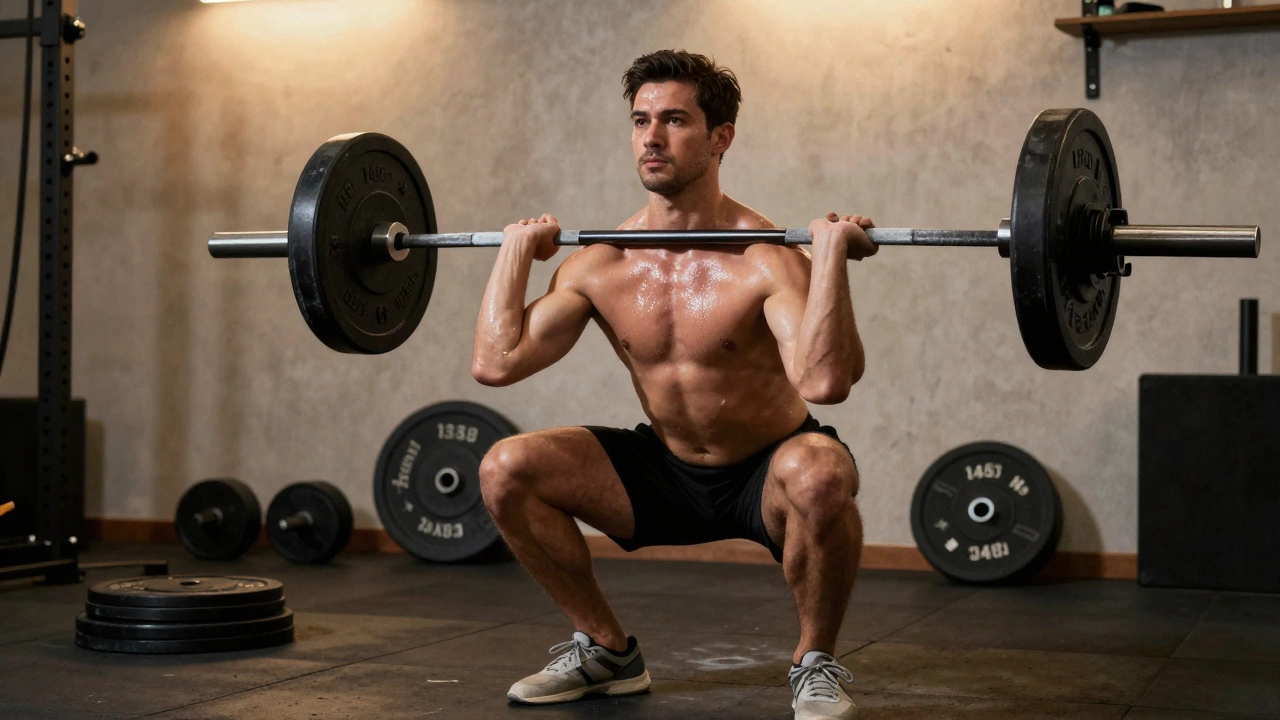
Take the squat. When you load a barbell on your back and lower yourself, you’re not just working quads. You’re engaging glutes, hamstrings, core, lower back, lats, and even your grip. That kind of full-body demand signals your body to release growth hormones, strengthen tendons, and improve motor unit recruitment. No machine can replicate that.
And here’s what most people miss: you don’t need to do 10 different leg exercises. One well-executed squat, done 2-3 times a week with progressive overload, will outperform five isolation exercises done inconsistently.
Frequency beats volume
Many think more sets = more strength. Not true. What matters is how often you practice the movement with good form and increasing load. Strength is a skill. And like any skill, you get better by repeating it.
Research from the University of Queensland found that training each major movement 2-3 times per week led to 30% greater strength gains over 12 weeks compared to training once a week - even when total weekly volume was the same. That means doing 3 sets of 5 squats three times a week is better than doing 9 sets of 5 once a week.
Why? Because your nervous system learns the pattern faster. Your tendons adapt. Your brain gets better at firing the right muscles at the right time. That’s the secret behind why powerlifters squat twice a week, not once. They’re not trying to exhaust themselves. They’re trying to perfect the movement under load.
Start with this simple structure:
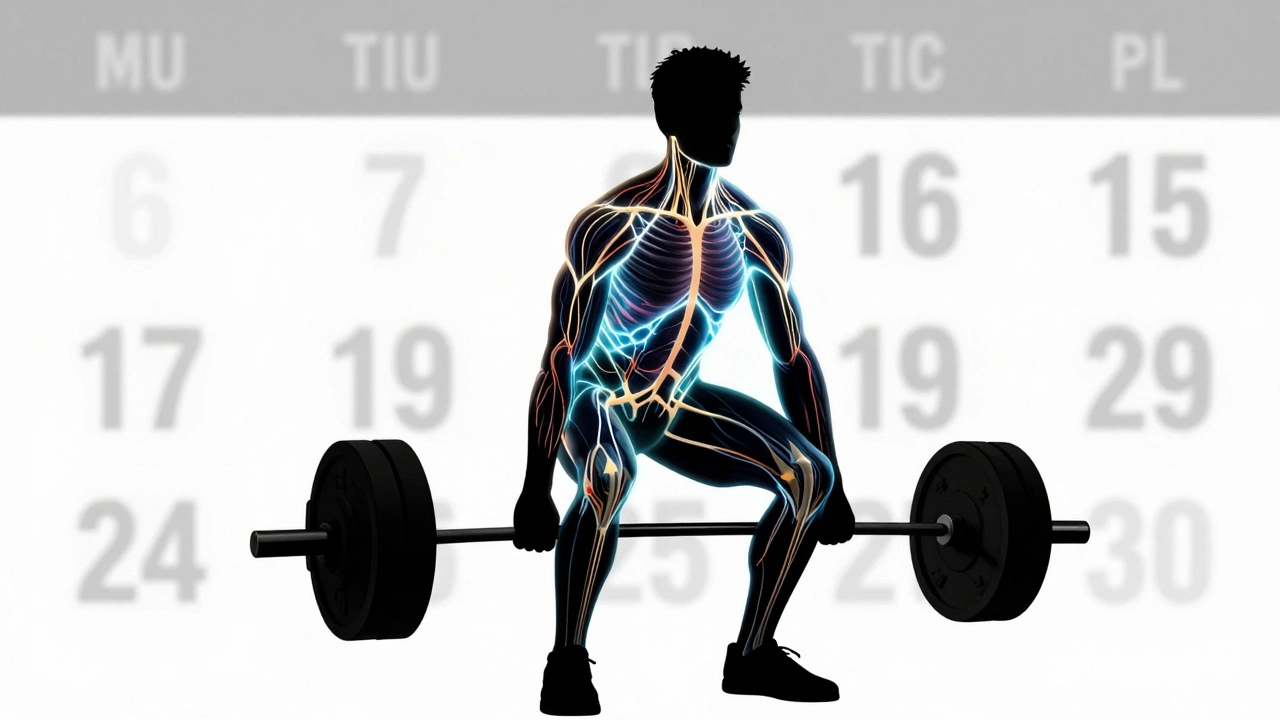
- Monday: Squat + Bench Press
- Wednesday: Deadlift + Overhead Press
- Friday: Squat + Deadlift
That’s three sessions a week. Each session hits two major lifts. You’re practicing strength movements often enough to build momentum - without overtraining.
Recovery isn’t optional - it’s the engine
People think strength comes from lifting. It doesn’t. It comes from what happens after you stop lifting. Your muscles don’t grow in the gym. They grow when you sleep, eat, and rest.
Strength gains require protein synthesis, hormonal balance, and nervous system recovery. If you’re sleeping less than 7 hours a night, you’re sabotaging your progress. Studies show that sleep-deprived lifters gain 40% less muscle mass and 50% less strength over time compared to those who sleep well.
And protein? You need at least 1.6 grams per kilogram of body weight. For a 75kg person, that’s 120 grams a day. Spread across 3-4 meals. No need for shakes or supplements - real food works fine. Eggs, chicken, fish, tofu, Greek yogurt - they all do the job.
Also, stop doing cardio every day. Light walking is fine. But if you’re running 5K after lifting, you’re draining the energy your body needs to rebuild muscle. Strength training is a high-stress activity. It needs recovery space.
Progressive overload isn’t just weight - it’s control
You don’t have to add weight every week. Sometimes, you can get stronger by doing the same weight with better form. That’s still overload.
For example: if you bench 95 pounds for 3 sets of 5, but you’re bouncing it off your chest, you’re not getting stronger. But if you lower the bar slowly for 3 seconds, pause it on your chest, then press it up with control - you’re building more strength. That’s time under tension. That’s neuromuscular efficiency.
Track more than just the number on the bar. Track:
- Reps per set
- Rest time between sets
- Bar speed
- Form quality
When you can do the same weight with slower eccentrics, tighter core, and less wobble - you’re stronger. That’s progress.
What doesn’t work - and why
Let’s cut through the noise:
- Bodybuilding splits (chest day, arm day): Great for size, slow for strength. You’re not practicing the movement often enough.
- High-rep sets (15-20 reps): Builds endurance, not strength. You’re not taxing the nervous system enough.
- Machine isolation: Machines guide your movement. Your body doesn’t learn to stabilize. No transfer to real strength.
- Supersets and circuits: Great for fat loss, terrible for strength. You’re sacrificing load and recovery.
These aren’t bad. They just don’t build strength fast. If your goal is to get stronger in 3 months - not just look bigger - stick to the big lifts, low reps, and consistent progression.
Real-world example: 90 days to a 2x bodyweight squat
Let’s say you start at 135 pounds for 3 sets of 5. Here’s what a smart 90-day plan looks like:
- Weeks 1-4: 135 → 155 lbs (add 5 lbs per week)
- Weeks 5-8: 155 → 175 lbs (add 5 lbs every other session)
- Weeks 9-12: 175 → 195 lbs (add 5 lbs weekly, deload every 4th week)
That’s 60 pounds of progress in 12 weeks. That’s a 44% increase. And it’s not magic. It’s consistency. You didn’t do 50 exercises. You didn’t take 20 supplements. You just showed up, lifted a little more, and slept well.
People who do this for 6 months end up squatting 225-275 pounds. Not because they’re genetically gifted. Because they followed the simplest rule: increase the load, slowly, consistently.
Can I build strength without weights?
Yes - but only up to a point. Bodyweight exercises like push-ups, pull-ups, and pistol squats can build decent strength, especially for beginners. But once you can do 15+ reps easily, you need to add resistance. That’s when you start using dumbbells, barbells, or resistance bands. Without progressive overload, your strength plateaus. Real strength gains require external load.
How long until I see real strength gains?
You’ll notice improvements in 2-4 weeks. Your lifts will feel easier, you’ll have better control, and your body will feel more powerful. Real, measurable strength increases - like adding 20+ pounds to your squat - usually show up between 6 and 12 weeks. Consistency beats speed. If you train 3 times a week with focus, you’ll outperform someone training 5 times a week with no plan.
Do I need a coach or gym membership?
No. You don’t need a coach to get strong - but you do need structure. Use free online programs like Starting Strength or StrongLifts 5x5. Record your lifts. Stick to the plan. Film your form to check for errors. Many people get stronger at home with just a barbell and a squat rack. Gyms help, but they’re not the key. Discipline is.
Is it safe to lift heavy every week?
Lifting heavy every week is fine - if you manage volume and recovery. Don’t go for max lifts every session. Instead, use 80-85% of your 1-rep max for most sets. That’s heavy enough to build strength, but light enough to recover. Add a deload week every 4-6 weeks. Reduce weight by 40-50% and just move the bar. Your joints and nervous system will thank you.
What if I’m over 40 or have joint pain?
You can still build strength - and you should. Strength training is one of the best ways to protect your joints as you age. Start with lighter loads and focus on control. Use dumbbells or machines if barbells hurt your wrists or back. The goal isn’t to lift like a 20-year-old - it’s to get stronger than you were last year. Even 10% more strength improves balance, reduces injury risk, and helps you stay independent longer.
Final takeaway
The fastest way to build strength isn’t a secret. It’s not a supplement. It’s not a viral TikTok trend. It’s simple: pick 3-4 compound lifts, do them 2-3 times a week, and add weight every session. Sleep. Eat enough protein. Rest. Repeat.
That’s it. No fluff. No gimmicks. Just science, consistency, and patience. You don’t need to be strong tomorrow. You just need to be stronger next week. And the week after that. And the week after that.