What Equipment Do You Have in a Gym? A Complete Guide to Machines, Free Weights, and Accessories
Gym Equipment Explorer & Zone Guide
Select a Gym Zone
Click on a zone to see the specific equipment available and its primary purpose.
Zone Overview
Walk into any commercial gym, and you are immediately hit with a wall of metal, rubber, and plastic. It can look like a junkyard for athletes if you do not know what you are looking at. But every piece of that gear serves a specific purpose. Some machines isolate a single muscle fiber, while others demand your whole body to work in sync. Understanding the layout helps you stop wandering around confused and start training with intent.
The question "what equipment do you have in a gym?" is broader than it sounds. The answer depends on whether you are visiting a big-box chain, a boutique studio, or setting up a home corner. However, most standard gyms follow a predictable blueprint. They divide their floor into zones: cardiovascular endurance, resistance training (both free weights and machines), functional movement areas, and recovery spaces. Knowing these zones allows you to build a routine that hits every system in your body efficiently.
Cardiovascular Training Zone
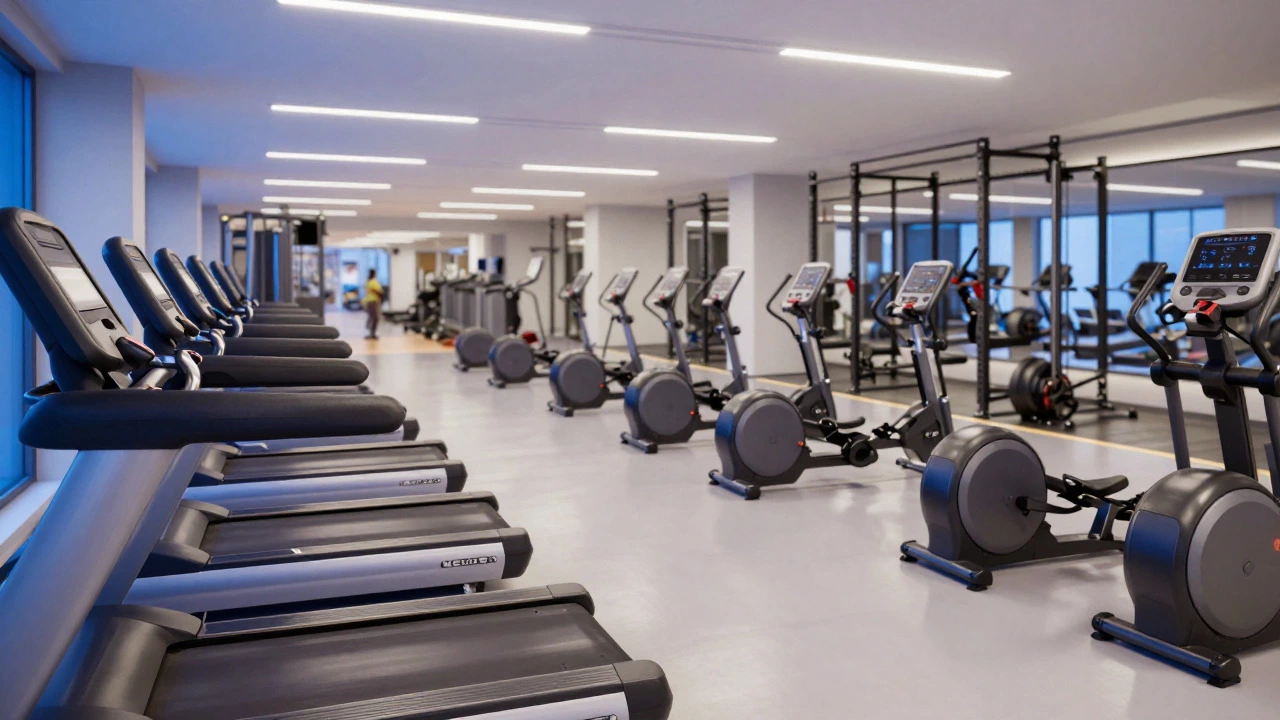
The cardio section is usually the first thing you see because it takes up the most square footage. This area focuses on raising your heart rate and burning calories through sustained movement. Treadmills are motorized running belts that simulate outdoor walking or running. They dominate this space because they are low-impact compared to pavement but still provide high-intensity options via incline settings. Most modern treadmills feature shock absorption to protect your knees and hips from repetitive impact forces.
Next to the treadmills, you will find Stationary Bikes, which include spin bikes and upright cycles. These are essential for low-impact cardiovascular conditioning. Spin bikes mimic road cycling with heavy flywheels for resistance, making them ideal for interval training classes. Upright bikes offer a more casual ride, often used for warm-ups or active recovery days when joint stress needs to be minimized.
Other staples in this zone include:
- Elliptical Trainers: These machines simulate running without the foot-strike impact. They engage both the upper and lower body simultaneously, making them efficient for full-body calorie burn.
- Rower Machines: Often called ergometers, these provide a total-body workout engaging legs, core, back, and arms. They are excellent for building anaerobic capacity.
- Air Bikes: Known for high-intensity interval training (HIIT), these use air resistance that increases with pedal speed, providing immediate feedback on effort levels.
Free Weight Area
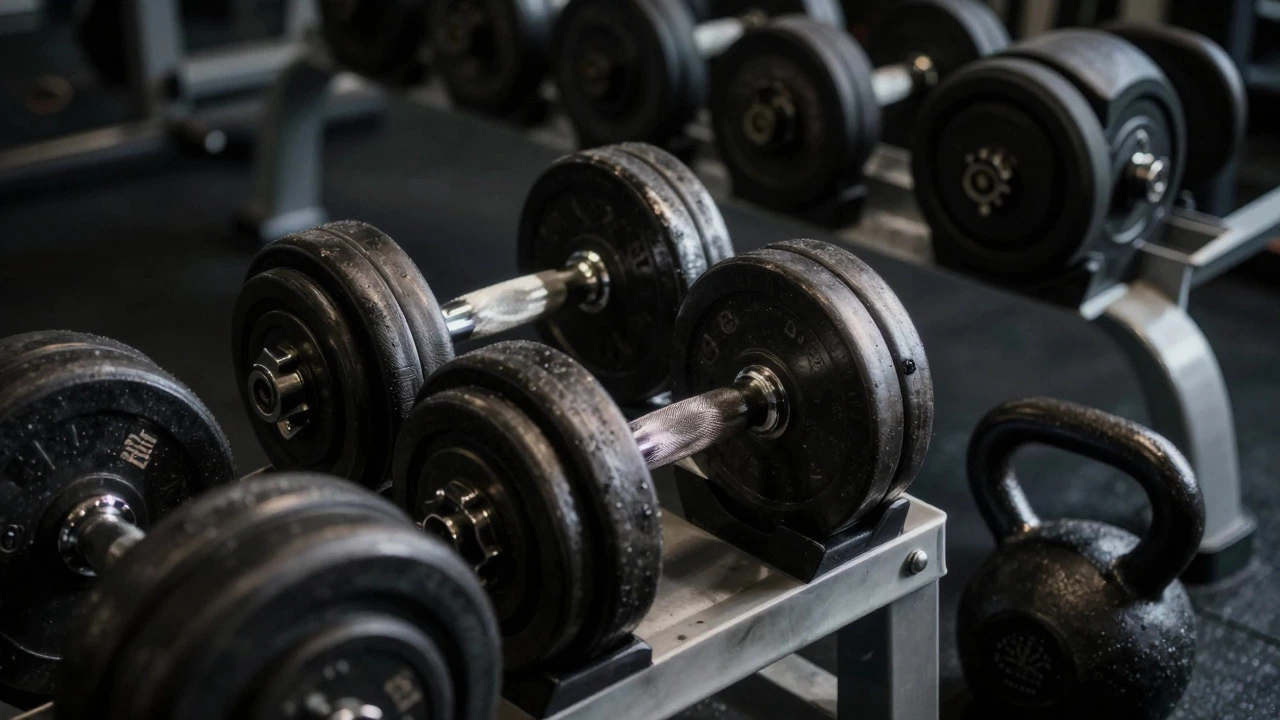
If cardio is about endurance, the free weight area is about strength and stability. This section requires more coordination because there are no fixed paths of motion guiding your limbs. Dumbbells are handheld weights with a handle and two weighted ends. They come in pairs ranging from light (5 lbs) to very heavy (100+ lbs). Dumbbells allow for unilateral training, meaning you can work one arm or leg at a time to correct muscular imbalances.
Barbells are long metal bars loaded with weight plates on each end. They are the backbone of compound lifts like squats, deadlifts, and bench presses. Olympic barbells typically weigh 45 pounds and are designed for dynamic movements where the bar might bounce off the floor or rack. Standard barbells are lighter and used for simpler exercises like bicep curls.
You will also find Kettlebells, which are cast iron weights shaped like cannonballs with handles. Their offset center of mass makes them unique for swinging motions and carries, engaging the posterior chain (glutes, hamstrings, and lower back) effectively. Kettlebell workouts blend strength and cardio, making them popular in functional fitness programs.
Supporting equipment in this zone includes squat racks, power cages, and benches. Squat racks provide safety bars to catch the weight if you fail a lift, while power cages offer adjustable pull-up bars and dip stations. Benches come in flat, incline, and adjustable varieties to change the angle of resistance for chest and shoulder exercises.
Weight Machines Section
Machines are often misunderstood as "cheating" tools, but they serve a critical role in hypertrophy (muscle growth) and rehabilitation. Resistance Machines are devices that guide your movement along a fixed path using pulleys, levers, or cams. Because the machine stabilizes the weight, you can focus entirely on contracting the target muscle without worrying about balance. This isolation is crucial for targeting weak points or recovering from injury.
Common machines include:
- Leg Press: Allows you to move heavy loads for your quadriceps and glutes without compressing your spine, unlike back squats.
- Cable Crossover: Uses pulley systems to provide constant tension throughout the range of motion. It is versatile for chest flies, tricep pushdowns, and face pulls.
- Lat Pulldown: Targets the latissimus dorsi muscles in the back, mimicking the pulling motion of pull-ups but with adjustable resistance.
- Seated Row: Focuses on the mid-back and rhomboids, helping to improve posture by strengthening the muscles between the shoulder blades.
Selective eccentric machines allow you to set different weights for the lifting and lowering phases of an exercise. This advanced feature enables greater overload during the eccentric phase, which is linked to increased muscle damage and subsequent growth.
Functional Training Zone
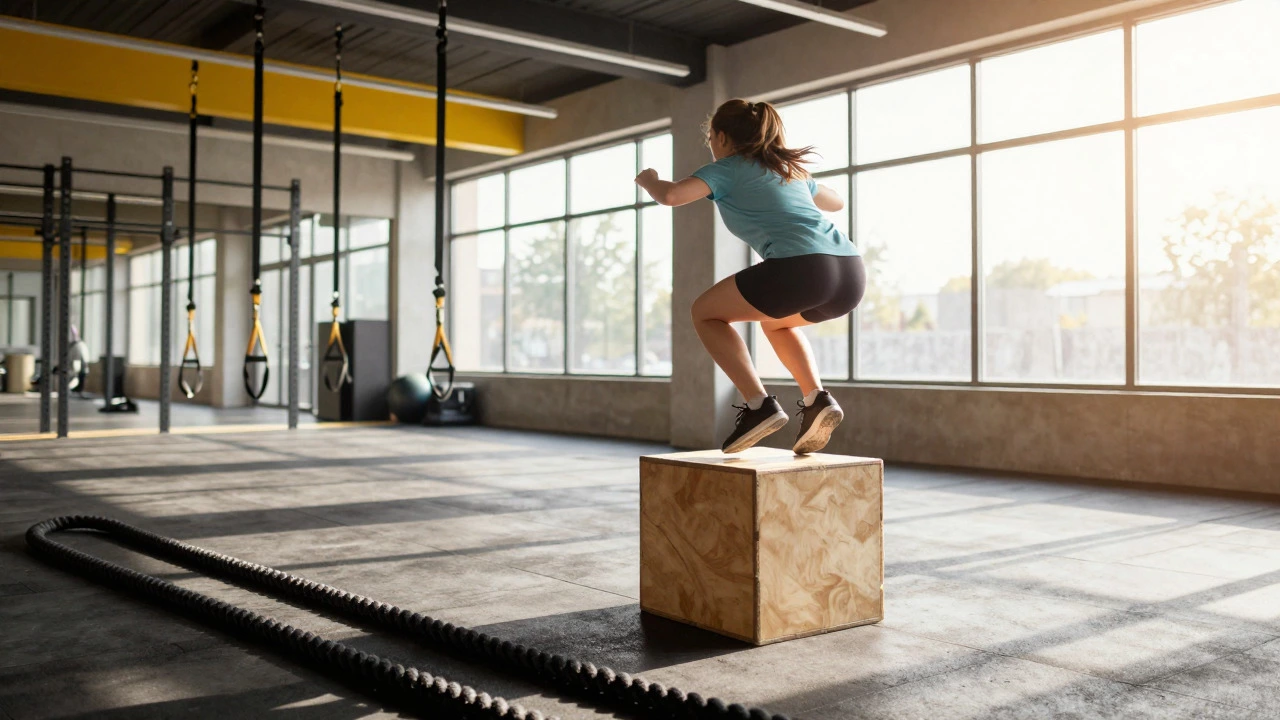
This area has grown significantly in popularity over the last decade. It moves away from isolated muscle work toward movements that translate to real-life activities. Plyometric Boxes are sturdy platforms used for jump training. Box jumps develop explosive power in the legs and improve coordination. Heights vary from 12 inches to 48 inches, allowing users to progress gradually.
You will also find Suspension Trainers, such as TRX straps. These use your body weight and gravity to create resistance. By adjusting the angle of your body, you can make exercises easier or harder. They are excellent for core stability and mobility work.
Other functional tools include:
- Medicine Balls: Weighted balls used for throwing, slams, and rotational exercises to build core power.
- Battle Ropes: Thick ropes anchored at one end. Waving them creates intense cardiovascular and upper-body conditioning.
- Slingshots and Bands: Resistance bands provide variable tension that increases as they stretch, useful for warming up joints or adding resistance to bodyweight exercises.
Recovery and Flexibility Tools
Training breaks down muscle; recovery builds it back stronger. Modern gyms increasingly dedicate space to post-workout care. Foam Rollers are cylindrical tubes used for self-myofascial release. Rolling over tight muscles helps break up adhesions in the fascia, improving blood flow and reducing soreness. High-density rollers are firmer and better for deep tissue work, while softer ones suit beginners.
Additional recovery equipment includes:
- Massage Guns: Percussive therapy devices that deliver rapid bursts of pressure into muscle tissue to reduce inflammation and accelerate recovery.
- Stretching Mats: Thick yoga mats dedicated to static stretching and mobility drills after lifting.
- Infrared Saunas: Some premium gyms offer these for heat therapy, which can help relax muscles and promote detoxification through sweating.
Comparison of Major Equipment Types
| Equipment Type | Primary Benefit | Best For | Skill Level Required |
|---|---|---|---|
| Free Weights | Strength & Stability | Compound Movements | Intermediate to Advanced |
| Machines | Muscle Isolation | Hypertrophy & Rehab | Beginner Friendly |
| Cardio Machines | Endurance & Calorie Burn | Heart Health | All Levels |
| Functional Tools | Power & Coordination | Athletic Performance | Varies by Tool |
Choosing the Right Equipment for Your Goals
Your goals dictate which equipment you should prioritize. If you want to lose weight, combine cardio machines with high-repetition circuit training using dumbbells and kettlebells. This approach keeps your heart rate elevated while preserving muscle mass. For pure strength gains, focus on the free weight area. Master the form on squats, deadlifts, and presses before adding heavy plates. Machines can supplement this routine by targeting lagging muscles like calves or rear delts.
Beginners often feel intimidated by free weights. Starting with machines is perfectly acceptable. They teach proper movement patterns safely. Once you understand how your body feels under load, transition to dumbbells and barbells to challenge your balance and core. Always warm up with dynamic stretches or light cardio before touching heavy equipment. Cool down with foam rolling and static stretching to maintain flexibility.
Remember that consistency matters more than the type of equipment. Whether you use a cable crossover or a resistance band, progressive overload-gradually increasing the difficulty-is the key to results. Listen to your body, respect the limits of the machinery, and enjoy the process of getting stronger.
Is it better to use machines or free weights?
It depends on your experience level and goals. Machines are safer for beginners and great for isolating specific muscles. Free weights build functional strength and require more stabilization, making them superior for overall athleticism. Most effective routines combine both.
What equipment do I need for a home gym?
Start with adjustable dumbbells, a sturdy bench, and resistance bands. Add a pull-up bar and a set of kettlebells as you progress. This covers most major muscle groups without taking up too much space.
Are ellipticals better than treadmills for weight loss?
Treadmills generally burn more calories per minute due to higher impact and effort. Ellipticals are better if you have joint issues or prefer a smoother motion. Consistency in either activity yields weight loss results.
How often should I use foam rollers?
You can foam roll daily, especially after workouts. Spend 1-2 minutes per muscle group, focusing on tight spots. Avoid rolling directly over bones or joints.
What is the difference between a spin bike and an upright bike?
Spin bikes mimic road cycling with a forward-leaning posture and heavier flywheel for intense intervals. Upright bikes have a vertical seat position, offering a more relaxed ride suitable for steady-state cardio.
Do I need a spotter for free weight exercises?
For heavy compound lifts like bench press or squats, yes. A spotter ensures safety if you fail a rep. For lighter exercises or those done in power cages with safety bars, a spotter may not be necessary.
Can I build muscle with just bodyweight exercises?
Yes, especially as a beginner. Bodyweight exercises like push-ups, pull-ups, and squats are effective. As you get stronger, you may need to add external resistance like bands or weights to continue progressing.
What is the best equipment for abs?
There is no single "best" tool. Cable crunches, ab wheels, and suspension trainers all work well. Compound lifts like squats and overhead presses also heavily engage the core for stability.
Should I wear gloves when lifting weights?
Gloves can prevent calluses and improve grip, but they may reduce tactile feedback from the bar. Many lifters prefer chalk for grip enhancement instead. It comes down to personal preference and comfort.
How do I choose the right weight for dumbbells?
Choose a weight that allows you to complete your target reps with good form, leaving 1-2 reps in reserve. If you struggle with the last few reps, the weight is appropriate. If it feels too easy, increase the load.