What Happens After 2 Weeks of Strength Training? The Real Physiological Changes

Strength Training Adaptation Simulator
Adjust the slider to see how your body adapts from Day 1 to Day 14 of a new strength training program.
Neural Efficiency
Brain is hesitant. Only recruiting basic muscle fibers.
Strength Output
Low output due to poor technique and neural inefficiency.
Muscle Soreness (DOMS)
You just started. No soreness yet.
You’ve just finished fourteen days of lifting weights. You’re sore, you might feel a bit stronger, but if you look in the mirror, nothing has really changed. It’s easy to feel like you wasted your time. But here is the truth: your body hasn’t been idle. In fact, some of the most critical adaptations for long-term strength happen in this first two-week window. They just don’t show up on the scale or in your bicep size yet.
Understanding what is actually happening inside your muscles and nervous system during these first two weeks can save you from quitting prematurely. This phase isn't about building massive bulk; it's about laying the neurological groundwork that makes future gains possible. Let’s break down exactly what changes occur when you start strength training, why you feel the way you do, and how to navigate this crucial initial period without burning out.
The Neural Awakening: Why You Feel Stronger Before You Look Bigger
If you step onto a bench press or squat rack after two weeks and lift slightly more weight than day one, it’s not because your muscles have grown significantly. Muscle hypertrophy (growth) takes time-usually at least four to six weeks to become visible. Instead, what you are experiencing is neuromuscular adaptation. This is your central nervous system (CNS) learning how to talk to your muscles more efficiently.
Think of your brain as the conductor and your muscle fibers as the orchestra. When you first start training, the conductor is hesitant. He doesn’t know which musicians to cue, when to bring them in, or how loud they should play. During the first two weeks, your brain learns to recruit more motor units-the combination of a nerve cell and the muscle fibers it controls. Previously, maybe only 50% of your available muscle fibers fired during a lift. Now, thanks to improved neural drive, you might be recruiting 60% or 70%. That extra recruitment translates directly to strength, even though the physical size of the muscle remains largely unchanged.
This process also involves improved synchronization. Your muscles learn to fire together rather than in disjointed bursts. This coordination reduces energy leakage and allows you to move weight with better technique. If you felt clumsy or awkward on week one, you likely feel smoother by week two. This is pure neurological efficiency, not structural change.
Dealing with DOMS: The Soreness Curve
Let’s address the elephant in the room: the pain. Most beginners experience Delayed Onset Muscle Soreness (DOMS) heavily during the first seven to ten days. By day fourteen, this soreness usually peaks and begins to subside, provided you haven’t increased the volume too aggressively.
DOMS is caused by microscopic damage to muscle fibers and connective tissue, along with an inflammatory response. It is a normal part of the remodeling process. However, there is a common misconception that extreme soreness equals a good workout. It doesn’t. In fact, if you are still cripplingly sore after two weeks, you might be overtraining or not recovering properly.
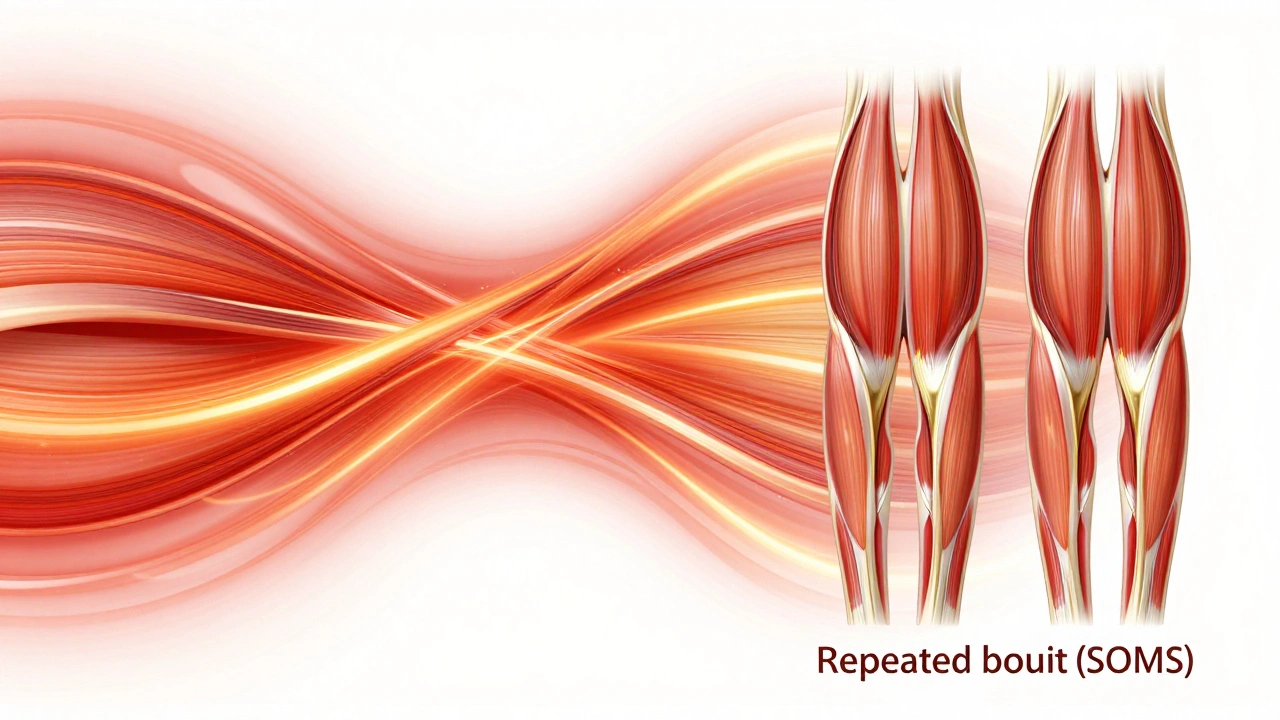
By the end of the second week, your body starts to exhibit the "repeated bout effect." This means your muscles have adapted to the specific stressors you placed on them. The same workout that left you unable to walk down stairs on day three will leave you mildly tender or completely fine by day fourteen. This reduction in soreness is a positive sign. It indicates that your tissues are becoming resilient and that your recovery mechanisms are kicking in.
Metabolic Shifts and Energy Systems
While your muscles aren’t visibly growing yet, your cellular machinery is undergoing significant upgrades. Your mitochondria-the powerhouses of your cells-are starting to adapt to the new demands. Although endurance training is typically associated with mitochondrial biogenesis, resistance training also stimulates improvements in metabolic health.
Your body becomes more efficient at utilizing glycogen (stored carbohydrates) for fuel during high-intensity efforts. You may notice that you don’t gas out as quickly during sets. Additionally, your insulin sensitivity often improves within this short timeframe. This means your body gets better at shuttling nutrients into muscle cells rather than storing them as fat. For anyone concerned about body composition, this early metabolic shift is a silent but powerful benefit of consistent lifting.
| Aspect | Week 1 Status | Week 2 Status |
|---|---|---|
| Muscle Size | No visible change | No visible change (fluid retention may mask slight growth) |
| Strength Output | Low due to poor technique/neural inefficiency | Slight increase (2-5%) due to neural adaptation |
| Soreness (DOMS) | High, often peaking at 48-72 hours | Moderate to Low (Repeated Bout Effect kicks in) |
| Mental Confidence | Anxiety about form and weights | Increased familiarity with movement patterns |
| Recovery Time | Slow, prolonged fatigue | Faster return to baseline energy levels |
The Psychological Hurdle: Consistency Over Intensity
Physical changes are important, but the mental game is where most people fail in the first month. The novelty of joining a gym or starting a home program wears off quickly. By day ten, the excitement fades, and the discipline required to show up takes over. This is known as the "habit formation" phase.
Research suggests it takes an average of 66 days to form a new habit, but the first two weeks are the filter. If you can survive the initial discomfort and lack of visible results, you are statistically more likely to stick with the program long-term. You begin to derive satisfaction from the act of completing the workout itself, rather than waiting for external validation like a smaller waistline.
You also start to understand your own limits. You learn which exercises feel natural and which ones challenge your mobility. This self-awareness is invaluable. It prevents injury later on because you stop pushing through bad form and start respecting your body’s current capabilities.
Nutrition and Recovery: The Hidden Drivers
You cannot out-train a bad diet, especially in the beginning. During these first two weeks, your nutritional needs are shifting. While you don’t need a massive calorie surplus to build strength initially, protein intake becomes critical. Aim for approximately 1.6 to 2.2 grams of protein per kilogram of body weight. This provides the amino acids necessary for repairing the micro-tears created during lifting.
Hydration is equally vital. Muscle tissue is largely water, and dehydration can reduce strength output by up to 10%. Many beginners underestimate how much fluid they lose during intense sessions. Drinking enough water helps maintain joint lubrication and nutrient transport.
Sleep is the final piece of the puzzle. Growth hormone, which plays a key role in tissue repair and muscle development, is primarily released during deep sleep. If you are sleeping less than seven hours a night, you are actively hindering the adaptations your body is trying to make. Prioritize rest as much as you prioritize the workout itself.

Common Mistakes to Avoid in the First Two Weeks
Even with the best intentions, beginners often derail their progress early on. Here are the most frequent pitfalls:
- Ego Lifting: Trying to lift weights that are too heavy too soon. This compromises form and increases injury risk. Focus on mastering the movement pattern with lighter loads.
- Inconsistency: Going hard for three days, then taking five days off because you’re sore. Consistency beats intensity. Three moderate workouts a week are better than one brutal session followed by a week of rest.
- Ignoring Warm-ups: Skipping dynamic stretching or activation exercises. Cold muscles are prone to strains. Spend 5-10 minutes warming up before touching heavy weights.
- Changing Programs Too Often: Switching routines every few days. Give your body time to adapt to a stimulus. Stick to a simple full-body or upper/lower split for at least eight weeks.
What to Expect Next: Weeks 3 to 4
As you cross the two-week threshold, you enter a new phase. The soreness will continue to decrease, allowing you to train with higher frequency. You may start to see subtle changes in posture and muscle tone, particularly in areas that were previously weak. The strength gains from neural adaptation will plateau slightly, making way for the onset of actual muscle hypertrophy.
This is the point where progressive overload becomes essential. You must gradually increase the weight, reps, or sets to continue challenging your body. Without progression, your body has no reason to adapt further. Keep a logbook. Track your lifts. Seeing the numbers go up, even by small increments, provides the tangible feedback that keeps motivation high when visual changes are still slow to appear.
Will I lose weight in the first 2 weeks of strength training?
It varies. Some people experience initial water weight loss due to reduced inflammation or dietary changes. Others might gain a pound or two of water weight as muscles store more glycogen and retain fluid for repair. The scale is not a reliable indicator of success in the first two weeks. Focus on strength metrics and how your clothes fit instead.
Is it normal to be sore after 2 weeks?
Mild soreness is normal, but severe pain is not. If you are still extremely sore after two weeks, you may be overtraining or not eating enough. Your body should be adapting to the stress, meaning soreness should decrease over time. If pain persists or feels sharp, consult a medical professional.
How many times a week should I lift?
For beginners, 3 to 4 days a week is ideal. This allows for sufficient stimulation while providing ample time for recovery. Full-body workouts on non-consecutive days (e.g., Monday, Wednesday, Friday) are a great starting point.
Can I build muscle in just 2 weeks?
You can initiate the process of muscle growth, but visible hypertrophy takes longer. Most of the strength gains in the first two weeks come from neural adaptations, not muscle size. Visible changes typically start appearing after 4 to 8 weeks of consistent training.
Should I cardio if I'm starting strength training?
Yes, but keep it moderate. Light cardio can aid recovery and heart health. However, avoid excessive high-intensity cardio immediately after lifting, as it may interfere with muscle recovery and strength gains in the early stages.