What Is a Good Distance to Walk Every Day for Health and Strength?

Most people think walking is just a way to get from point A to point B. But if you’re serious about your health - especially strength - walking isn’t just good, it’s essential. You don’t need fancy gear, a gym membership, or a personal trainer. Just your shoes, a clear path, and the right distance. So what’s a good distance to walk every day? The answer isn’t one-size-fits-all, but there’s a clear sweet spot backed by science and real-world results.
Why Walking Matters More Than You Think
Walking might seem too simple to build strength, but it’s one of the most underrated tools for muscle endurance, joint stability, and even core engagement. Every step activates your glutes, quads, hamstrings, calves, and the deep stabilizers in your hips and lower back. Over time, that adds up. A 2023 study from the University of Bristol found that adults who walked 7,000 to 9,000 steps daily for six months showed measurable improvements in leg strength and balance - even without lifting weights.
It’s not just about muscle. Walking improves circulation, which helps deliver oxygen and nutrients to your tissues. That means faster recovery, less stiffness, and better movement quality when you do lift or train. People who walk regularly also report fewer lower back issues, better posture, and more energy throughout the day.
The Magic Number: 7,000 to 9,000 Steps
So how far is that? On average, 7,000 steps equals about 3 to 3.5 miles, and 9,000 steps is roughly 4 to 4.5 miles. That’s the range most experts agree on for noticeable health and strength gains. It’s not about hitting 10,000 steps just because it’s a round number - that target was invented by a Japanese pedometer company in the 1960s. What matters is consistency, not the number on the screen.
For someone new to movement, starting at 5,000 steps (about 2.5 miles) is fine. The goal isn’t to burn out on day one. Build up over two to four weeks. For someone already active, pushing toward 9,000 steps adds a strong endurance base that supports heavier lifting. Walk faster, walk uphill, carry a light backpack - these small tweaks turn walking into a strength-building activity.
How to Turn Walking Into Strength Training
Walking isn’t just cardio. You can make it work for strength too. Here’s how:
- Walk with purposeful posture. Stand tall, pull your shoulders back, engage your core. Imagine a string pulling your head toward the sky. This activates your entire posterior chain - the muscles you use to stand, bend, and lift.
- Use terrain. Find hills. Even small inclines in your neighborhood make a big difference. Walking uphill increases glute and quad activation by up to 40% compared to flat ground.
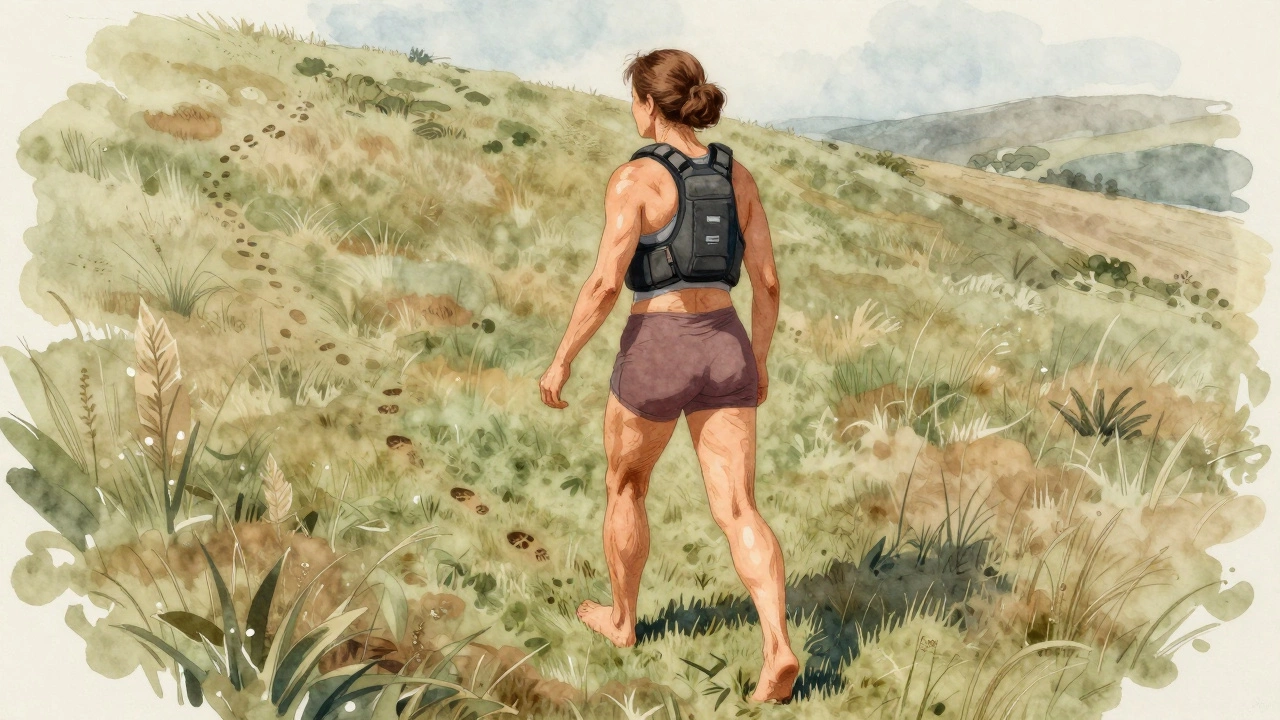
- Carry something. A 5- to 10-pound backpack or a weighted vest adds resistance. Don’t go heavy - just enough to feel a slight burn in your legs and core after 20 minutes.
- Slow down and control your steps. Try walking at a slower pace (about 2.5 mph) with exaggerated heel-to-toe rolls. This increases time under tension, which builds muscle endurance.
- Walk barefoot on grass. If you have safe, soft ground, try 10-15 minutes barefoot. It strengthens the small muscles in your feet and improves proprioception - your body’s sense of balance and position.
These aren’t fancy tricks. They’re simple adjustments that turn a casual stroll into a functional strength session.
What Happens If You Walk Too Little or Too Much?
Walking less than 5,000 steps a day is linked to higher risks of muscle loss, especially after age 40. A 2024 meta-analysis in the Journal of Aging and Physical Activity showed that adults walking under 4,000 steps daily lost up to 1.5% of leg muscle mass per year - even if they lifted weights occasionally. That’s because walking keeps your muscles engaged in daily movement, which signals your body to maintain them.
On the flip side, walking more than 12,000 steps daily without rest can lead to overuse injuries - especially if you have weak hips or flat feet. You don’t need to walk every single day. Three to five days a week with 7,000-9,000 steps, plus one or two rest days, gives your body time to recover and grow stronger.
Walking and Strength Training: A Perfect Pair
If you lift weights, walking isn’t a replacement - it’s a partner. Here’s why:
- Recovery booster. On rest days, a 45-minute walk increases blood flow to sore muscles without stressing them. It speeds up recovery better than stretching alone.
- Joint lubrication. Walking gently moves your knees, hips, and ankles, keeping them healthy for heavier lifts.
- Core stability. Your core works constantly while walking. That translates to better form in squats, deadlifts, and overhead presses.
- Cardio without burnout. Long cardio sessions can interfere with strength gains. Walking gives you heart health without draining your energy for the gym.
Try this simple weekly plan: three days of strength training (squats, deadlifts, push-ups, rows), plus two days of 7,500-step walks. Add one longer 10,000-step walk on the weekend. That’s it. No extra equipment. No gym time. Just steady progress.
Real People, Real Results
In Bristol, a local community group called WalkStrong started a 30-day challenge last year. Participants walked 7,500 steps daily and tracked strength changes. One member, a 58-year-old woman who hadn’t lifted anything heavier than a grocery bag in 15 years, increased her squat weight by 20 pounds and could stand up from a chair without using her hands by day 28. Another participant, a 32-year-old office worker, reduced his lower back pain so much he stopped taking painkillers.
These aren’t outliers. They’re proof that walking, done right, builds real strength - not just endurance.

How to Track Progress Without Getting Obsessed
You don’t need a smartwatch. A basic pedometer or even your phone’s health app works fine. But don’t fixate on the number. Instead, track how you feel:
- Can you climb stairs without getting winded?
- Do your legs feel stronger when you stand up from a chair?
- Can you carry heavier bags without your shoulders aching?
- Do you sleep better and wake up less stiff?
These are better indicators than step counts. Strength isn’t just about weight on a barbell. It’s about how easily you move through your day.
Start Small. Stay Consistent.
Don’t try to walk 4 miles on day one if you’re used to sitting most of the day. Start with 15 minutes after lunch. Add five minutes every few days. Make it part of your routine - walk while you talk on the phone, take the long way to the kitchen, park farther away. Small habits stack up.
Walking every day isn’t about being the fastest or the farthest. It’s about showing up. And over time, that consistent movement builds a body that’s stronger, more resilient, and better prepared for everything else you do - whether it’s lifting, playing with kids, or just getting through the day without pain.
Is 30 minutes of walking enough for strength?
Yes, if you walk with intention. A 30-minute walk at a brisk pace (about 3.5 mph) covers roughly 4,000-5,000 steps. To build strength, add inclines, carry light weight, or slow your pace to increase muscle engagement. It won’t replace heavy lifting, but it supports muscle endurance and joint health - especially when done daily.
Can walking build glutes and legs?
Absolutely. Walking uphill, stepping over curbs, or walking with a weighted vest activates your glutes and quads more than you’d think. A 2023 study showed that participants who walked on a 5% incline for 30 minutes five times a week increased glute strength by 18% in eight weeks - without any gym equipment.
Should I walk before or after lifting weights?
It depends on your goal. Walk before lifting to warm up your joints and activate your muscles - especially your core and hips. Walk after lifting to flush out lactic acid and improve recovery. Many people find the best results by doing a short walk (15-20 minutes) both before and after their strength sessions.
Is walking better than running for strength?
Walking is lower impact and better for long-term joint health. While running builds power, walking builds endurance and stability - two key components of functional strength. If you have knee pain, back issues, or are recovering from injury, walking is the safer, more sustainable choice. You can still build strength without pounding your joints.
Do I need special shoes to walk for strength?
Not necessarily, but good shoes help. Look for flexible soles with cushioning in the heel and arch support. Avoid overly cushioned “running” shoes - they can reduce your foot’s natural movement. A flat, lightweight shoe like a minimalist walking shoe or even a pair of clean tennis shoes works best. If you walk barefoot on grass or sand occasionally, it strengthens your feet and improves balance.
What to Do Next
Start tomorrow. Put on your shoes and walk for 15 minutes. Don’t worry about distance or speed. Just move. The next day, add five more minutes. In two weeks, you’ll be walking 30 minutes without thinking about it. In a month, you’ll notice your legs feel firmer, your posture straighter, your energy higher.
Strength isn’t always about lifting heavy. Sometimes, it’s about showing up - every day - with your feet on the ground and your body moving forward.