What Is the 3-3-3 Exercise? A Simple Routine for Strength and Balance
3-3-3 Workout Planner & Estimator
Choose one movement for each category to build your custom 3-3-3 routine.
Time Commitment:
The 3-3-3 method typically takes about 15-20 minutes depending on rest periods and intensity.
Equipment Needed:
None!
Just a comfortable surface like a yoga mat or carpet.
Your Custom 3-3-3 Plan
Routine Breakdown
Pro Tips
- • Focus on form over speed.
- • Breathe out during exertion.
- • Keep core braced throughout.
- • Consistency beats intensity.
Have you ever stared at a blank wall in your living room, wondering how to get a decent sweat on without buying expensive equipment or joining a gym that closes at 8 PM? You aren't alone. In a world where we spend most of our day sitting at desks or commuting, finding time for a structured workout feels like solving a complex puzzle. That’s exactly why simple, no-nonsense routines have taken over social media feeds and home gyms alike. One such method gaining serious traction is the 3-3-3 exercise, a minimalist approach to full-body conditioning. It doesn’t promise six-pack abs overnight, but it does offer a realistic path to building functional strength using nothing but your own body weight.
The Core Concept: Simplicity Over Complexity
The beauty of the 3-3-3 exercise lies in its name. It strips away the confusion of periodization, rep schemes, and rest timers. Instead, it asks you to commit to three specific movements, performed for three sets each, with three minutes of total work (or sometimes interpreted as three reps per set depending on the variation, though the circuit style is more common for general fitness). The goal isn't just to move; it's to move efficiently. This routine targets the major muscle groups-legs, core, and upper body-in a sequence that mimics natural human motion. Think of it less as a 'workout' and more as a daily maintenance check for your physical engine.
Why does this matter? Because consistency beats intensity every single time. Most people quit fitness programs not because they are too hard, but because they are too complicated. The 3-3-3 model removes the decision fatigue. You don't need to ask yourself what to do next. You know. You show up, you execute, you leave. For busy parents, remote workers, or anyone juggling a chaotic schedule, this predictability is a superpower.
The Three Pillars of the Routine
To understand the 3-3-3 exercise, you need to break down the three components. While variations exist, the most effective version focuses on compound movements. These are exercises that use multiple joints and muscle groups simultaneously, giving you the most bang for your buck. Here are the three staples that form the backbone of this routine:
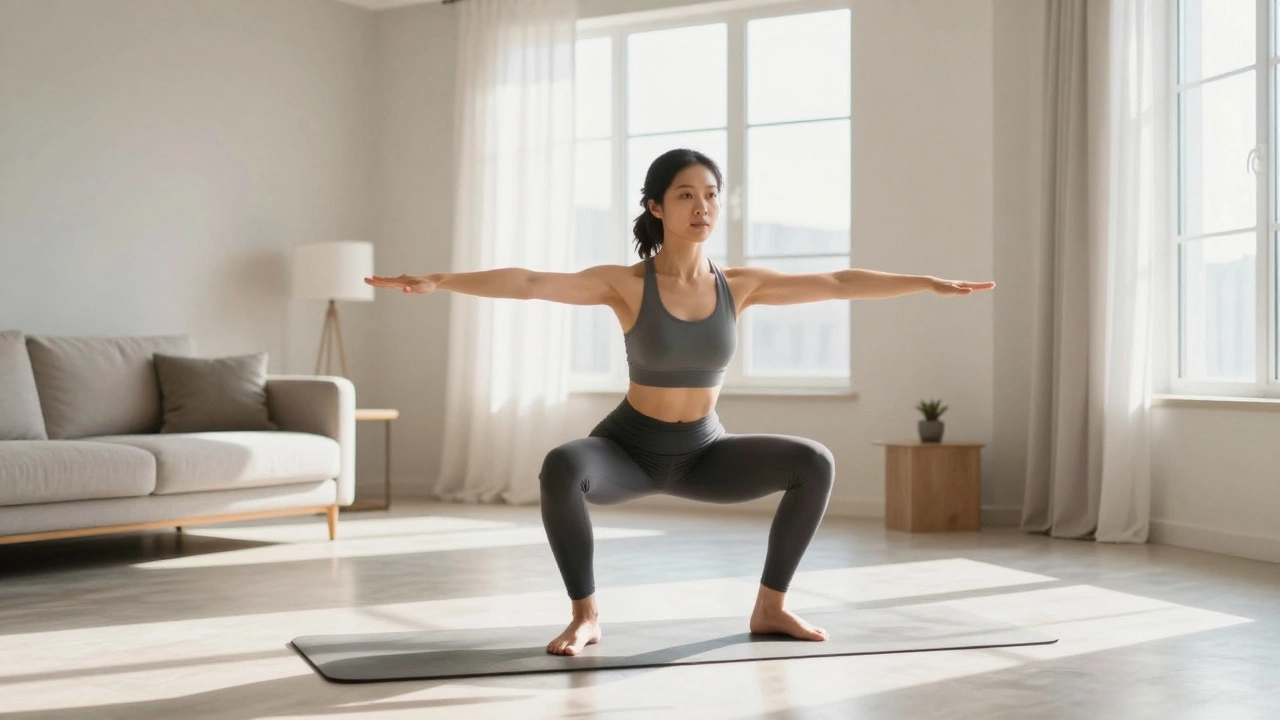
- Squats: The king of lower-body exercises. Squats engage your quadriceps, hamstrings, glutes, and even your core for stability. They mimic the action of sitting down and standing up, a fundamental movement we perform dozens of times a day. By strengthening these muscles, you protect your knees and hips from age-related wear and tear.
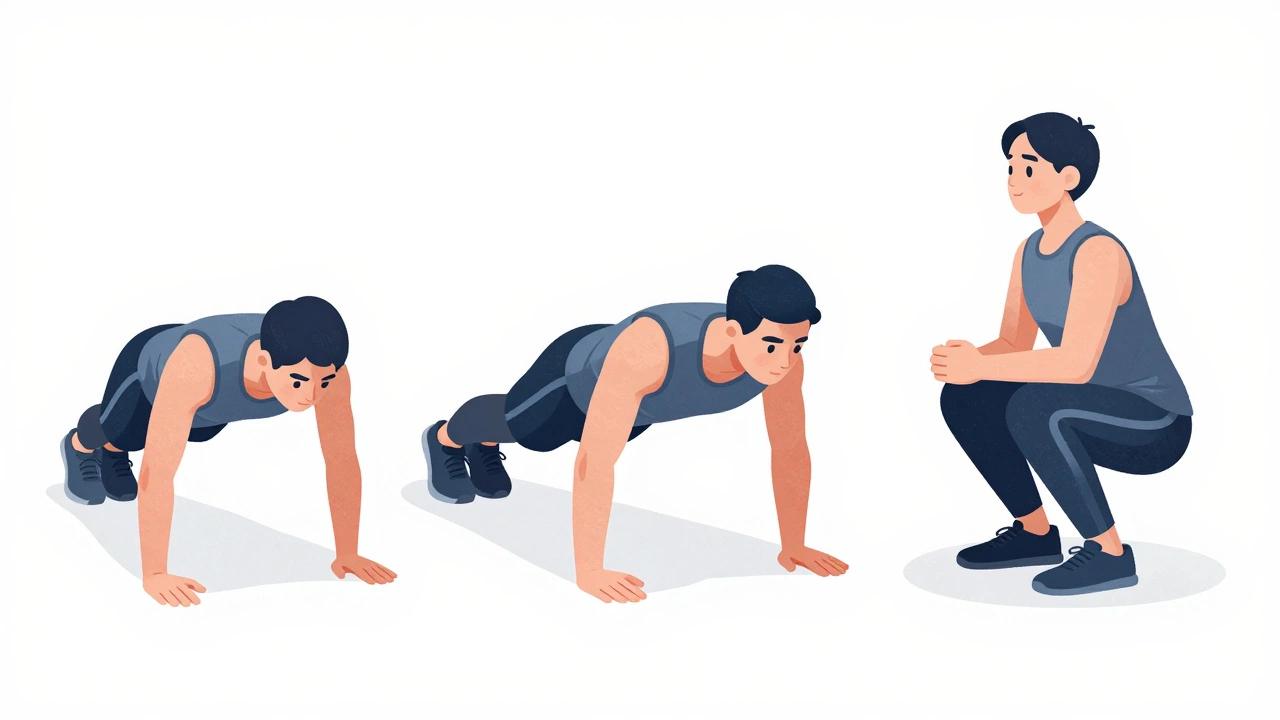
- Push-Ups: The ultimate upper-body builder. Push-ups target your chest, shoulders, and triceps, while also requiring significant core engagement to keep your body straight. Unlike bench presses, push-ups require balance and coordination, making them a true test of functional strength.
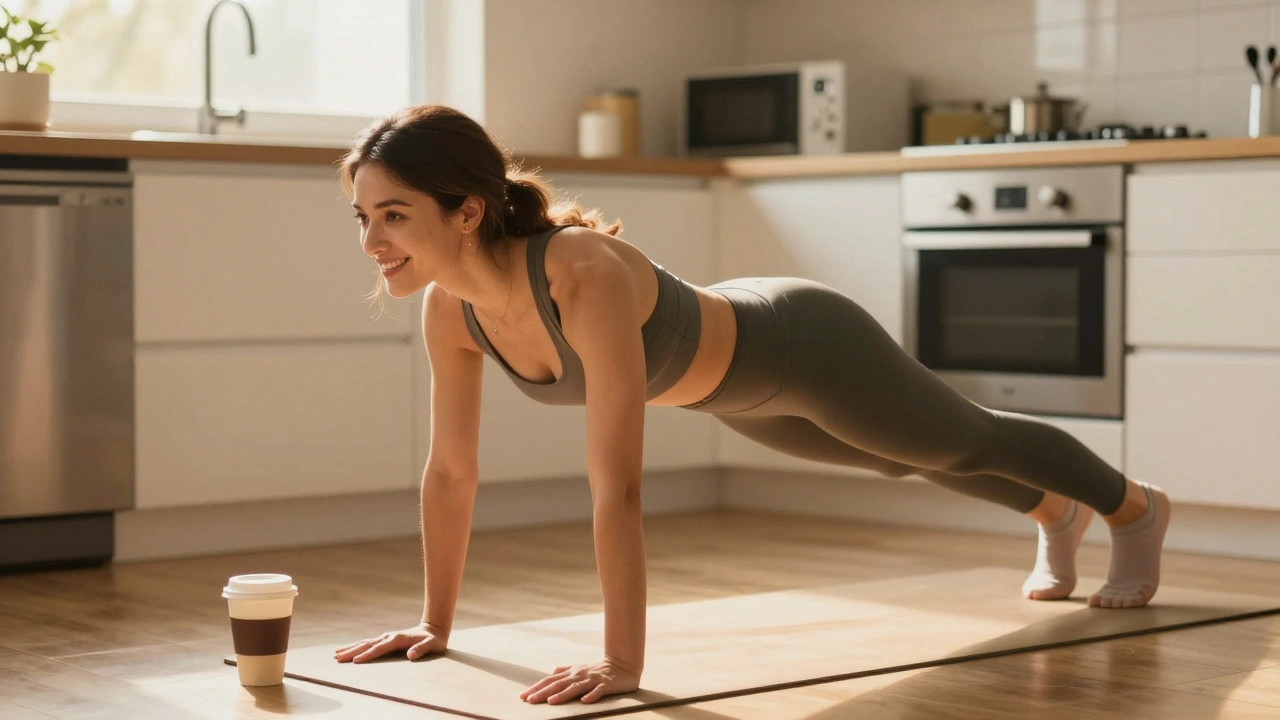
- Planks: The foundation of core stability. A plank isn't just about holding still; it's about creating tension across your entire midsection. This protects your lower back and improves your posture, which is crucial if you spend hours hunched over a laptop.
These three moves cover all bases. You have a pull-like movement (if you modify squats to include a hinge), a push, and a hold. Together, they create a balanced stimulus for your musculoskeletal system. If you want to spice things up, you can swap planks for mountain climbers or add lunges instead of standard squats, but the principle remains the same: three distinct actions.
How to Structure Your 3-3-3 Session
Now that you know the moves, how do you put them together? The structure is where the "3-3-3" logic comes into play. There are two primary ways to interpret this, and both are valid depending on your fitness level.
Method A: The Circuit Approach Perform one set of each exercise back-to-back with minimal rest. Then, repeat the cycle three times.
- Set 1: 10-15 Squats → 10-15 Push-Ups → 30-second Plank
- Rest for 60 seconds.
- Repeat Steps 1-2 two more times (Total: 3 rounds).
Method B: The Time-Based Approach Dedicate three minutes to each exercise, broken down into intervals. Or, simpler yet, perform three sets of each exercise with three minutes of total active time. However, the most popular interpretation for beginners is the Three Sets, Three Exercises model:
- Do 3 sets of Squats.
- Do 3 sets of Push-Ups.
- Do 3 sets of Planks.
- Rest 90 seconds between each exercise block.
Why Bodyweight Training Works
You might be thinking, "Can I really build muscle without weights?" The answer is yes, especially if you are starting out or returning to fitness after a break. Resistance training stimulates muscle growth by placing stress on muscle fibers. When you use your own body weight, gravity provides that resistance. As you get stronger, you don't need heavier dumbbells; you just need to make the movement harder. Do push-ups on your toes instead of your knees. Slow down the squat to take five seconds to descend. Add a pause at the bottom of the movement. This concept, known as progressive overload, is the key to long-term progress, and it applies perfectly to the 3-3-3 exercise.
Moreover, bodyweight training improves proprioception-the awareness of your body in space. Machines guide your movement; free weights and bodyweight exercises require you to stabilize yourself. This translates to better balance and coordination in everyday life, reducing the risk of falls and injuries.
Common Mistakes to Avoid
Even simple routines can go wrong if executed poorly. Here are the pitfalls that sabotage the 3-3-3 exercise:
- Rushing the Reps: Quality always trumps quantity. Ten perfect squats are worth more than twenty sloppy ones. Focus on controlled movement. Feel the muscles working, rather than just going through the motions.
- Sacrificing Form for Speed: In push-ups, let your hips sag or pike up? You're losing the benefit and risking injury. Keep your body in a straight line from head to heels.
- Ignoring the Core: During squats and push-ups, your core should be braced. If your abs are loose, your spine takes the load. Engage your stomach muscles as if someone is about to punch you in the gut.
- Inconsistent Breathing: Don't hold your breath. Exhale during the exertion phase (pushing up, standing up) and inhale during the lowering phase. Proper breathing stabilizes your core and keeps your blood pressure in check.
| Feature | Circuit Style | Block Style |
|---|---|---|
| Best For | Fat loss & cardio endurance | Muscle definition & strength |
| Intensity Level | High | Moderate |
| Rest Periods | Minimal (between rounds) | Longer (between exercises) |
| Beginner Friendly | No (requires stamina) | Yes (allows recovery) |
Integrating 3-3-3 Into Your Daily Life
The real power of the 3-3-3 exercise is its flexibility. You can do it in the morning before coffee to wake up your nervous system. You can do it during a lunch break to combat afternoon slumps. Or you can do it in the evening to unwind and release tension built up during the day. Because it requires no equipment, there are no excuses. No waiting for the gym to open. No driving to a location. Just you and your floor.
Try pairing it with habit stacking. After you brush your teeth at night, do one round of 3-3-3. After you finish your first cup of coffee, do another. Small, consistent doses of movement accumulate over time. Within a month, you’ll notice changes in your posture, your energy levels, and your confidence. You won't just look better; you'll feel capable.
Progressing Beyond the Basics
As you master the basic 3-3-3 routine, you might find it becoming too easy. This is a good problem to have! It means you're getting stronger. To keep progressing, apply the principles of progressive overload:
- Increase Volume: Add a fourth set. Or increase the number of reps per set.
- Decrease Rest: Cut rest times from 60 seconds to 30 seconds.
- Increase Difficulty: Switch from knee push-ups to toe push-ups. Try pistol squats (single-leg squats) if regular squats feel effortless. Hold planks for longer durations or elevate your feet.
Is the 3-3-3 exercise suitable for complete beginners?
Absolutely. The 3-3-3 exercise is designed to be scalable. Beginners can start with modified versions, such as knee push-ups, box squats (sitting onto a chair and standing up), and shorter plank holds. The key is to focus on form rather than speed or volume. As you build strength, you can gradually increase the difficulty.
How often should I do the 3-3-3 exercise?
For best results, aim to perform the routine 3 to 4 times per week. This frequency allows enough stimulus for strength gains while providing adequate recovery time for your muscles. Consistency is more important than intensity, so stick to a schedule that fits your lifestyle.
Can I lose weight with just the 3-3-3 exercise?
Weight loss is primarily driven by a calorie deficit, which means burning more calories than you consume. The 3-3-3 exercise helps by building muscle, which boosts your metabolism, and by increasing daily energy expenditure. However, for significant weight loss, combine the routine with a balanced diet and other forms of cardiovascular activity.
Do I need any equipment for this routine?
No equipment is required. The entire routine uses your body weight for resistance. All you need is a small amount of space and a comfortable surface, such as a yoga mat or carpeted floor, to protect your hands and knees during push-ups and planks.
What if I have joint pain or injuries?
If you have pre-existing conditions or injuries, consult a healthcare professional before starting any new exercise program. Modifications can often be made, such as performing seated marches instead of squats or wall push-ups instead of floor push-ups, to reduce stress on sensitive joints.