What Is the 4-2-1 Rule Workout? A Simple Plan for Strength and Endurance
4-2-1 Workout Calculator
Calculate Your Starting Weight
The 4-2-1 rule requires proper starting weights to maximize results while minimizing injury risk. Answer the questions below to get your recommended starting weight.
Note: Start with 5-10% lighter than your calculated weight for the first workout. This ensures proper form and reduces injury risk.
Your Recommended Starting Weight
Ever heard of the 4-2-1 rule workout and wondered if it’s just another fitness trend? It’s not. This simple, science-backed structure has been quietly helping people build real strength, improve endurance, and stay consistent - without spending hours in the gym. The 4-2-1 rule isn’t about fancy machines or obscure exercises. It’s about stacking three basic movements in a way that forces your body to adapt, recover, and get stronger - all in under an hour, three times a week.
What Exactly Is the 4-2-1 Rule?
The 4-2-1 rule breaks down your workout into three parts:
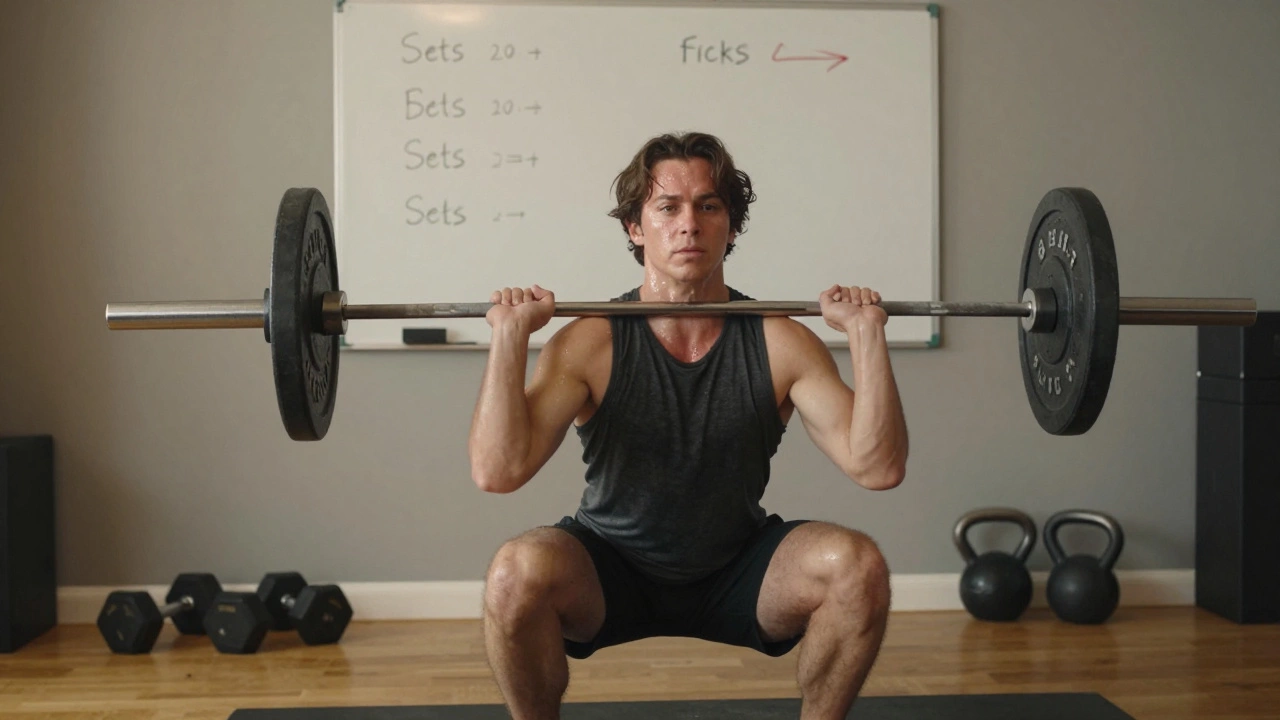
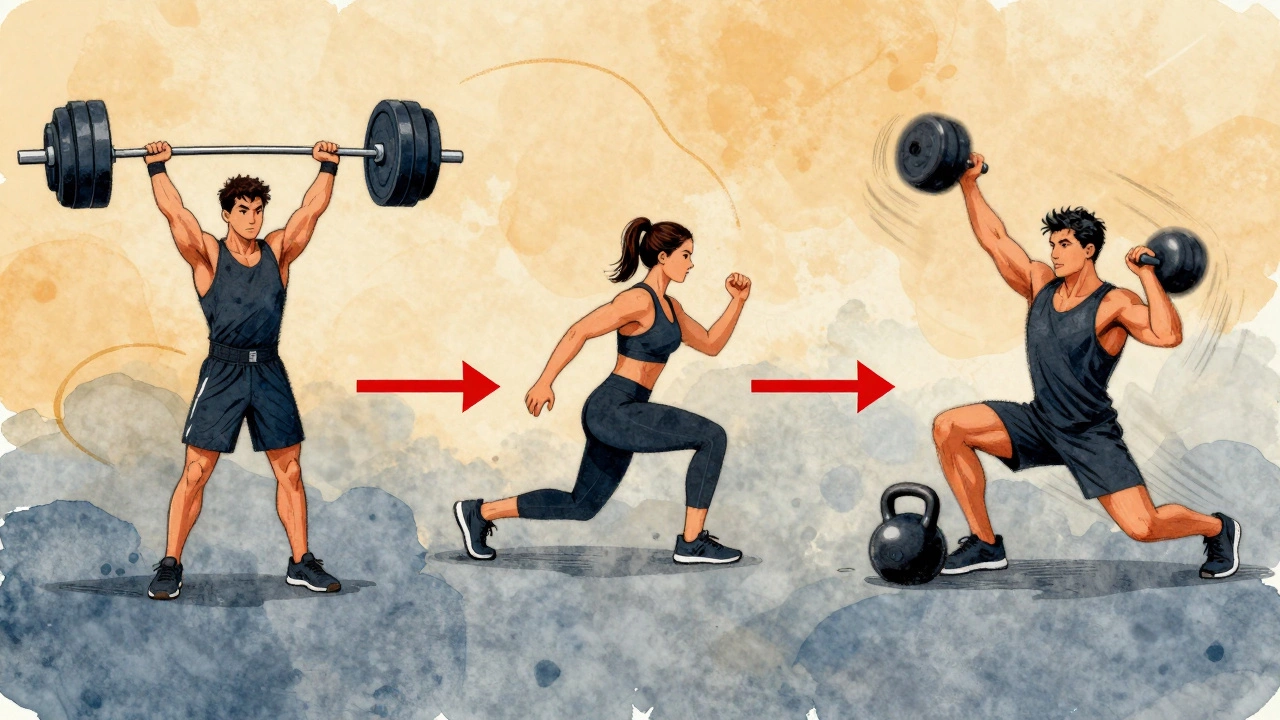
- 4 sets of a heavy compound lift (like squats, deadlifts, or bench press)
- 2 sets of a moderate-intensity accessory movement (like lunges, rows, or overhead press)
- 1 set of a high-rep conditioning finisher (like kettlebell swings, battle ropes, or rowing machine)
That’s it. No complicated charts. No daily calorie tracking. Just three blocks of work that hit strength, muscle, and stamina - in that order.
The order matters. You start heavy when you’re fresh, so you lift with proper form and maximum force. Then you move to volume work to build muscle endurance. Finally, you finish with something that pushes your heart rate up and burns through glycogen. This mimics how athletes train - not like bodybuilders who isolate muscles, but like warriors who need to move, lift, and keep going.
Why This Structure Works
Most people quit because their workouts feel endless or pointless. The 4-2-1 rule fixes that. It gives you a clear, repeatable pattern that fits into a busy life. You don’t need to guess what to do next. You know: four heavy, two medium, one hard.
Here’s the science behind it:
- 4 sets of heavy lifting triggers muscle protein synthesis and neural adaptation. Studies show that 3-5 sets per exercise are optimal for strength gains (Journal of Strength and Conditioning Research, 2017).
- 2 sets of accessory work target stabilizers and weak points. For example, if your squat is strong but your glutes lag, adding Bulgarian split squats here fixes imbalances before they become injuries.
- 1 set of high-rep conditioning boosts metabolic efficiency. Research from the University of Birmingham found that short, intense finishers improve fat oxidation and cardiovascular recovery better than steady-state cardio.
It’s not magic. It’s timing. You’re giving your body the right stimulus in the right sequence - strength first, then volume, then endurance. Your muscles learn to handle load, then sustain it, then recover under stress.
How to Pick Your Exercises
Not every exercise fits the 4-2-1 structure. You need movements that are compound, scalable, and safe under fatigue.
For the 4 sets: Pick one barbell or heavy dumbbell lift. Examples:
- Back squat
- Deadlift
- Barbell bench press
- Overhead press
- Weighted pull-ups
Use a weight you can do for 5-7 reps with good form. Push to 4 sets of 5-6 reps. Rest 2-3 minutes between sets.
For the 2 sets: Pick a movement that complements the first. If you did squats, go for lunges or step-ups. If you did bench press, do push-ups or dumbbell rows. Keep the weight moderate - you should be able to do 8-12 reps with control.
For the 1 set: This is where you sweat. Pick one of these:
- 20 kettlebell swings (32-40 lbs)
- 400-meter row
- 10 burpees + 20 mountain climbers
- 30-second battle rope waves
Do it all-out. No rest. Stop when your form breaks. That’s the goal - to finish tired, not broken.
Sample Weekly Plan
You only need three days a week. No need to train every day. Recovery is part of the plan.
Day 1: Lower Body Focus
- Back squat - 4 sets of 5 reps
- Bulgarian split squats - 2 sets of 10 reps per leg
- 20 kettlebell swings - 1 set
Day 2: Upper Body Focus
- Barbell bench press - 4 sets of 5 reps
- Dumbbell rows - 2 sets of 10 reps per arm
- 400-meter row - 1 set
Day 3: Full Body Focus
- Deadlift - 4 sets of 5 reps
- Overhead press - 2 sets of 8 reps
- 10 burpees + 20 mountain climbers - 1 set
Rest at least one day between sessions. On off days, walk 30 minutes or stretch. That’s it.
Progression: How to Get Stronger Without Overtraining
Progression is simple: add weight, add reps, or add sets - but only one at a time.
After two weeks, if you hit all 4 sets of 6 reps on squats, add 5 pounds next session. If you’re struggling to finish the conditioning set, try extending the time slightly - like going from 20 to 25 kettlebell swings. Don’t jump to 5 sets. Don’t add another accessory exercise. Stick to the 4-2-1 structure. That’s what makes it sustainable.
People who stick with this for 8-12 weeks typically gain:
- 10-20 lbs on their main lift
- Improved stamina - they can do more work before fatigue hits
- Less joint pain - because they’re building balanced strength
And they don’t burn out. That’s the secret.

Who Should Avoid the 4-2-1 Rule?
This isn’t for everyone. If you’re recovering from surgery, have uncontrolled hypertension, or are brand new to exercise, start slower. Learn how to squat and hinge properly before loading heavy. The 4-2-1 rule assumes you know the basics.
Also, if you’re training for a marathon or powerlifting meet, this isn’t your full program. It’s a great base - but elite athletes need more volume or specificity. Use this as a foundation, not a finish line.
For 90% of people - office workers, parents, busy professionals - this is the most effective workout they’ll ever find. No gym membership needed. Just a barbell, dumbbells, and a timer.
Common Mistakes
Most people mess this up in three ways:
- Skipping the warm-up. You’re lifting heavy. Do 5 minutes of dynamic stretching and 1-2 light sets before your first heavy set.
- Doing too much cardio on off days. If you’re already doing a finisher, you don’t need to run 5 miles. Walk. Rest. Recover.
- Changing the order. Don’t do the kettlebell swings first. That’s not the 4-2-1 rule anymore. You’ll be too tired to lift heavy. The sequence is intentional.
Stick to the structure. Trust the process. Results come from consistency, not complexity.
Why This Beats Generic Workout Plans
Most online programs give you 20 exercises and tell you to do 3 rounds. You get overwhelmed. You skip days. You quit.
The 4-2-1 rule removes the noise. It gives you a framework you can remember while brushing your teeth. You don’t need an app. You don’t need a coach. You just need to show up three times a week and follow the pattern.
It’s not glamorous. But it works. People who follow this for six months don’t just look stronger - they feel stronger. They carry groceries easier. They climb stairs without gasping. They sleep better. That’s the real win.
Can I do the 4-2-1 rule workout at home?
Yes. You don’t need a full gym. A pair of dumbbells, a kettlebell, and a pull-up bar are enough. Swap barbell squats for goblet squats, deadlifts for Romanian deadlifts with dumbbells, and bench press for floor presses. The structure stays the same - 4 heavy, 2 medium, 1 hard.
How long should each workout take?
About 45-60 minutes. The heavy sets take the most time because of rest. If you’re efficient with transitions and keep rest periods to 2-3 minutes, you’ll finish in under an hour. The finisher only takes 30-90 seconds.
Is the 4-2-1 rule good for fat loss?
It helps, but fat loss happens in the kitchen. The 4-2-1 rule builds muscle, which raises your metabolism. The finisher burns calories and improves insulin sensitivity. But if you’re eating 3,000 calories a day, you won’t lose fat. Combine this workout with a modest calorie deficit, and you’ll see real changes.
Can beginners use the 4-2-1 rule?
Only if they’ve learned the basic movements. If you can’t do a bodyweight squat with good form, start there. Master the hinge, the push, and the pull before adding weight. Once you can do 3 sets of 10 bodyweight squats, 10 push-ups, and 5 pull-ups, you’re ready to try the 4-2-1 structure with light weights.
What if I miss a day?
Don’t try to make it up. Just pick up where you left off next week. Missing one session won’t ruin progress. Missing three in a row will. Consistency over perfection is the whole point of this plan.