What Is the Best HIIT Exercise? Top 5 Proven Moves for Maximum Results

HIIT Workout Calculator
Create Your Personalized HIIT Workout
Select exercises from the top 5 proven HIIT moves and get your custom workout plan with estimated calorie burn.
Your Personalized HIIT Workout
Estimated Calorie Burn
Workout Duration
Recommended Workout Structure
If you're looking for the single best HIIT exercise, there isn't one. But there are five that consistently deliver the biggest bang for your buck-burning fat, building endurance, and boosting metabolism faster than almost anything else. The truth is, the "best" HIIT exercise depends on your goals, fitness level, and what your body can handle. But if you want results that actually show up on the scale and in the mirror, these five moves are backed by real science and real people who’ve seen changes in just weeks.
Jump Rope: The Forgotten Fat Burner
Jump rope isn’t just for kids or boxers. It’s one of the most efficient calorie-burning tools you can use. A 15-minute session burns as many calories as 30 minutes of jogging. The key is intensity: 30 seconds of fast jumps, then 30 seconds of rest. Repeat for 15 minutes. You’ll hit 80-90% of your max heart rate in under a minute.
Why it works: Jumping rope forces your whole body to work together. Your legs push off, your core stabilizes, your arms swing, and your lungs gasp for air. Studies show it improves cardiovascular endurance faster than cycling or running at the same effort level. It also builds coordination and foot speed-useful for any athlete.
Start slow. If you can’t do 30 seconds straight, try 15 seconds on, 15 seconds off. Use a lightweight rope and land softly on the balls of your feet. No need for a fancy mat-concrete or hardwood works fine.
Burpees: The Full-Body Grinder
Burpees are the ultimate no-equipment HIIT move. They combine a squat, plank, push-up, jump, and explosive stand-all in one motion. That’s five muscle groups firing at once, plus your heart racing. One study from the American Council on Exercise found burpees elevate heart rate to 90% of maximum in under 10 seconds.
Here’s how to do them right: Drop into a squat, kick your feet back into a plank, do one push-up (or drop to knees if needed), jump your feet back in, then explode upward with arms overhead. Don’t rush the form. A sloppy burpee is a wasted rep.
Try this: 10 burpees, rest 15 seconds. Repeat 6 times. That’s 60 burpees in under 10 minutes. Most people can’t do more than 3 rounds without stopping. That’s the point. You’re not training to look good-you’re training to push past your limits.
Mountain Climbers: Core + Cardio in One
Mountain climbers look simple. They’re not. You’re holding a plank position while driving your knees toward your chest as fast as possible. It’s a full-body endurance test. Your shoulders, core, quads, hip flexors, and heart all get slammed.
Why it’s great for HIIT: Unlike running or jumping, mountain climbers keep tension on your core the whole time. That means you’re building functional strength while burning calories. A 2023 study in the Journal of Strength and Conditioning Research found mountain climbers increased core activation by 40% compared to traditional ab exercises like crunches.
Do them fast: 20 seconds on, 10 seconds rest. Repeat 8 times. Focus on pulling your knee all the way in-don’t let your hips sag. If your lower back starts to ache, slow down. Speed without control is just noise.
Kettlebell Swings: Power Without the Impact
If you hate jumping but still want high-intensity, kettlebell swings are your answer. They use your hips, not your legs, to generate power. That means less stress on your knees and ankles, but just as much cardiovascular demand.
How it works: Stand with feet shoulder-width apart, hinge at the hips, grab the kettlebell, swing it back between your legs, then drive your hips forward to snap it up to chest height. Let gravity bring it back down. The power comes from your glutes and hamstrings, not your arms.
Research shows kettlebell swings burn 20 calories per minute-comparable to sprinting. For HIIT, do 15 swings as fast as you can, rest 20 seconds. Repeat 8 rounds. Use a weight that challenges you by the 10th rep. Too light? You’re just waving a metal ball. Too heavy? You’ll hurt your back.
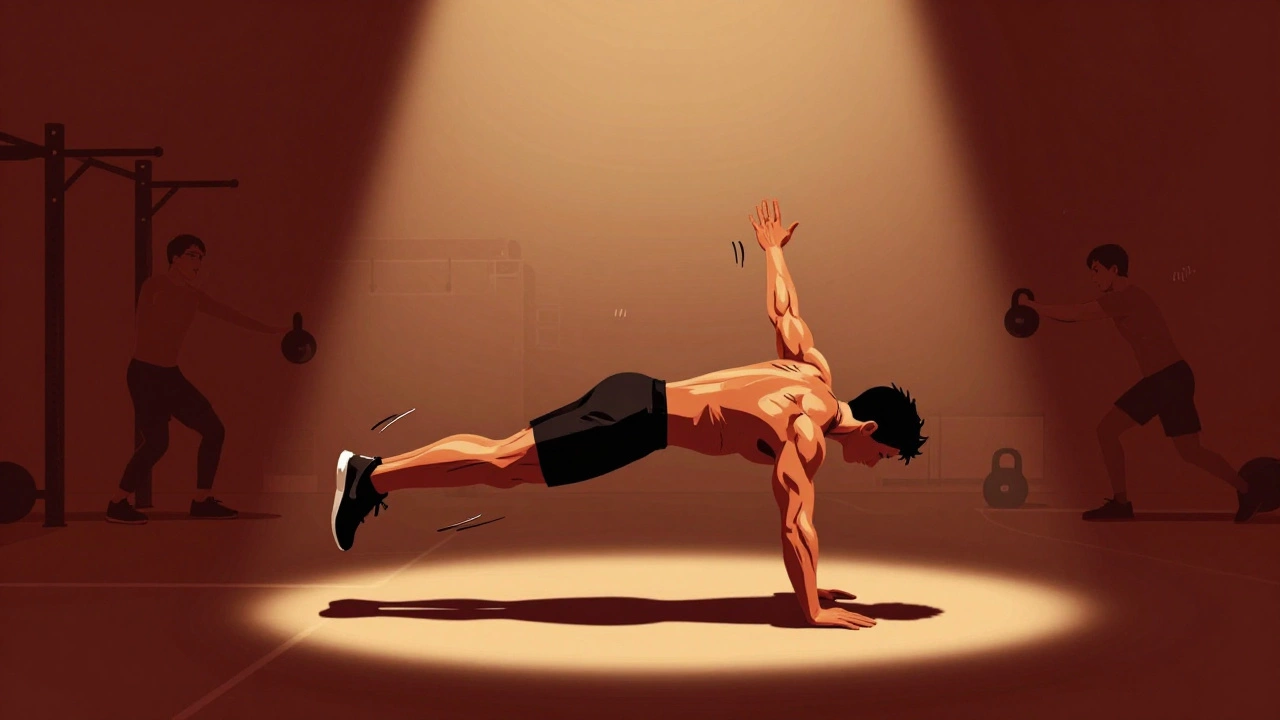
Sprint Intervals: The Gold Standard
Nothing beats sprinting for pure metabolic impact. Whether you’re on a track, treadmill, or just running in place, short bursts of all-out effort followed by rest trigger what’s called EPOC-Excess Post-exercise Oxygen Consumption. That’s the fancy term for "your body keeps burning calories for hours after you stop."
Here’s the proven formula: 30 seconds of sprinting at 90% effort, 90 seconds of walking or slow jogging. Repeat 6 times. That’s 12 minutes total. Done three times a week, this routine has been shown to reduce belly fat more than steady-state cardio in 8 weeks.
You don’t need a track. Sprint in your driveway. Sprint up stairs. Sprint on a stationary bike. The key is intensity. If you can talk while sprinting, you’re not going hard enough. If you’re gasping and your legs feel like lead, you’re doing it right.
How to Structure Your HIIT Workout
Don’t just pick one move and call it a day. Combine two or three of these into a circuit. Here’s a simple, effective template:
- Jump rope - 30 seconds
- Rest - 15 seconds
- Burpees - 30 seconds
- Rest - 15 seconds
- Mountain climbers - 30 seconds
- Rest - 15 seconds
- Kettlebell swings - 30 seconds
- Rest - 15 seconds
- Sprint - 30 seconds
- Rest - 60 seconds
Repeat the whole circuit 3 times. Total time: 20 minutes. That’s all you need. Do this 3 times a week. Skip the rest days if you’re sore-your body needs recovery.
What Not to Do
Don’t do HIIT every day. Your body needs time to recover. Overtraining leads to injury, burnout, and stalled progress. Three times a week is plenty.
Don’t skip warm-ups. Five minutes of light cardio and dynamic stretches (leg swings, arm circles, bodyweight squats) cut your injury risk in half.
Don’t chase reps over form. A slow, controlled burpee with perfect posture is better than 10 sloppy ones that wreck your shoulders.
Don’t compare yourself to TikTok influencers. Real results come from consistency, not speed. If you’re new, start with 10-minute sessions. Build up slowly.

Why These Five Work
These moves aren’t random. They all share three traits:
- Full-body engagement - No isolated muscles. Everything works together.
- High heart rate spike - They push you into Zone 4 or 5 (80-95% max HR) within seconds.
- Scalable intensity - You can make them easier or harder without equipment.
They also require no machines, no gym membership, and no fancy gear. Just your body and a little space.
What to Expect in 4 Weeks
People who stick with this routine for four weeks typically see:
- 5-8% reduction in body fat (measured by skinfold or bioimpedance)
- Improved resting heart rate by 5-10 bpm
- More energy during daily activities
- Better sleep quality
It’s not magic. It’s physiology. High-intensity intervals force your body to adapt-or break down. Choose to adapt.
Is HIIT better than running for fat loss?
Yes, for most people. HIIT burns more calories in less time and keeps your metabolism elevated for hours after the workout. Running burns calories only while you’re doing it. A 2024 meta-analysis found HIIT led to 28.5% more fat loss than steady-state cardio over the same period, even when participants burned fewer total calories during workouts.
Can I do HIIT if I’m overweight?
Absolutely-but modify the moves. Swap jump rope for marching in place. Do step-back burpees instead of jumping ones. Use a lighter kettlebell or skip swings altogether and do bodyweight squats with a pause. The goal isn’t to match someone else’s pace-it’s to challenge yourself safely. Progress matters more than intensity.
How often should I do HIIT?
Three times a week is ideal. Your body needs 48 hours to recover between intense sessions. If you’re new, start with two. If you’re advanced and feel recovered, you can do four-but always include at least one full rest day. Overdoing HIIT raises cortisol, which can lead to fat storage, not fat loss.
Do I need equipment for HIIT?
No. Jump rope, burpees, mountain climbers, and sprints require nothing. Kettlebell swings are the only move here that needs gear-but you can replace them with jump squats or high knees. The best HIIT workout is the one you’ll actually do.
Why am I not losing weight even though I do HIIT?
HIIT isn’t a magic bullet. If you’re eating more calories than you burn, you won’t lose weight. Track your food for a week-most people underestimate intake by 20-30%. Also, check your sleep and stress levels. High cortisol from poor sleep or chronic stress blocks fat loss, even with perfect workouts.
Next Steps
Start with one move. Pick the one you like least-that’s the one you need most. Do it three times this week. Then add another. Build slowly. The goal isn’t to crush your first workout. It’s to show up again tomorrow.
HIIT doesn’t require perfection. It requires persistence. You don’t need to be fast. You just need to keep going.