What Is the Best Workout Routine for Real Results?
Workout Routine Recommender
Find Your Perfect Routine
Answer these questions to get a personalized recommendation based on your fitness goals, time availability, and experience level.
Your Recommended Routine
Key Benefits
Remember: Consistency is more important than intensity. Start slow, track your progress, and adjust as needed.
There’s no single best workout routine that works for everyone. That’s the truth most fitness influencers won’t tell you. What works for a 25-year-old runner in London might leave a 45-year-old office worker exhausted and injured. The real question isn’t what’s the best - it’s what’s best for you.
Forget the Instagram Abs Routine
You’ve seen it: 10-minute HIIT sessions that promise six-pack abs in a week. Or full-body workouts with 20 different exercises, each done for 45 seconds. These aren’t routines - they’re distractions. They look impressive, but they don’t build lasting strength, endurance, or consistency.Real progress comes from simple, repeatable patterns. A good workout routine doesn’t need fancy equipment, obscure moves, or 90-minute sessions. It needs three things: consistency, progression, and recovery.
Let’s cut through the noise. The most effective routines for most people follow one of four proven structures. Pick the one that fits your life, not your feed.
Full-Body Workouts: Best for Beginners and Busy People
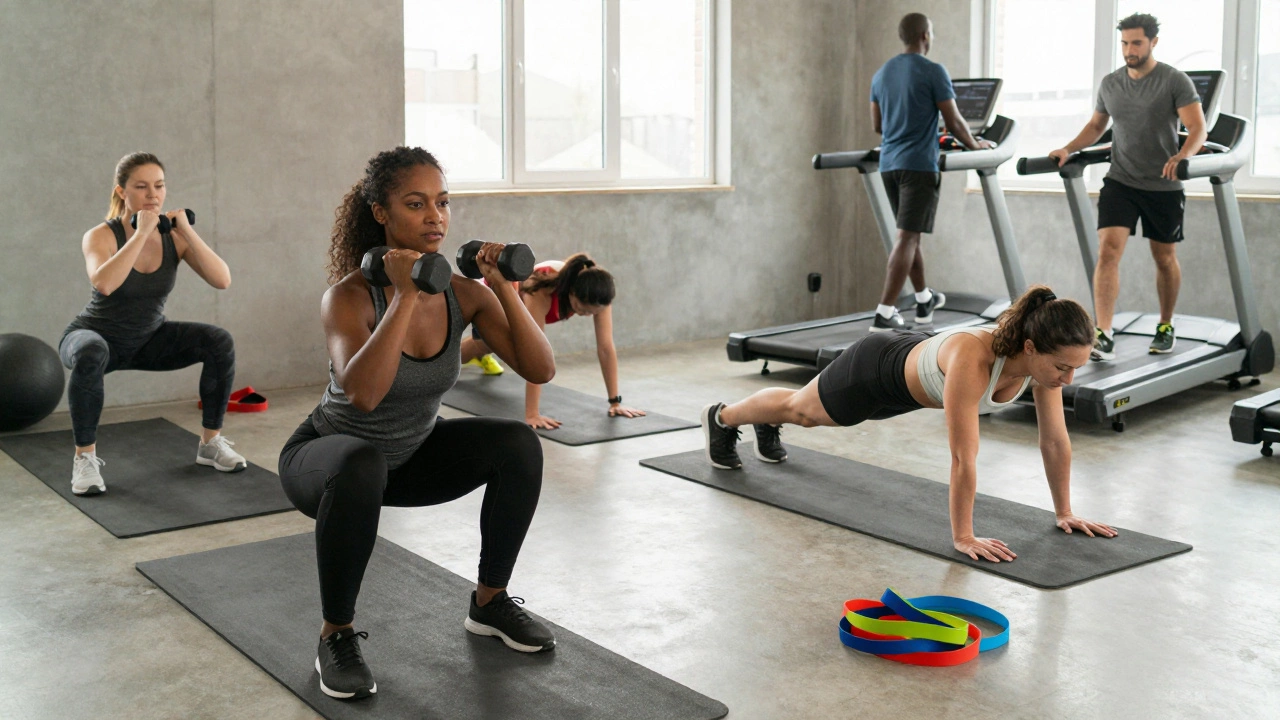
If you’re new to working out or only have three days a week to spare, full-body routines are your best bet. You hit every major muscle group in each session. That means more total work per week, faster strength gains, and less time spent planning.Here’s what a real full-body routine looks like, done three times a week (e.g., Monday, Wednesday, Friday):
- Barbell or dumbbell squat - 3 sets of 8-10 reps
- Push-up or chest press - 3 sets of 10-12 reps
- Row (dumbbell or machine) - 3 sets of 10-12 reps
- Plank - 3 sets of 30-60 seconds
- Walking or light cardio - 20 minutes after the workout
You don’t need a gym. Dumbbells, a bench, and a doorframe for resistance bands are enough. Do this for eight weeks, and you’ll notice your clothes fitting differently, your posture improving, and your energy rising. No magic. Just muscle.
Upper/Lower Split: Best for Building Strength
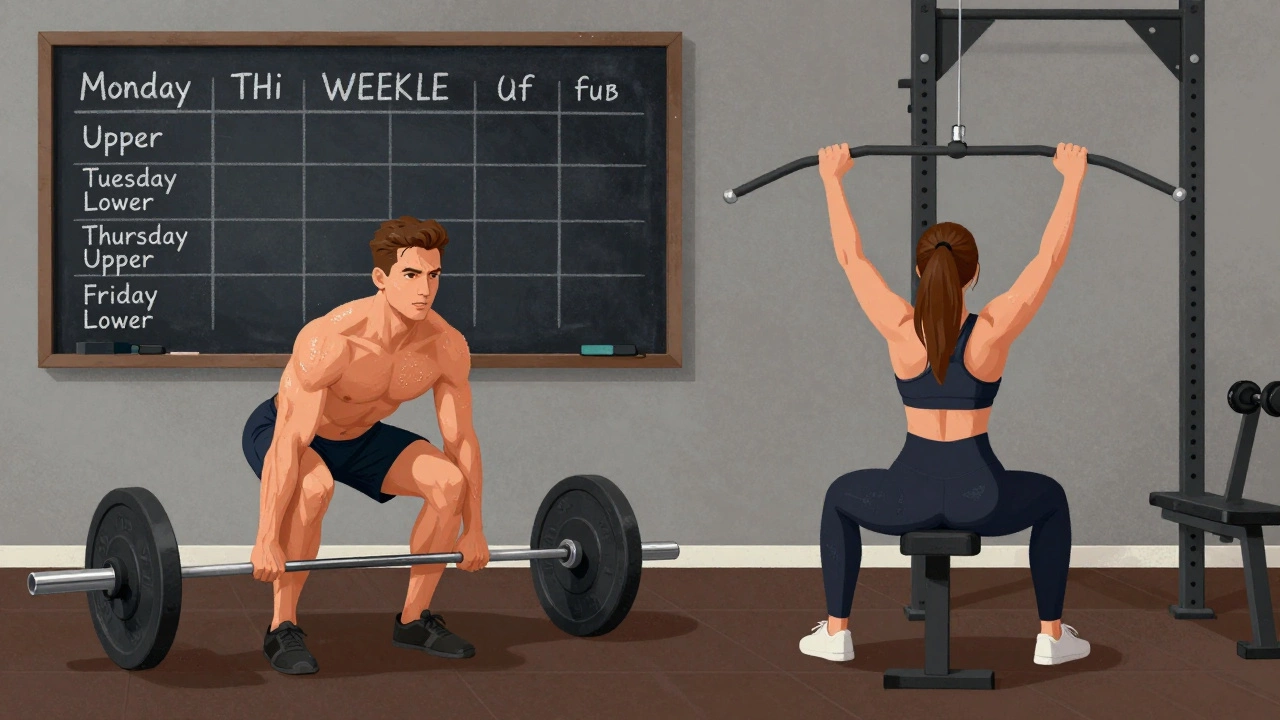
If you’ve been working out for a few months and want to get stronger without spending five days a week in the gym, try an upper/lower split. You train upper body two days a week and lower body two days a week. That’s four days total.Example week:
- Monday: Upper Body - Bench press, pull-ups, overhead press, rows
- Tuesday: Lower Body - Squats, Romanian deadlifts, lunges, calf raises
- Thursday: Upper Body - Incline dumbbell press, lat pulldown, lateral raises, bicep curls
- Friday: Lower Body - Deadlifts, step-ups, glute bridges, hamstring curls
Rest on weekends. This split lets you lift heavier, recover better, and build muscle faster than full-body routines over time. It’s what most serious lifters use - not because it’s trendy, but because it works.
Cardio-Focused Routine: Best for Endurance and Heart Health
If your goal isn’t to get bigger or stronger - but to run farther, climb stairs without gasping, or lower your blood pressure - then your routine should be built around movement, not weights.Here’s what works:
- Three days a week: Moderate cardio (brisk walking, cycling, swimming) - 45-60 minutes
- One day a week: High-intensity intervals (20 minutes total: 1 min sprint, 2 min walk, repeat 5x)
- One day a week: Active recovery (yoga, light hiking, stretching)
Studies from the American Heart Association show that people who do 150 minutes of moderate cardio per week cut their risk of heart disease by 30%. You don’t need to run a marathon. Just keep moving. And don’t skip the warm-up or cool-down - they’re not optional.
Hybrid Routine: Best for Balanced Fitness
Most people want both strength and stamina. You want to lift heavier and still have energy to chase your kids or hike on weekends. That’s where the hybrid routine shines.Here’s a simple 4-day hybrid plan:
- Monday: Strength (Full-body - squats, push-ups, rows, planks)
- Tuesday: Cardio (40-minute brisk walk or bike ride)
- Thursday: Strength (Upper/lower split - focus on legs and back)
- Saturday: Cardio + mobility (30-minute jog + 15-minute stretching)
That’s it. No complex programs. No daily logbooks. Just two days of lifting, two days of moving, and rest when you need it. This is what works for the average person in Bristol, Manchester, or Leeds who has a job, a family, and zero time for perfection.
What to Avoid
Here are the three biggest mistakes people make with workout routines:- Doing too much too soon - Burnout is real. Starting with 60-minute sessions five days a week leads to quitting by week three.
- Ignoring recovery - Muscles grow when you rest, not when you sweat. Sleep and rest days aren’t laziness. They’re part of the plan.
- Chasing trends - If a routine promises results without effort, it’s a scam. No supplement, app, or influencer can replace consistent effort.
Progress isn’t linear. Some weeks you’ll feel strong. Others, you’ll feel flat. That’s normal. What matters is showing up, even if it’s just for 20 minutes.
How to Know If Your Routine Is Working
You don’t need a scale or a mirror to tell if you’re making progress. Look for these signs:- You can lift heavier or do more reps without stopping
- You walk up stairs without getting winded
- You sleep better and wake up feeling rested
- Your clothes fit differently - not necessarily tighter, but more comfortably
- You look forward to your workout, not dread it
If you’re seeing at least two of these after six weeks, your routine is working. Don’t wait for a six-pack. Wait for the small wins.

Adjusting Your Routine Over Time
Your body adapts. That’s good. But if you keep doing the same thing for months, you’ll plateau. After 6-8 weeks, make one small change:- Add one more set to your main lifts
- Swap a machine exercise for a free weight version
- Extend your cardio by 10 minutes
- Take one rest day and replace it with mobility work
You don’t need to overhaul your plan. Just tweak it. Think of it like tuning a car - small adjustments, not a full rebuild.
What About Diet?
Food matters. But you don’t need a strict diet to make your workout routine effective. Focus on these three things:- Get enough protein - about 1.6 grams per kilogram of body weight (e.g., 70kg person = 112g protein daily)
- Drink water - aim for 2-3 liters a day, more if you sweat a lot
- Don’t skip meals - eating regularly keeps energy stable and recovery faster
No need to count calories or cut carbs. Just eat whole foods: eggs, chicken, beans, oats, vegetables, fruit. That’s it.
Final Thought: The Best Routine Is the One You’ll Stick To
There’s no perfect workout. There’s only the one you do consistently. A simple routine done for six months beats a complex one done for two weeks.Start small. Stay patient. Keep moving. That’s how real change happens - not in a viral video, but in the quiet moments when you show up even when you don’t feel like it.
Can I do the best workout routine at home without equipment?
Yes. Bodyweight exercises like squats, push-ups, lunges, planks, and glute bridges build strength and endurance. Add resistance bands or a backpack with books for extra challenge. A full-body routine done three times a week at home is just as effective as a gym routine if you push yourself.
How long should each workout last?
For most people, 45-60 minutes is enough. Strength sessions should take 40-50 minutes. Cardio sessions can be 30-60 minutes. The key isn’t duration - it’s intensity and consistency. A 20-minute focused workout beats an hour of distracted scrolling with dumbbells.
Do I need to warm up before every workout?
Yes. Spend 5-10 minutes doing light cardio (jumping jacks, brisk walking) and dynamic stretches (leg swings, arm circles). Warming up raises your body temperature, improves movement quality, and reduces injury risk. Skipping it is like starting a car without letting the engine warm up.
Is it okay to work out every day?
You can, but you shouldn’t train hard every day. Muscles need rest to grow. Instead of daily intense sessions, alternate between strength, cardio, and active recovery (walking, yoga, stretching). Four to five hard workouts a week is plenty for most people.
What if I miss a workout?
Miss one? No problem. Miss three in a row? That’s when habits break. Don’t try to make up for it with a double session. Just get back on track with your next planned workout. Consistency over time beats perfection in the short term.