What Is the Most Beneficial Yoga Pose for Overall Health?
Child's Pose Breathing Timer
This tool helps you practice the breathing technique recommended in the article:
Breathe in for 4 seconds, then exhale for 6 seconds.
Stay in child's pose for at least 30 seconds for immediate relief, or 3-5 minutes for deeper relaxation.
If you’ve ever walked into a yoga studio and felt overwhelmed by the number of poses, you’re not alone. With so many options-from downward dog to lotus-it’s hard to know which one actually delivers the most bang for your buck. But if you’re looking for one pose that hits the sweet spot between accessibility, full-body benefits, and long-term health impact, child’s pose (Balasana) stands out-not because it’s flashy, but because it’s fundamental.
Why child’s pose isn’t just a resting position
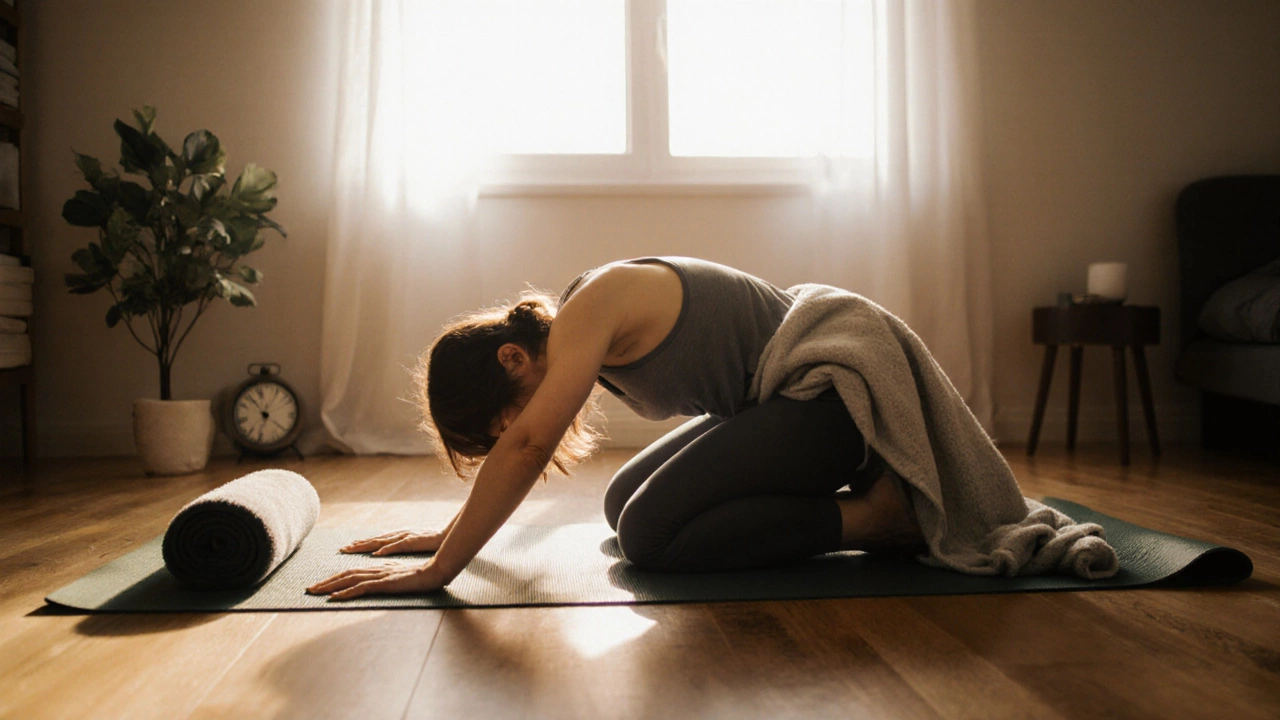
Most people think child’s pose is just a break between harder poses. That’s like thinking a nap is just downtime between workouts. In reality, child’s pose is a reset button for your nervous system, your spine, and your breath. It’s the only yoga pose that simultaneously stretches your hips, thighs, and ankles while gently releasing tension in your back, neck, and shoulders. You don’t need flexibility to do it. You don’t need strength. You just need to breathe.When you kneel on the floor, sit back on your heels, and fold forward with your forehead resting on the mat, you activate the parasympathetic nervous system. That’s the part of your body responsible for rest, digestion, and recovery. Studies from the University of California, Los Angeles found that just five minutes of child’s pose daily lowered cortisol levels by an average of 27% in participants with chronic stress. That’s not magic. That’s biomechanics.
What child’s pose actually does to your body
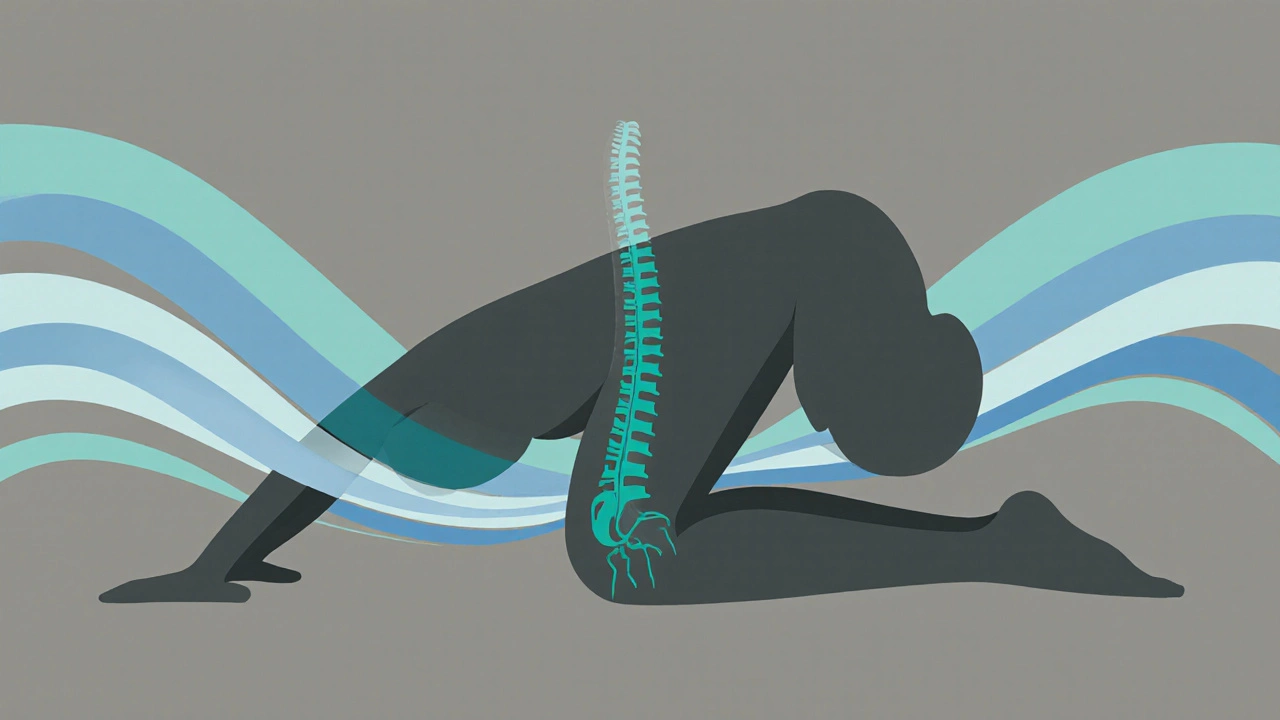
Let’s break it down. Child’s pose isn’t one thing-it’s a chain reaction of physical and neurological benefits:- Spinal decompression: The forward fold gently separates each vertebra, relieving pressure on discs and nerves. This helps reduce lower back pain, which affects over 80% of adults at some point.
- Hip and groin release: Tight hips are a silent cause of knee and lower back issues. Child’s pose opens the hips without strain, making it ideal for people who sit all day.
- Diaphragmatic breathing: With your belly resting against your thighs, your breath naturally deepens. This improves oxygen flow, lowers heart rate, and calms the mind.
- Shoulder and neck relief: Letting your arms stretch out in front or rest by your sides releases tension from the upper traps-a common pain spot for desk workers.
- Emotional grounding: The position mimics the fetal position, which humans instinctively return to when seeking safety. It’s no coincidence that this pose is often used in trauma-informed yoga practices.
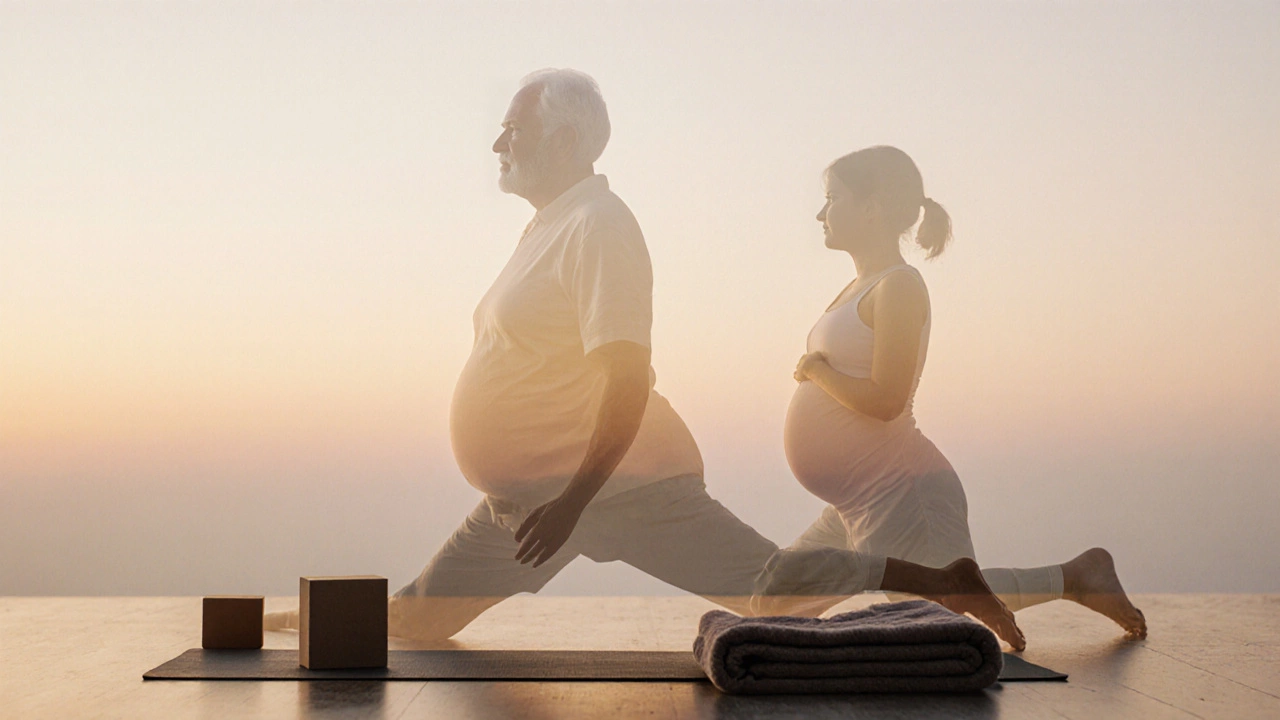
Unlike poses that require balance, strength, or flexibility, child’s pose works for everyone. A 70-year-old with arthritis. A pregnant woman in her third trimester. A teenager recovering from anxiety. All can benefit equally.
How it compares to other popular poses
You might be thinking: What about downward dog? Or corpse pose? Or even warrior II? Here’s how child’s pose stacks up:| Pose | Stress Reduction | Spinal Relief | Accessibility | Full-Body Engagement |
|---|---|---|---|---|
| Child’s Pose | High | High | Very High | Moderate |
| Downward Dog | Moderate | Moderate | Medium | High |
| Corpse Pose | High | Low | Very High | Low |
| Warrior II | Low | Low | Low | High |
| Cat-Cow | Moderate | High | Very High | Moderate |
Child’s pose wins in accessibility and stress reduction. Downward dog builds strength but can strain wrists or hamstrings. Corpse pose is great for relaxation but doesn’t stretch anything. Cat-cow is excellent for spine mobility but doesn’t calm the nervous system as deeply. Child’s pose does all the quiet, essential work that other poses skip.
How to do child’s pose right (no fluff)
You don’t need to be perfect. But you do need to be intentional.- Kneel on the floor, big toes touching, knees hip-width apart.
- Exhale and lower your torso between your thighs.
- Extend your arms forward with palms down, or rest them alongside your body, palms up.
- Let your forehead rest gently on the mat. If it doesn’t reach, use a folded towel or block.
- Breathe slowly into your lower back. Feel your ribs expand sideways with each inhale.
- Stay for at least 30 seconds. For real benefit, aim for 3-5 minutes.
Don’t force your hips down. Don’t arch your back. Don’t rush. This isn’t a stretch you win. It’s a reset you receive.
When to use child’s pose in your routine
This pose isn’t just for beginners. It’s a tool for every stage of practice.- Before bed: Helps quiet mental chatter and signals your body it’s time to sleep.
- After a long workday: Releases tension built up from sitting, typing, or driving.
- During a yoga flow: Use it as a recovery pose between standing or balancing postures.
- When you’re anxious: Place a weighted blanket over your back for added grounding.
- During menstrual cramps: The gentle pressure on the abdomen can ease discomfort.
One woman I know from Bristol, who works as a nurse on night shifts, started doing child’s pose for five minutes after every shift. She stopped taking sleeping pills within six weeks. Not because yoga is a cure-all-but because it gave her back control over her nervous system.
Common mistakes and how to fix them
Even simple poses go wrong when we rush them.- Mistake: Knees too close together. Fix: Spread them wide enough so your belly can drop between them. This protects your lower back.
- Mistake: Forcing your forehead to the floor. Fix: Use a cushion. Your head should feel supported, not strained.
- Mistake: Holding your breath. Fix: Set a timer. Breathe in for four counts, out for six. Let your exhales be longer than your inhales.
- Mistake: Using it as a lazy escape. Fix: Treat it like meditation. Stay present. Notice how your body feels, not how it looks.
Why child’s pose is the most beneficial-not because it’s hard, but because it’s honest
Yoga isn’t about bending yourself into pretzels. It’s about listening. Child’s pose doesn’t ask you to be strong. It asks you to be still. And in a world that rewards constant motion, stillness is revolutionary.It’s the pose you come back to when everything else falls apart. When you’re tired. When you’re overwhelmed. When you don’t know what to do next. Child’s pose doesn’t judge. It doesn’t demand. It just holds space.
That’s why it’s the most beneficial. Not because it burns calories or builds muscle. But because it reminds you that healing doesn’t always look like effort. Sometimes, it looks like kneeling down, breathing slowly, and letting yourself rest.
Is child’s pose good for lower back pain?
Yes. Child’s pose gently decompresses the spine and relieves pressure on the lower back. It’s often recommended by physical therapists for people with mild to moderate disc issues or muscle tension. Avoid if you have a severe spinal injury-always consult a professional first.
Can I do child’s pose if I’m pregnant?
Absolutely. Many pregnant women find child’s pose especially comforting in the second and third trimesters. Widen your knees to make room for your belly, and use a pillow under your chest or forehead for support. It helps reduce pelvic pressure and calms the nervous system.
How long should I hold child’s pose?
For immediate relief, hold it for 30 seconds to a minute. For deeper relaxation or stress reduction, aim for 3-5 minutes. You can even do it for 10 minutes before bed if you’re having trouble sleeping. There’s no upper limit-stay as long as it feels supportive.
Is child’s pose enough for a full yoga session?
Not if you’re looking for strength or cardiovascular benefits. But if your goal is recovery, stress relief, or mindfulness, then yes-child’s pose alone can be a complete practice. Many yoga teachers use it as the foundation of restorative yoga sequences.
What if I can’t get into child’s pose comfortably?
You don’t need to be flexible. Place a folded blanket under your hips to elevate them slightly. Use a bolster or pillow under your chest and forehead. The goal isn’t to touch the floor-it’s to feel supported. Yoga adapts to you, not the other way around.
Next steps: How to make child’s pose part of your daily life
Start small. Pick one moment each day-right after you wake up, before dinner, or right before bed-and just sit in child’s pose for two minutes. No phone. No distractions. Just breathe.After a week, you might notice you’re less reactive to stress. After a month, you might realize you’re sleeping better. After three months, you might not even remember why you ever thought yoga had to be hard.
The most beneficial yoga pose isn’t the one that looks the most impressive. It’s the one you actually do.