What Is the No. 1 Weight Loss Drink? The Truth Behind Hydration and Fat Burn
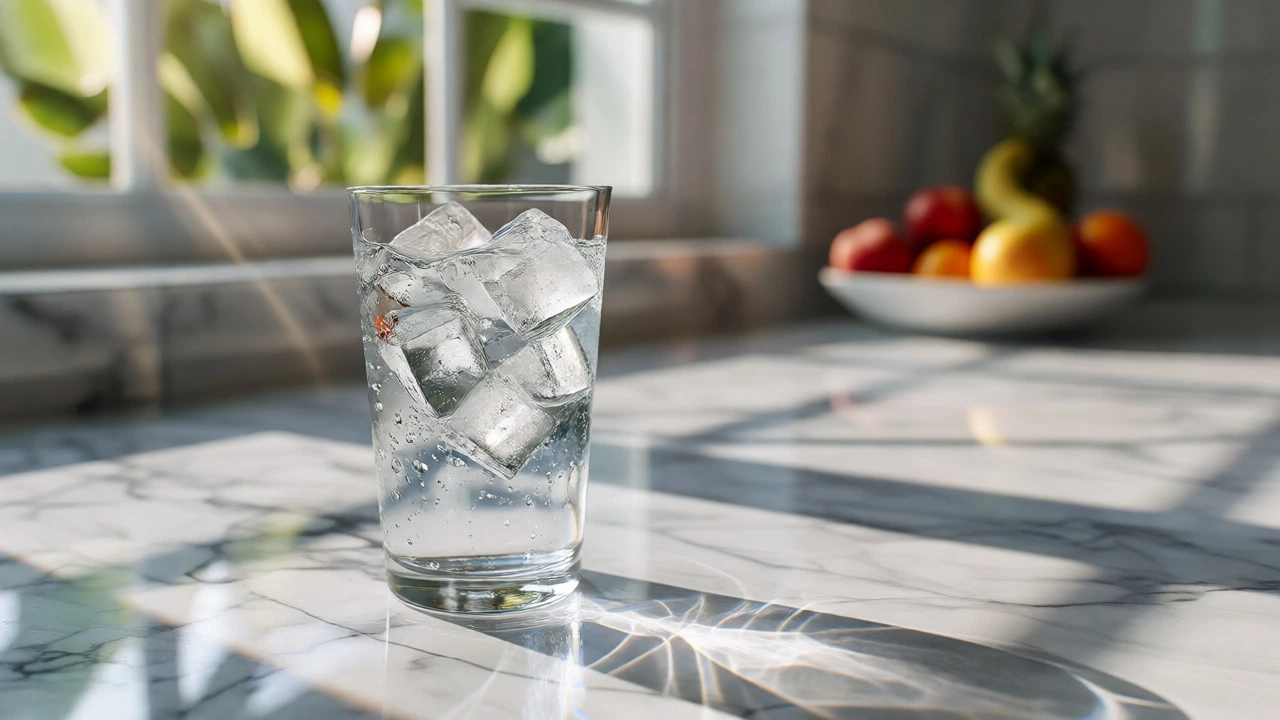
Weight Loss Drink Calculator
Enter your details below to find out how much water you should drink daily and see how swapping sugary drinks for water or tea can help you shed pounds.
Your Daily Hydration Goal
Daily Water Target
--
ounces (~-- Liters)
Liquid Calorie Swap Estimator
See how many pounds of fat you could lose per year by replacing one daily sugary drink with water or unsweetened tea/coffee.
Potential Fat Loss
--
pounds per year*
Top Weight Loss Drinks Comparison
| Drink | Active Compound | Mechanism | Cals/Cup |
|---|---|---|---|
| Water | H₂O | Appetite suppression & Thermogenesis | 0 |
| Green Tea | EGCG & Caffeine | Fat oxidation enhancement | ~2 |
| Black Coffee | Caffeine | Metabolic rate increase | ~2 |
| Apple Cider Vinegar | Acetic Acid | Blood sugar stabilization | ~3 |
*Based on a standard estimate of 3,500 calories per pound of body fat. Individual results vary based on activity level and overall diet.
You’ve probably seen the headlines: "This one weird trick melts belly fat!" or "Drink this to lose 10 pounds in a week." It’s tempting to believe that there is a magical liquid out there that does all the hard work while you sit on the sofa. But if you’re looking for the single no. 1 weight loss drink, the answer isn’t a fancy detox juice or an expensive supplement blend. It’s water.
Wait, hear me out before you roll your eyes. I know it sounds too simple to be true. We are conditioned to think that results require complexity. But when we look at the science of metabolism, appetite regulation, and calorie balance, plain water consistently outperforms every other beverage category. It doesn’t have calories, it doesn’t spike insulin, and it supports almost every biological process involved in burning fat. However, saying "just drink water" feels like a cop-out, right? So, let’s break down why water takes the crown, which specific types of water (like cold or sparkling) might give you a tiny edge, and what the runner-up contenders are actually doing to your body.
Why Water Is Actually the King of Weight Loss Drinks
When researchers from Virginia Tech studied the effects of pre-meal water consumption, they found that participants who drank two cups of water before meals lost about 44% more weight over 12 weeks than those who didn’t. Why? Because water stretches the stomach, sending fullness signals to the brain via the vagus nerve. This reduces the amount of food you naturally want to eat. You aren’t forcing yourself to starve; you’re just giving your body the volume it needs to feel satisfied without adding energy density.
There is also a metabolic component known as water-induced thermogenesis. Some studies suggest that drinking 500ml of water can increase your resting energy expenditure by up to 30% for about an hour. While this sounds impressive, don’t expect to torch hundreds of calories. For most people, this translates to burning an extra 20-30 calories per glass. It’s not huge, but it adds up over months, especially if you replace sugary sodas with water. That swap alone can save you 150+ calories a day, which is nearly 50,000 calories a year-that’s roughly 14 pounds of fat.
Cold Water vs. Warm Water: Does Temperature Matter?
If you want to squeeze every bit of efficiency out of your hydration, temperature plays a minor role. Cold water forces your body to expend energy to heat it up to core body temperature (98.6°F / 37°C). This process, called thermoregulation, burns a few extra calories compared to room-temperature water. If you drink ice-cold water throughout the day, you might burn an additional 50-100 calories daily. It’s small, but it’s free.
On the flip side, warm water has its own benefits, particularly for digestion. Many nutritionists in Bristol, where I live, recommend starting the day with warm lemon water. The warmth helps stimulate peristalsis-the wave-like muscle contractions that move food through your digestive tract. Better digestion means less bloating and more regular bowel movements, which can make you look and feel leaner, even if the scale hasn’t moved yet. Plus, the ritual of sipping something warm can curb cravings for hot, high-calorie beverages like lattes with sugar.
The Runners-Up: Green Tea and Coffee
If water is the undisputed champion, green tea and black coffee are the silver and bronze medalists. These aren’t just cultural favorites; they have active compounds that interact with your physiology.
| Drink | Key Active Compound | Primary Mechanism | Calories (per cup) | Best Time to Drink |
|---|---|---|---|---|
| Water | H₂O | Appetite suppression & Thermogenesis | 0 | Before meals |
| Green Tea | EGCG & Caffeine | Fat oxidation enhancement | ~2 | Morning/Pre-workout |
| Black Coffee | Caffeine | Metabolic rate increase | ~2 | Early morning |
| Apple Cider Vinegar | Acetic Acid | Blood sugar stabilization | ~3 | Before carb-heavy meals |
Green Tea contains catechins, specifically epigallocatechin gallate (EGCG), and caffeine. Together, these compounds inhibit an enzyme that breaks down norepinephrine, a hormone that signals fat cells to break down fat. A meta-analysis published in the International Journal of Obesity suggested that green tea extract could lead to modest weight loss-about 2-3 pounds over several months-in overweight individuals. It’s not a miracle worker, but it’s a helpful tool if you already enjoy tea.
Black Coffee is another potent option. Caffeine stimulates the central nervous system, increasing adrenaline levels and breaking down body fat. Studies show caffeine can boost metabolic rate by 3-11%. However, timing matters. Drinking coffee late in the afternoon can disrupt sleep, and poor sleep increases ghrelin (the hunger hormone) and decreases leptin (the satiety hormone), making you crave junk food the next day.

The Trap of "Detox" Waters and Juices
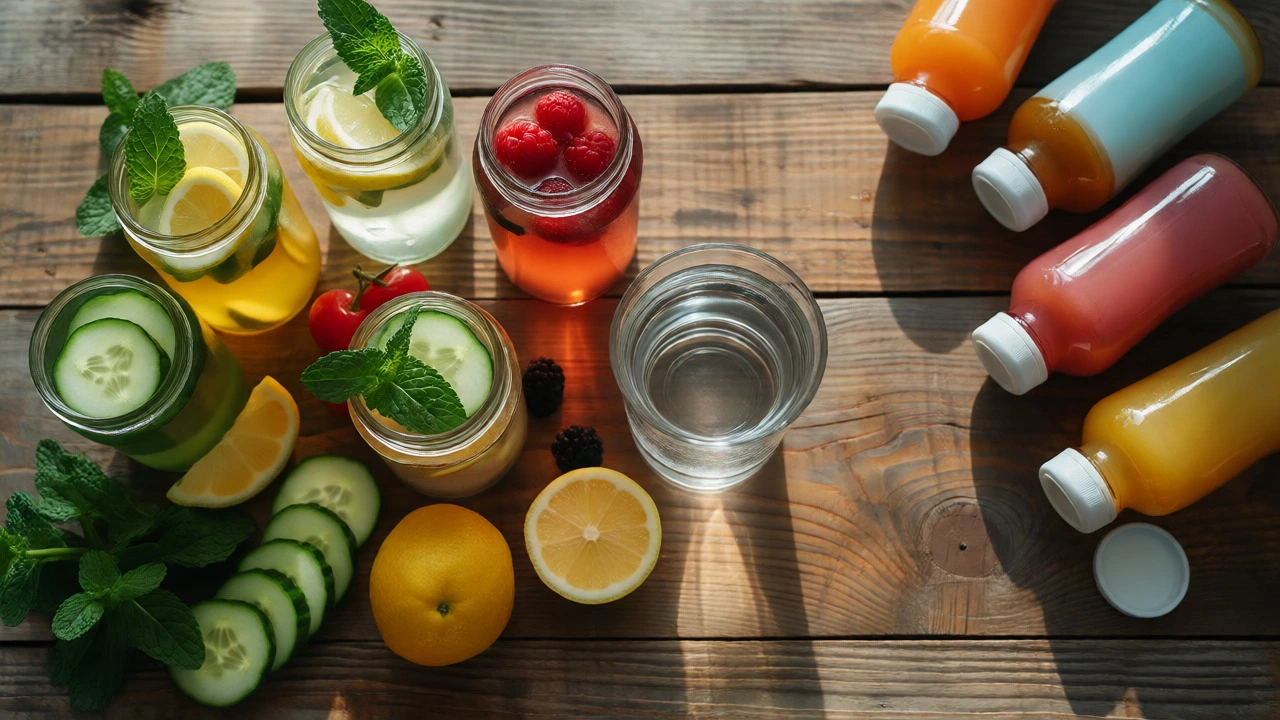
Let’s talk about the elephant in the room: fruit juices and so-called "detox" waters. You’ll see bottles of kale-spinach-cucumber blends promising to flush toxins and melt fat. Here’s the reality: your liver and kidneys are excellent at detoxifying your body. You don’t need a $12 bottle of juice to help them do their job.
Fruit juice, even fresh-squeezed orange juice, is essentially concentrated sugar. When you eat an orange, you get fiber, which slows down sugar absorption. When you drink the juice, that fiber is gone. Your blood sugar spikes, insulin surges to store the energy, and you often end up hungrier sooner because liquid calories don’t trigger the same satiety signals as solid food. A glass of apple juice can have as much sugar as a soda. If you’re trying to lose weight, swapping whole fruits for juice is usually a step backward.
As for infused waters (cucumber slices, berries, mint), they are fine. They add flavor without significant calories, helping you drink more water if you find plain water boring. Just don’t expect the cucumber slices themselves to do anything magical beyond making the water taste better.
How to Structure Your Drink Schedule for Maximum Fat Loss
Knowing what to drink is half the battle; knowing when to drink it is the other half. Here is a practical framework I use with clients in my fitness practice:
- Upon Waking: Start with 500ml of water. You wake up dehydrated after 7-8 hours of sleep. Rehydrating kickstarts your metabolism and clears out any nighttime waste products.
- Before Meals: Drink 300-500ml of water 20 minutes before lunch and dinner. This primes your stomach for fullness.
- Mid-Morning/Afternoon: If you need a boost, opt for green tea or black coffee. Avoid adding cream or sugar, which negate the low-calorie benefit.
- During Exercise: Stick to water. Unless you’re working out intensely for more than 60 minutes, sports drinks are unnecessary and often packed with sugar.
- Evening: Switch to herbal teas like chamomile or peppermint. These are caffeine-free and can help reduce stress-eating triggers.
Pitfalls to Avoid: Liquid Calories Are Sneaky
The biggest mistake people make is ignoring liquid calories. A standard latte can contain 150-200 calories. A smoothie bowl can easily hit 500 calories. If you drink three of these a day, you’re consuming 1,000+ calories without ever chewing. And here’s the kicker: your brain doesn’t register liquid calories the same way it registers solid food. You won’t automatically eat less later to compensate. You’ll just accumulate a surplus.
Alcohol is another major culprit. It stops fat burning in its tracks because your body prioritizes metabolizing alcohol over fat. Plus, it lowers inhibitions, leading to poor food choices. If you’re serious about losing weight, limit alcohol to special occasions, or choose spirits with zero-calorie mixers like soda water.
Final Thoughts: Consistency Beats Intensity
There is no magic potion. The no. 1 weight loss drink is simply water because it is the foundation of health, has zero calories, and actively aids in appetite control. Green tea and coffee offer slight metabolic boosts, but they work best when paired with adequate hydration. Skip the sugary juices and expensive detoxes. Focus on drinking enough plain water throughout the day, and watch how your energy levels stabilize and your waistline shrinks.
Does drinking cold water really burn more calories?
Yes, but the effect is minimal. Your body uses energy to heat cold water to body temperature, burning roughly 8-10 calories per 500ml. While consistent cold water drinking can contribute to a slight caloric deficit over time, it is not a substitute for exercise or diet changes.
Is green tea better than coffee for weight loss?
Both have benefits. Coffee provides a stronger immediate metabolic boost due to higher caffeine content. Green tea contains EGCG, which may enhance fat oxidation during exercise. For many, green tea is preferred because it causes less jitteriness and anxiety than coffee, making it easier to sustain long-term.
Can I drink diet soda instead of water?
Diet soda has zero calories, which is good, but artificial sweeteners may affect gut bacteria and insulin sensitivity in some people. Some studies suggest diet soda drinkers still experience sugar cravings. Water remains superior, but diet soda is a acceptable occasional alternative if it helps you avoid sugary drinks.
How much water should I drink to lose weight?
A common guideline is to drink half your body weight in ounces daily. For example, if you weigh 150 lbs, aim for 75 oz (approx. 2.2 liters). Additionally, drinking 500ml before each main meal can significantly aid in portion control and weight loss.
Do detox teas cause real weight loss?
Most detox teas act as laxatives or diuretics. Any weight loss you see on the scale is primarily water weight and stool mass, not fat. Once you stop drinking them, the weight returns. They can cause dehydration and electrolyte imbalances if used excessively.