Why Am I Gaining Weight Doing HIIT? 7 Real Reasons and How to Fix It
HIIT Weight Change Calculator
Your HIIT Routine
(Actual burn is typically 200-300 calories for 20 mins)
Your Nutrition & Recovery
You’re crushing your HIIT workouts-sweating, pushing hard, burning calories-and yet the scale keeps going up. You’re not imagining it. This isn’t rare. In fact, more people than you think are confused because they’re doing everything "right" and still gaining weight. If you’re wondering why you’re gaining weight doing HIIT, you’re not alone. And the answer isn’t as simple as "you’re eating too much."
Your Body Is Building Muscle
HIIT isn’t just about burning fat. It’s also a powerful stimulus for muscle growth. When you do sprints, burpees, kettlebell swings, or jump squats, you’re forcing your muscles to adapt. That means they get stronger and denser. Muscle is heavier than fat. So if you’re new to HIIT or ramping up intensity, you might be gaining muscle faster than you’re losing fat. That’s not a bad thing-but it will show up on the scale.
Think about it: one pound of muscle takes up 22% less space than one pound of fat. You could be losing inches and gaining muscle, but the scale doesn’t show that. If your clothes are fitting better, your reflection looks leaner, or your strength is improving, you’re likely gaining muscle-not fat.
You’re Eating More Because You Think You "Earned" It
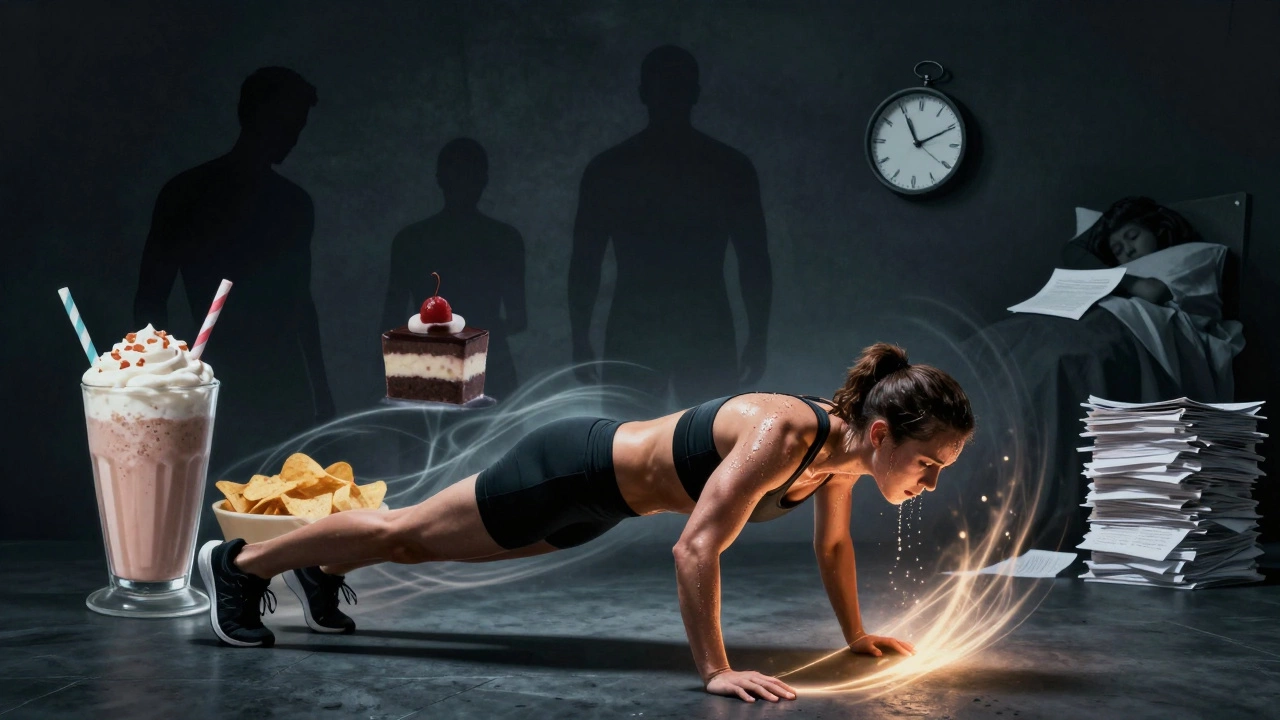
HIIT feels brutal. After a 20-minute session, you’re exhausted. It’s easy to think: "I burned 500 calories-I deserve this post-workout smoothie with banana, peanut butter, honey, and protein powder." But here’s the catch: most people overestimate how many calories they burn during HIIT. A 20-minute session might burn 200-300 calories, not 500. That smoothie? It could easily be 400-600 calories. You just ate back your entire workout.
Studies show people who do HIIT often increase their food intake afterward, especially high-calorie, high-sugar snacks. Your brain thinks you’ve earned a reward. That’s called compensation. And it’s one of the biggest reasons people gain weight despite intense workouts.
Your Stress Hormones Are Out of Control
HIIT is intense. And stress-whether physical, mental, or emotional-triggers cortisol. High cortisol over time can lead to fat storage, especially around your belly. If you’re doing HIIT six days a week, skipping sleep, juggling a high-pressure job, and eating on the run, your body is in survival mode. It holds onto fat as a protective mechanism.
Research from the University of California found that people with chronically elevated cortisol levels gained more abdominal fat-even when they were in a calorie deficit. Your body doesn’t care if you burned 300 calories in a sprint. It cares that you’re under constant stress. If your workouts feel like punishment instead of empowerment, you’re pushing your body into fat-storage mode.
You’re Not Recovering Enough
HIIT isn’t meant to be done every day. Your muscles need time to repair. Your nervous system needs time to reset. When you don’t recover, your body breaks down instead of building up. That can slow your metabolism, reduce fat-burning efficiency, and even cause water retention.
Signs you’re overtraining: constant fatigue, trouble sleeping, irritability, persistent soreness, or a plateau in performance. If you’re doing HIIT five or more times a week without rest days, you’re not helping your body lose weight-you’re sabotaging it. The body doesn’t lose fat during workouts. It loses fat during recovery.
Your Diet Hasn’t Changed
HIIT alone won’t make you lose weight. You still need to be in a calorie deficit. But most people don’t track their food. They think, "I’m working out harder, so I can eat what I want." That’s not how it works.
Let’s say you were eating 2,000 calories a day before HIIT. Now you’re doing four HIIT sessions a week. You still eat 2,000 calories. Your body doesn’t need that much anymore. But if you’re eating processed foods, sugary drinks, or large portions, you’re still in surplus. You might be burning more calories, but you’re not burning enough to create a deficit.
Track your food for just one week. Use a free app like MyFitnessPal or Cronometer. You might be shocked. You’re not eating "too much"-you’re eating just enough to stay the same. And that’s why the scale isn’t moving.
You’re Retaining Water
HIIT is hard on your muscles. When you stress them, they hold onto water to repair and grow. This is normal. You might see a 2-4 pound jump on the scale after a few intense sessions. That’s not fat. That’s water.
Salt intake, dehydration, hormonal changes (especially in women), and even the timing of your weigh-in can affect water weight. Weigh yourself at the same time each day-preferably first thing in the morning, after using the bathroom, and before eating or drinking. Look at trends over weeks, not daily numbers.
Your Hormones Are Off
Thyroid function, insulin resistance, and estrogen levels all play a role in how your body stores fat. If you’re doing HIIT, eating clean, and still gaining weight, it might not be your workouts-it might be your hormones.
Signs you should get checked: fatigue despite sleep, hair loss, dry skin, irregular periods, constant hunger, or difficulty losing weight around your midsection. If you’ve tried everything and nothing’s working, talk to a doctor. Get your thyroid, fasting insulin, and sex hormones tested. HIIT can help or hurt depending on your hormonal baseline.
What to Do Instead
Here’s how to fix it:
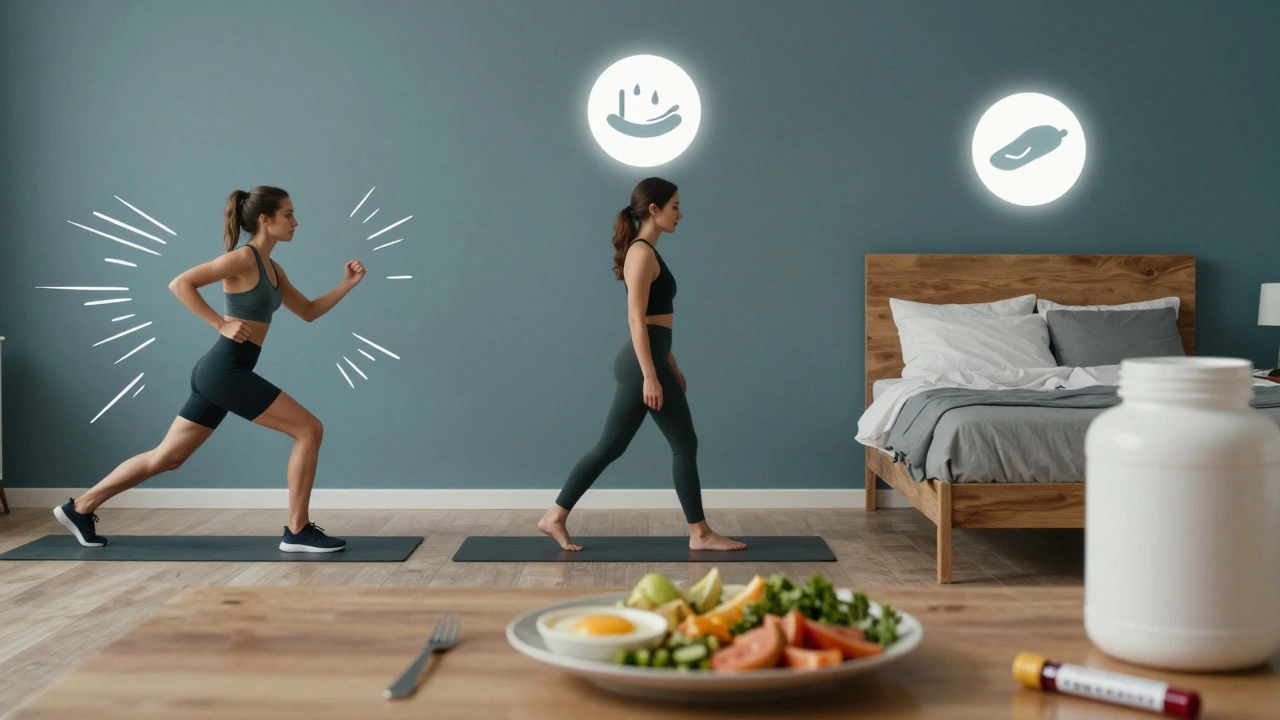
- Reduce HIIT to 2-3 sessions per week. Add low-intensity walks or yoga on other days.
- Track your food for 7 days. Aim for a 300-500 calorie deficit-not more.
- Focus on protein: 0.7-1 gram per pound of body weight. It keeps you full and preserves muscle.
- Sleep 7-8 hours. Poor sleep raises cortisol and increases cravings.
- Drink more water. Dehydration mimics hunger and causes water retention.
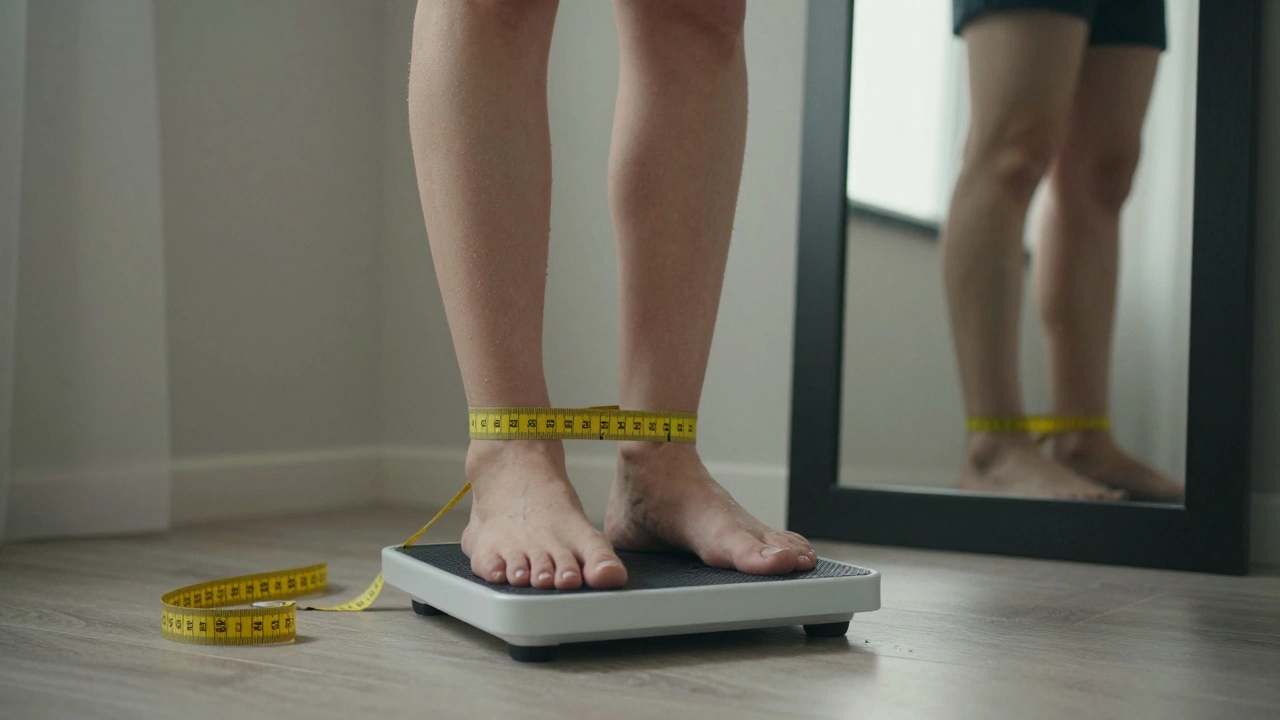
- Measure progress with photos, tape measurements, and how your clothes fit-not just the scale.
- If nothing changes after 6 weeks, get blood work done.
HIIT is a tool. Not a magic solution. Use it wisely. Push too hard, and your body fights back. Balance it with rest, nutrition, and recovery-and the scale will start moving in the right direction.
Can HIIT make you gain fat?
HIIT doesn’t directly make you gain fat. But if you’re eating more calories than you burn, overtraining, or under-recovering, your body can store fat despite the workouts. The issue isn’t HIIT-it’s the other habits around it.
Why am I gaining weight but looking thinner?
You’re likely gaining muscle and losing fat. Muscle is denser than fat, so you can lose inches and gain weight at the same time. If your clothes fit better and your strength is improving, you’re making progress-even if the scale says otherwise.
Should I stop HIIT if I’m gaining weight?
No. But you should adjust how often you do it. Cut back to 2-3 sessions per week and focus on recovery, nutrition, and sleep. HIIT is effective-but only when balanced with rest.
Does HIIT increase appetite?
Yes. HIIT can spike hunger hormones like ghrelin, especially if you’re not eating enough protein or sleep-deprived. That’s why post-workout snacks often lead to overeating. Eat a high-protein meal after your session to stay full longer.
How long does water retention last after HIIT?
Water retention after intense workouts usually lasts 2-5 days. It’s caused by muscle inflammation and repair. Drink plenty of water, reduce salt, and give your body time. The scale will drop once recovery is complete.