Why Is the First 20 Minutes of Running the Hardest?

Running Warm-up Calculator
Your Results
Enter your pace and fitness level to see your personalized warm-up strategy.
Ever hit the pavement and felt like your body was made of lead during the first few minutes? You’re not weak. You’re not out of shape. You’re just experiencing something every runner goes through-the brutal first 20 minutes. It doesn’t matter if you’re a beginner or have been running for years. That early slog feels the same: heavy legs, labored breathing, and a voice in your head screaming, “Why am I doing this?”
What’s Really Happening in Your Body
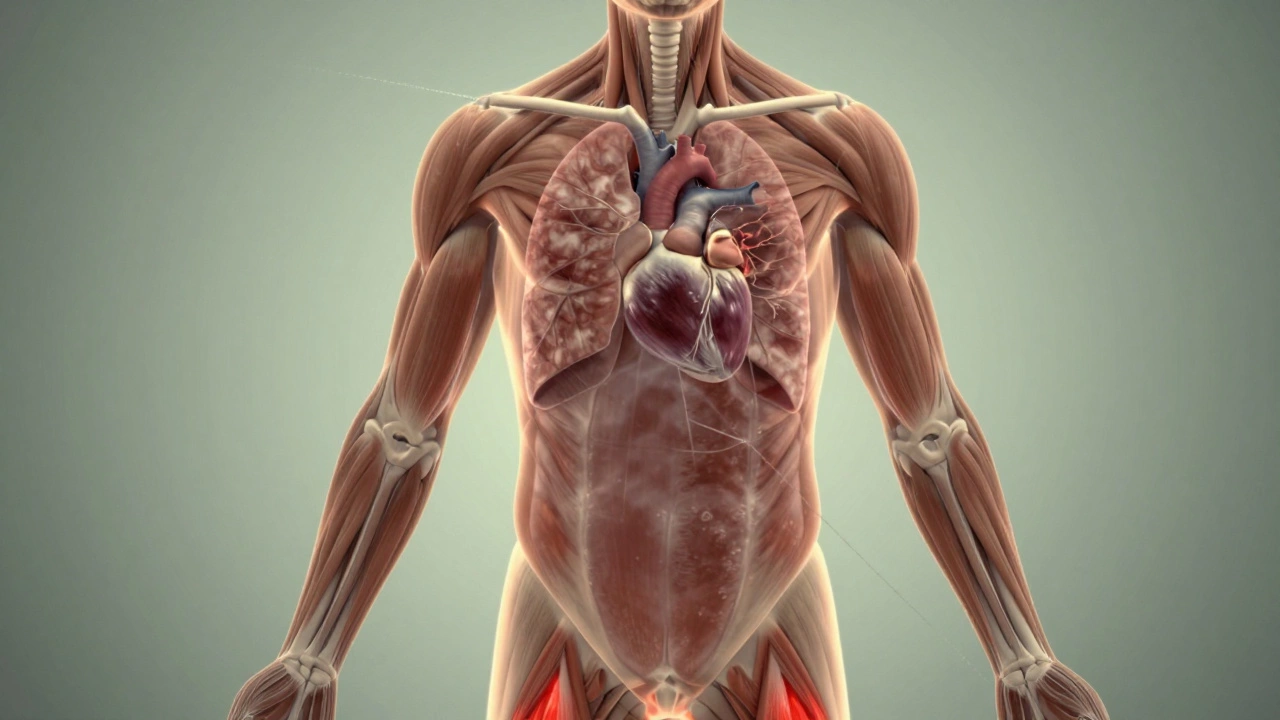
When you start running, your body isn’t ready. Not even close. Your muscles are still cold, your heart hasn’t found its rhythm, and your lungs are gasping for air like they’ve been holding their breath for hours. It’s not laziness. It’s biology.
Your body runs on energy systems, and the first few minutes of running force it to switch from one system to another. At rest, your body uses aerobic metabolism-slow, steady, oxygen-based energy. But when you sprint out of the gate, your muscles need energy now. So they tap into the anaerobic system, which doesn’t need oxygen. It’s fast, but it’s messy. It produces lactic acid as a byproduct. That’s what makes your legs burn.
Meanwhile, your heart and lungs are scrambling to catch up. It takes about 15 to 20 minutes for your cardiovascular system to fully engage. Until then, you’re running on borrowed energy. Your body’s trying to deliver oxygen to muscles that are already burning fuel without it. That mismatch is why your breathing feels ragged and your chest tight.
The Mental Hurdle
Physical discomfort is only half the story. The mental struggle is just as real. Your brain doesn’t understand why you’re making it suffer. Evolutionarily speaking, running hard is a last-resort survival move-not something you do for fun. So your brain throws up red flags: “Stop. You’re wasting energy. You’re not in danger.”
That voice isn’t lying. It’s trying to protect you. But in modern life, running isn’t about escaping lions. It’s about building endurance. The problem? Your brain hasn’t caught up. It still thinks you’re in a life-or-death situation. That’s why the first 10 minutes feel like a war. Your mind is fighting your body’s decision to run.
Studies show that runners who push through the first 15-20 minutes report a dramatic shift in how they feel. It’s called the “second wind.” Not magic. Not luck. Just physiology. Once your body transitions fully to aerobic metabolism, lactic acid clears, oxygen delivery improves, and your stride becomes smoother. That’s when running starts to feel good.
Why 20 Minutes? Not 10 or 30
Why does it take 20 minutes, and not 10 or 30? It’s not arbitrary. It’s tied to how long it takes your body to activate key systems:
- Heart rate stabilization: 8-12 minutes to reach steady state
- Oxygen uptake (VO₂): 15-20 minutes to peak
- Thermoregulation: 10-15 minutes to start sweating efficiently
- Neuromuscular coordination: 5-10 minutes for muscles to sync up
Combine all those delays, and you get a 20-minute window where everything is working against you. After that, the systems sync. The burn fades. The rhythm clicks. That’s why the hardest part ends around the 20-minute mark.
How to Make It Easier
You can’t skip the struggle-but you can make it less brutal. Here’s how:
- Warm up properly. Don’t just step out the door and sprint. Do 5-7 minutes of dynamic stretches: leg swings, high knees, butt kicks. Get your blood moving. Even a slow 5-minute walk before you start helps.
- Start slower than you think. If you’re gasping in the first minute, you’re going too fast. Aim for a pace where you can speak in short sentences. That’s your aerobic sweet spot. You’ll get faster later.
- Use breathing rhythm. Try a 3:2 pattern-three steps inhale, two steps exhale. It calms your nervous system and tells your body, “We’re not in crisis.”
- Focus on the next 5 minutes. Don’t think about 30 minutes. Just get to 5. Then 10. Then 15. Breaking it down tricks your brain into thinking the task is manageable.
- Run at the same time every day. Your body learns patterns. If you run at 6 a.m. every Tuesday, your heart rate and hormone levels start adjusting hours before you even leave the house. It’s called circadian adaptation.

Real Stories, Real Relief
One runner in Bristol, Sarah, told me she used to quit every run before the 15-minute mark. She thought she was unfit. Then she started doing 5-minute warm-ups with bodyweight squats and arm circles. She slowed her pace. She focused on breathing. Within three weeks, she hit 25 minutes without stopping. She said, “It wasn’t that I got stronger. I just stopped fighting my body.”
Another runner, Mark, started running at night because he couldn’t handle the morning fog. He realized his body was still warming up from sleep. When he switched to late afternoon runs, the first 20 minutes felt lighter. His body was already active. His muscles were warm. His mind was alert. He went from 10-minute runs to 30-minute runs in six weeks.
It Gets Better-But Only If You Stick With It
The first 20 minutes will always be the hardest. That’s just how running works. But here’s the secret: the more you run, the faster your body adapts. That 20-minute wall doesn’t disappear-it just gets closer to the start. After six months, you might only feel it for the first 8 minutes. After a year? Maybe just the first 3.
And when it does get easier? That’s when you realize running isn’t about pushing through pain. It’s about learning to listen to your body. The discomfort isn’t a sign you’re failing. It’s proof you’re changing.
You don’t need to be fast. You don’t need to be fit. You just need to show up. Even if it feels awful. Especially then. Because after 20 minutes, the real runner emerges.
Why does my chest feel tight during the first few minutes of running?
Your lungs and heart are still adjusting to the increased demand for oxygen. At rest, your body uses minimal oxygen. When you start running, your muscles need more fuel fast. Until your cardiovascular system kicks into full gear-usually around 15 to 20 minutes-your body is working in oxygen debt. This causes shallow breathing and a tight, burning sensation in your chest. It’s normal, not dangerous.
Should I stop running if the first 20 minutes feel unbearable?
No. Stopping reinforces the idea that running is too hard. Instead, slow down. Walk for 30 seconds, then jog again. Repeat until you find a rhythm. The goal isn’t to push through pain-it’s to teach your body that movement is safe. Over time, the discomfort shrinks. Persistence rewires your nervous system.
Does running in the morning make the first 20 minutes harder?
Yes, often. Your core temperature is lower in the morning, your muscles are stiffer, and your heart rate is slower. Your body hasn’t fully woken up. That’s why many runners find afternoon or evening runs easier early on. If morning runs are your only option, warm up for 5-7 minutes with light movement before you start jogging.
Can I train to reduce the length of the hard start?
Absolutely. Consistent running trains your body to switch to aerobic energy faster. After 4-6 weeks of regular runs, your VO₂ max improves, your heart becomes more efficient, and your muscles get better at clearing lactic acid. The first 20 minutes won’t vanish-but the burn will fade quicker. Some runners report the tough phase shrinking to under 10 minutes within a few months.
Is it normal to feel worse during the first 20 minutes after a break?
Yes. After even a week off, your cardiovascular efficiency drops. Your muscles lose some of their aerobic adaptation. Your body forgets the rhythm. That’s why returning after a break feels harder than starting from scratch. Don’t panic. Your fitness comes back faster than it left. Just ease back in-walk-jog intervals work wonders.