How Long Does It Take to See Results from Strength Training?
Strength Training Results Calculator
Your Progress Timeline
Your Estimated Timeline
Most people start strength training with one question: how long until I actually see results? You hit the gym, lift heavy, eat clean, and then... nothing. After a week. After two. After a month. You’re not imagining it - progress feels slow. But here’s the truth: results aren’t invisible. They’re just happening in ways you can’t see yet.
What ‘Results’ Actually Mean (And When You’ll Notice Them)
When you ask about results, you probably mean one of three things: visible muscle growth, increased strength, or fat loss. These don’t happen at the same time, and they don’t look the same for everyone.
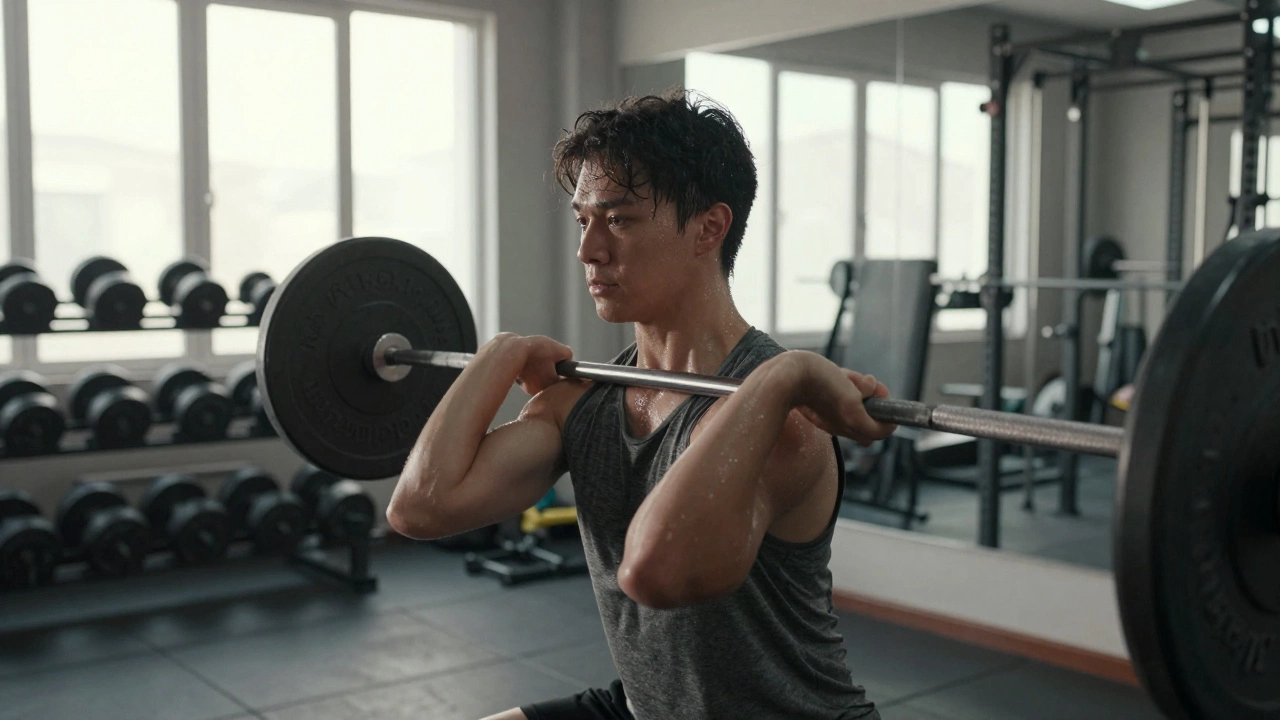
Strength gains show up first - often within two to four weeks. That’s because your nervous system gets better at recruiting muscle fibers before your muscles even grow bigger. You might not look different, but you’ll notice you can lift 5kg more on the bench press, or do an extra rep on your squats. That’s your body adapting. This is real progress, even if the mirror doesn’t show it.
Visible muscle changes take longer. For most people, noticeable muscle definition starts showing around eight to twelve weeks with consistent training and decent nutrition. That’s not a guarantee - it depends on your starting point, genetics, and how hard you’re pushing. Someone who’s been sedentary will see changes faster than someone who’s already athletic. Men typically build visible muscle faster than women due to higher testosterone levels, but women absolutely build strength and tone - just differently.
Fat loss is a separate game. If you’re trying to get leaner, your results depend more on your diet than your workout. Strength training helps preserve muscle while you lose fat, but you won’t see abs unless your body fat drops below 15% for men or 20% for women. That can take three to six months, depending on your starting point and calorie deficit.
Why You’re Not Seeing Results (And What You’re Probably Doing Wrong)
Here’s the most common reason people don’t see results after six weeks: they’re not lifting heavy enough.
Strength training isn’t about doing 30 reps with a light dumbbell until your arms shake. It’s about challenging your muscles with enough resistance to force them to adapt. If you can easily do 15 reps of a movement, it’s time to increase the weight. You need to be close to failure by the last rep - meaning you can’t do another one with good form.
Another mistake? Inconsistent training. Going to the gym twice a week for 30 minutes isn’t enough. You need at least two full-body sessions per week, or three to four split sessions (like upper/lower body). Each muscle group needs to be trained at least twice a week for optimal growth.
And then there’s recovery. You don’t grow in the gym. You grow when you sleep, eat, and rest. If you’re sleeping less than seven hours a night, skipping protein, or training sore muscles every day, you’re sabotaging your progress. Muscle repair happens during rest - not during the set.
The Real Timeline: What to Expect Month by Month
Let’s break it down with realistic expectations.
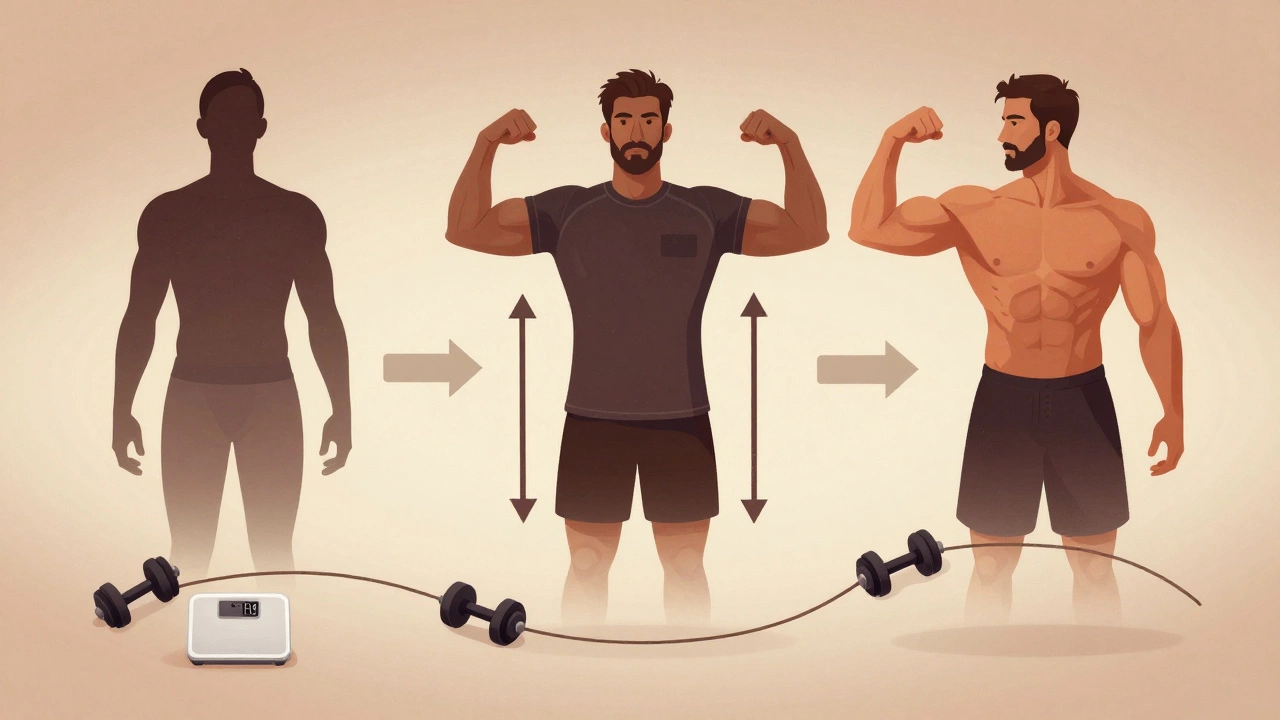
- Weeks 1-4: You’ll feel stronger. Your form improves. You’re learning the movements. Your muscles might feel tighter or fuller - that’s fluid retention and early adaptation. Don’t expect to look different.
- Weeks 5-8: Strength jumps continue. You’re lifting heavier. You might notice your clothes fitting differently - sleeves feel tighter, pants looser around the waist. This is often fat loss mixed with muscle gain. Your posture improves. You stand taller.
- Weeks 9-12: This is when most people start seeing visible changes. Arms, shoulders, or legs look more defined. You catch yourself looking in the mirror more often. Friends start asking if you’ve changed your routine.
- Months 4-6: If you’ve stayed consistent, you’ll see real transformation. Muscle mass increases. Strength keeps climbing. Your body composition shifts noticeably. This is the point where people say, ‘I didn’t think I could do this.’
That’s the pattern. It’s not magic. It’s math: consistent stimulus + recovery + nutrition = results.
How Nutrition Affects Your Timeline
You can train like crazy, but if you’re not eating enough protein, your muscles won’t repair. Aim for 1.6 to 2.2 grams of protein per kilogram of body weight daily. That’s about 120-165g for a 75kg person. Spread it across meals - don’t just shove it all into dinner.
Calories matter too. If you’re trying to lose fat, you need a slight deficit. If you’re trying to build muscle, you need a slight surplus. You don’t need to count every calorie, but you need to know if you’re eating enough to support growth. Most people underestimate how much they need to eat to gain muscle.
Hydration and sleep are non-negotiable. Dehydration slows recovery. Poor sleep kills testosterone and spikes cortisol - the hormone that breaks down muscle. Two hours of extra sleep per night can make more difference than an extra gym session.
Real People, Real Timelines
Let’s look at two real cases from people I’ve worked with in Bristol.
Case 1: Sarah, 38, sedentary office worker - Started with bodyweight squats and light dumbbells. She trained three times a week, ate 1.8g protein per kg, and slept 7+ hours. After eight weeks, she could do 10 push-ups (she couldn’t do one before). At 12 weeks, her arms looked toned. At six months, she lost 6kg of fat and gained 2kg of muscle. Her jeans fit better. She didn’t get huge - she got strong and lean.
Case 2: Mark, 29, former athlete - Came back after a year off. He lifted heavy four times a week, ate in a surplus, and tracked his lifts. He added 15kg to his squat in six weeks. At three months, his chest and shoulders looked fuller. At six months, he gained 5kg of muscle and his body fat dropped to 12%. He didn’t change his diet much - he just got back to lifting with intensity.
Both saw results. But they weren’t the same. Sarah’s results were about tone and function. Mark’s were about size and strength. Neither was ‘faster’ - they were just different goals.
What to Track (Beyond the Scale)
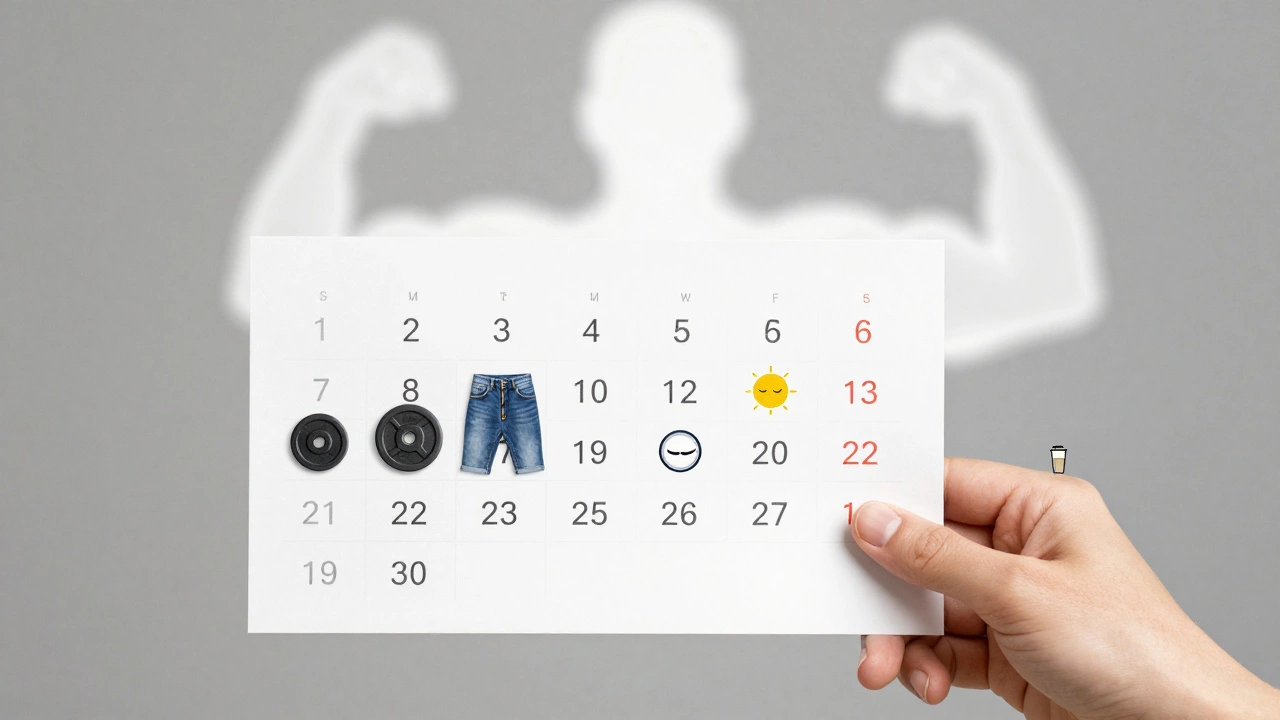
The scale lies. It doesn’t tell you if you lost fat or gained muscle. Instead, track these:
- How much weight you can lift on key lifts (squat, bench, deadlift)
- How many reps you can do with the same weight
- How your clothes fit
- Photos taken every four weeks (same lighting, same pose)
- How you feel - more energy? Better sleep? Less back pain?
These are the real signs of progress. If you’re getting stronger, you’re building muscle. If your clothes are looser, you’re losing fat. The mirror will catch up - but only if you’re patient.
When to Worry (And When to Keep Going)
If you’ve trained consistently for 12 weeks and see zero progress - no strength gains, no change in how you look or feel - then something’s off. Maybe your program is too easy. Maybe you’re not eating enough. Maybe you’re overtraining. Time to reassess.
But if you’ve been training for six weeks and you’re not seeing changes? That’s normal. You’re not failing. You’re just in the invisible phase.
Strength training is a long game. The people who get results aren’t the ones who train the hardest for a month. They’re the ones who show up, week after week, even when nothing seems to change.
Progress isn’t loud. It’s quiet. It’s the extra rep. The heavier weight. The better sleep. The jeans that zip easier. Those are the wins. They’re real. And they’re coming.
Can I see results from strength training in 2 weeks?
You won’t see visible muscle growth in two weeks, but you will likely feel stronger. Your nervous system adapts quickly - you’ll lift heavier or do more reps. That’s progress, even if the mirror hasn’t caught up yet.
Why am I not gaining muscle even though I lift regularly?
You’re probably not lifting heavy enough, not eating enough protein, or not recovering well. Muscle grows when you challenge it with resistance and give it time to repair. If your workouts feel easy, increase the weight. If you’re not sleeping or eating enough, fix that first.
Do women build muscle as fast as men?
Women typically build muscle slower than men due to lower testosterone, but they can still gain strength and tone effectively. The difference is in size, not capability. Women who train hard will get stronger and leaner - just not as bulky. That’s normal and healthy.
Is it possible to lose fat and gain muscle at the same time?
Yes - especially if you’re new to training or coming back after a break. This is called ‘body recomposition.’ It requires a moderate calorie deficit, high protein intake, and consistent strength training. It’s slower than losing fat or gaining muscle alone, but it’s possible and sustainable.
How often should I train to see results?
Train each major muscle group at least twice a week. That means at least three full-body sessions or four split sessions (like upper/lower) per week. Two sessions a week is the bare minimum - more is better if you recover well.
Do I need supplements to see results?
No. Protein powder can help if you struggle to hit your protein target, but it’s not required. Whole foods like eggs, chicken, fish, beans, and dairy work just fine. Creatine is the only supplement with strong evidence for boosting strength and muscle gains - but even that’s optional.