How Much Cardio Is Enough a Day? Science-Backed Guidelines for Real Results

Cardio Calculation Tool
How Much Cardio Do You Really Need?
This tool calculates your optimal daily cardio based on your health goals and fitness level. Answer a few quick questions to get personalized recommendations.
Your Personalized Cardio Plan
Recommended Weekly Cardio: minutes
Daily Target: minutes per day
Frequency:
Best Activities For You:
Pro Tip: Focus on consistency rather than perfection. Even small amounts of daily movement add up to significant health benefits.
How much cardio should you actually do each day? It’s not about pushing yourself to exhaustion or logging hours on the treadmill just because you think you should. It’s about finding the sweet spot that keeps your heart strong, your energy up, and your body feeling good - without burning you out.
What does ‘enough’ really mean?
‘Enough’ doesn’t mean the same thing for everyone. A 70-year-old recovering from heart surgery needs a different amount than a 25-year-old training for a 10K. But there are clear, science-backed targets that work for most healthy adults.
The American Heart Association says 150 minutes of moderate-intensity cardio per week is the minimum for heart health. That’s 30 minutes, five days a week. Or you can do 75 minutes of vigorous cardio - like running or HIIT - spread over three days. These aren’t suggestions. They’re based on decades of research linking this level of activity to lower risk of heart disease, stroke, type 2 diabetes, and even some cancers.
But here’s the thing: if you’re just trying to stay healthy, you don’t need to hit these numbers every single week. Even 10 minutes of brisk walking after dinner counts. Movement adds up. The real danger isn’t doing too little - it’s doing nothing at all.
What counts as cardio?
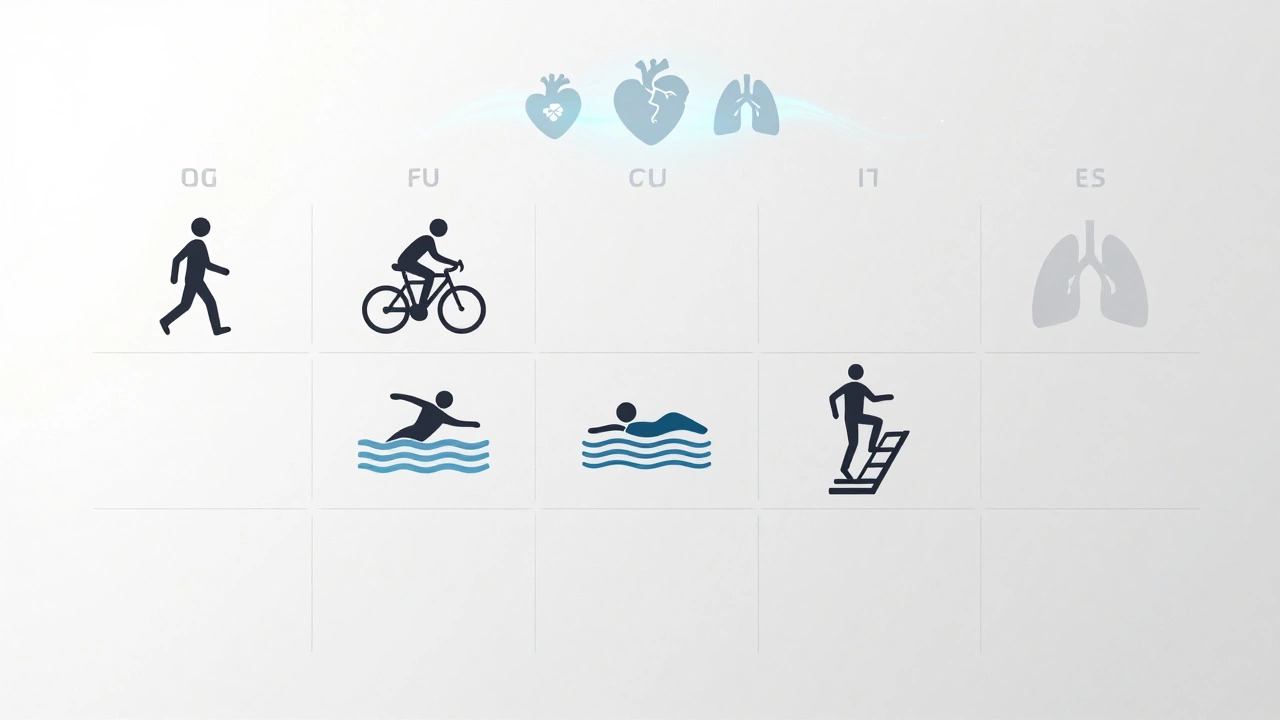
Cardio isn’t just running. It’s any activity that raises your heart rate and keeps it there for a while. Think: cycling, swimming, dancing, hiking, stair climbing, even vigorous gardening. If you’re breathing harder than normal but can still talk in short sentences, you’re in the moderate zone. If you can only say a few words before gasping for air, you’re in the vigorous zone.
For most people, mixing both types works best. A 40-minute walk on Monday, a 20-minute run on Wednesday, and a 30-minute swim on Friday gives you variety, reduces injury risk, and keeps things interesting. You don’t need a gym membership. You don’t need fancy gear. Just get moving.
Is more cardio always better?
No. And pushing too hard can backfire.
Studies show that people who do more than 60 minutes of intense cardio daily - especially without enough rest or nutrition - start to see diminishing returns. Their immune systems weaken. Their muscles break down. Their stress hormones spike. Some even develop heart rhythm issues over time. This isn’t rare. It’s called ‘overtraining syndrome,’ and it’s more common than you think.
If you’re constantly exhausted, sleeping poorly, or feeling irritable, your body is screaming for a break. More cardio isn’t the answer. Recovery is.
For most people, five days a week of cardio is plenty. Two days of rest or light activity - like stretching, yoga, or a slow walk - lets your body repair and get stronger.
What if you want to lose weight?
If your goal is fat loss, you’ll likely need more than the basic 150 minutes. Research from the University of Copenhagen found that people who lost weight and kept it off averaged 200-300 minutes of moderate cardio per week - about 40-60 minutes a day, five days a week.
But here’s the catch: cardio alone won’t melt fat if you’re eating a lot of processed food. You can’t out-exercise a bad diet. The real key is combining cardio with strength training and eating whole foods. One study showed that people who did 150 minutes of cardio plus two days of lifting lost more fat and kept more muscle than those who only did cardio.
So if you’re serious about shedding pounds, aim for 200-250 minutes of cardio a week, but pair it with protein-rich meals and resistance training. Don’t just run - build muscle while you burn fat.

What about beginners?
If you haven’t moved much in years, don’t start with 30 minutes of running. That’s a recipe for injury and quitting.
Start with 10-15 minutes a day, three times a week. Walk at a pace where you’re slightly out of breath but can still hold a conversation. Use a pedometer or phone app to track steps. Aim for 5,000 steps a day at first, then slowly bump it up to 7,500, then 10,000.
After two weeks, add a fifth day. After a month, try adding a 5-minute jog between walks. Progress slowly. Your joints, lungs, and heart will thank you.
What about older adults or people with health conditions?
If you have heart disease, arthritis, diabetes, or high blood pressure, talk to your doctor before starting a new routine. But don’t assume you’re off the hook. Movement is medicine.
Studies show that even light activity - like 20 minutes of walking or water aerobics - lowers blood pressure, improves insulin sensitivity, and reduces joint pain. The goal isn’t to run a marathon. It’s to stay independent, mobile, and pain-free as you age.
For many older adults, three days a week of 20-30 minutes of walking or cycling is enough to make a real difference. Balance exercises like tai chi or standing on one foot for 30 seconds count too. They reduce fall risk, which is just as important as heart health.
How to know if you’re doing enough
You don’t need a fancy tracker. Just ask yourself these three questions:
- Do I feel more energized after exercising, not drained?
- Do I sleep better and feel less stressed?
- Can I do daily tasks - climbing stairs, carrying groceries, playing with kids - without getting winded?
If you answered yes to all three, you’re probably doing enough.
If you’re tired all the time, sore for days, or skipping workouts because you dread them, you’re doing too much. Scale back. Rest. Try again next week.
Real-life examples that work
Here’s what ‘enough’ looks like for real people:
- Emma, 42, office worker: Walks 20 minutes at lunch, 15 minutes after dinner. That’s 35 minutes a day, five days a week. She lost 8 pounds in three months and no longer needs her blood pressure pill.
- David, 58, retired: Cycles 30 minutes on Tuesdays and Thursdays, swims 20 minutes on Saturdays. He says he feels 10 years younger.
- Leah, 29, new mom: Does 15-minute home HIIT videos three times a week, walks with her baby in the stroller 20 minutes on weekends. She’s not trying to get ‘ripped’ - just strong enough to keep up with her toddler.
They didn’t do hours. They just moved consistently. That’s the secret.
What to avoid
Don’t fall for these myths:
- Myth: You need to sweat buckets to burn fat. Truth: You burn calories whether you sweat or not. Walking in the cold? Still counts.
- Myth: Cardio is the only way to lose weight. Truth: Strength training builds muscle, which boosts your resting metabolism. You burn more calories even when you’re not moving.
- Myth: You have to do cardio every day. Truth: Rest days are when your body gets stronger. Skipping one or two days a week isn’t failure - it’s strategy.
Cardio isn’t punishment. It’s self-care. Treat it that way.
Final answer: How much cardio is enough?
For most healthy adults: 150 minutes of moderate cardio per week - that’s 30 minutes, five days a week. Add two days of light activity or rest.
If you want to lose weight: aim for 200-250 minutes per week, and combine it with strength training and better nutrition.
If you’re new to exercise: start with 10-15 minutes a day, three times a week, and build slowly.
If you’re older or have health issues: even 20 minutes a day makes a difference. Talk to your doctor, but don’t stop moving.
There’s no magic number. Just consistency. Move when you can. Rest when you need to. Keep going.
Is 20 minutes of cardio a day enough?
Yes, if you’re just starting out or maintaining health. Twenty minutes a day adds up to 140 minutes a week - close to the 150-minute minimum recommended by the American Heart Association. It’s not ideal for weight loss, but it’s excellent for heart health, mood, and energy. Build from there.
Can I do cardio every day?
You can, but you shouldn’t unless you’re an athlete. Daily intense cardio without rest increases injury risk and can weaken your immune system. Instead, mix intense days with easy walks or rest. For most people, 3-5 days of cardio with 2-4 days of recovery is the sweet spot.
Does walking count as cardio?
Absolutely. Brisk walking - fast enough to raise your heart rate and make you breathe harder - is moderate-intensity cardio. It’s low-impact, easy to stick with, and just as effective as running for reducing heart disease risk. Many people who stick with walking for years end up healthier than those who burn out on high-intensity workouts.
How long until I see results from cardio?
You’ll notice small changes in energy and mood within a week. Better sleep and less stress show up fast. Physical changes like weight loss or improved endurance take 4-8 weeks. The key is consistency, not speed. Don’t quit before your body has time to adapt.
Should I do cardio before or after strength training?
If your goal is muscle gain, do strength training first. Your muscles need full energy for lifting. If your goal is fat loss or endurance, cardio first is fine. But if you’re doing both on the same day, keep sessions under 60 minutes each, or split them into morning and evening.
Next steps
Start tomorrow. Not next Monday. Not after the holidays. Tomorrow.
Put on your shoes. Walk for 10 minutes. That’s it. No need to track calories. No need to run. Just move. If you do that for seven days in a row, you’ve already done more than 80% of people your age.
Then add five more minutes next week. Then swap one walk for a bike ride. Then try a short dance video. Keep it simple. Keep it going. That’s how real change happens - not with extreme effort, but with quiet, daily commitment.