Is It Better to Go to a Personal Trainer 2 or 3 Times a Week?

Personal Training Frequency Calculator
Determine if twice or three times weekly sessions are better for your goals and lifestyle
What are your primary goals?
How do you manage recovery?
How busy is your schedule?
Can you afford three sessions?
Your goal for [goal], combined with [recovery] recovery and [schedule] schedule makes twice weekly the ideal frequency. This aligns with research showing 40% better retention and sustainable results for most people. Focus on consistency and quality over quantity.
Pro tip: Start with these two sessions and reassess after 8 weeks. Your trainer can help optimize the program based on your progress.
If you're trying to get stronger, lose fat, or just feel better in your own skin, hiring a personal trainer is one of the best moves you can make. But once you’ve signed up, the big question pops up: should you go twice a week or three times? There’s no one-size-fits-all answer, but there are clear patterns based on your goals, recovery, and lifestyle. Let’s break it down with real-world logic, not hype.
What Happens When You Train Twice a Week?
Two sessions a week is the sweet spot for most people who aren’t training full-time. It gives you enough stimulus to make progress without burning you out. Think of it like watering a plant-you don’t need to soak it every day. Two solid sessions give your body time to adapt, recover, and grow stronger.
For someone new to training or returning after a long break, two days is often enough to build consistency. You’ll learn proper form, build confidence, and start seeing results without feeling overwhelmed. Most people who train twice a week stick with it longer because it fits into busy lives-work, family, commuting. A 2023 study from the British Journal of Sports Medicine found that people who trained twice weekly were 40% more likely to stick with their program over 12 months than those aiming for five or more days.
Your trainer can split those two sessions effectively: one focused on strength (squats, deadlifts, presses) and the other on conditioning or mobility (cardio, core, flexibility). That balance keeps things varied and reduces injury risk. You’re not trying to cram everything into one session. You’re building a habit.
When Does Three Times a Week Make Sense?
Three sessions a week starts to shift the game. It’s not just about frequency-it’s about volume and intensity. If your goal is serious muscle gain, fat loss, or preparing for a competition, three days gives you more room to target different areas properly.
For example: Monday = lower body strength, Wednesday = upper body strength, Friday = metabolic conditioning. That kind of split lets you train harder in each session because you’re not trying to do everything at once. You’re not racing through exercises just to hit a number. You’re building real strength and endurance.
People who train three times a week also tend to lose fat faster-not because the workouts are harder, but because they burn more calories overall and boost metabolism more consistently. A 2024 review from the Journal of Strength and Conditioning Research showed that individuals training three times weekly lost an average of 1.2kg more body fat over 12 weeks than those training twice, assuming diet stayed the same.
But here’s the catch: three sessions demand more recovery. Sleep, nutrition, and stress levels matter more. If you’re already working 60-hour weeks, juggling kids, or recovering from an old injury, pushing to three days might backfire. You could end up tired, sore, and quitting-exactly what you’re trying to avoid.
Recovery Is the Hidden Factor
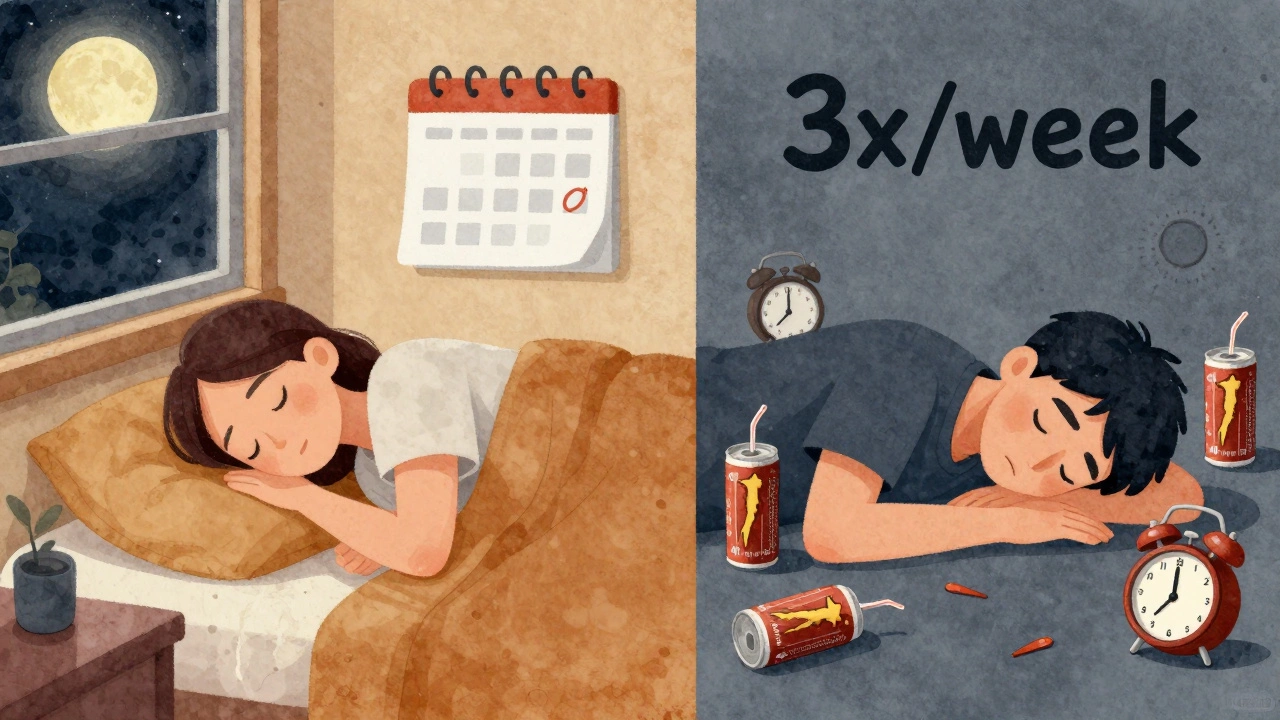
Many people think more sessions = better results. But muscle doesn’t grow in the gym. It grows when you rest. If you’re training three times a week but not sleeping well, eating enough protein, or managing stress, you’re not giving your body what it needs to recover. You’re just exhausting yourself.
Signs you’re overdoing it: constant soreness, trouble sleeping, irritability, lack of progress, or dreading your sessions. If that sounds familiar, dialing back to two days might actually help you progress faster. You’ll show up energized, not drained.
On the flip side, if you’re sleeping 7+ hours a night, eating balanced meals, and feeling good between sessions, three days can work beautifully. It’s not about the number-it’s about how you feel.
What Your Goals Tell You
Your goal should drive your schedule, not the other way around.
- Weight loss: Two sessions with added daily walking or light cardio often works better than three intense sessions. You don’t need to burn 800 calories in the gym if you’re already active outside of it.
- Muscle gain: Three sessions give you the volume needed to stimulate growth across major muscle groups. Two might not be enough unless you’re very advanced.
- General fitness: Two is plenty. You’ll feel stronger, move better, and have more energy for life.
- Rehab or injury recovery: Two sessions with a focus on movement quality and mobility are safer and more effective than pushing too hard.
Most people in the UK aiming for general fitness don’t need three sessions. They need consistency, not intensity. A 2025 survey by the UK Fitness Federation found that 68% of clients who trained twice weekly reported higher satisfaction and better long-term results than those doing three or more.
Cost and Commitment Matter Too
Let’s be real: personal training isn’t cheap. In Bristol, a single session can cost between £45 and £75. Two sessions a week = £180-£300 a month. Three sessions = £270-£450. That’s a big jump.
Is the extra cost worth it? Only if you’re getting measurable results. If you’re going to three sessions but skipping workouts, not following nutrition advice, or showing up tired, you’re wasting money. Two focused, consistent sessions often deliver better ROI than three half-hearted ones.
Many trainers recommend starting with two sessions. After 6-8 weeks, you reassess. Are you ready to push harder? Do you have the time and energy? Then add a third. Don’t commit to three from day one unless you’re certain.

What Most People Get Wrong
The biggest mistake? Thinking frequency is the key to success. It’s not. Consistency, effort, and recovery are.
Someone training twice a week with perfect form, proper nutrition, and good sleep will outperform someone doing three sessions but eating junk food, sleeping five hours, and skipping warm-ups.
Another myth: you need to train every muscle group every week. Not true. You can train legs hard on Monday and still build strength by targeting them again in 72 hours. Your body doesn’t need daily stimulation.
Also, don’t confuse personal training with personal coaching. A trainer’s job isn’t to make you sweat every day. It’s to guide you, correct your form, and keep you accountable. That can happen just as effectively in two sessions as in three.
Final Answer: Start with Two, Add Three Only If You’re Ready
If you’re new to training, busy, or unsure-you start with two sessions a week. That’s enough to build momentum, learn the basics, and see real changes in your strength and energy levels.
If after 8 weeks you’re sleeping well, eating better, recovering fine, and craving more challenge, then add a third session. Use it wisely: not as a filler, but as a targeted boost to your goals.
There’s no magic in the number three. What matters is that you show up, you give effort, and you let your body recover. Two good days beat three rushed ones every time.
And if you’re still unsure? Ask your trainer. A good one will help you figure out what fits your life-not sell you a package.
Is it better to train with a personal trainer twice or three times a week?
For most people, twice a week is better because it balances progress with recovery. Three sessions can work if you’re focused on muscle gain, fat loss, or have the time and energy to recover properly. Start with two, then add a third only if you’re ready.
Can I get results with just two personal training sessions a week?
Absolutely. Two well-structured sessions a week are enough to build strength, lose fat, and improve fitness-especially if you’re consistent with nutrition and sleep. Many people see better long-term results with two sessions because they stick with it.
What if I can only afford one session a week?
One session is still valuable. Use it to learn proper form and get a plan you can follow on your own. Many trainers give clients workout sheets or video demos for home sessions. Consistency matters more than frequency.
Do I need to train every day to lose weight?
No. Weight loss happens when you burn more calories than you eat. Personal training helps with structure and accountability, but daily workouts aren’t required. Walking, daily movement, and diet play bigger roles than extra gym sessions.
How long should each personal training session last?
Most sessions last 45 to 60 minutes. That’s enough time to warm up, train hard, and cool down without dragging on. Longer sessions don’t mean better results-especially if you’re exhausted by minute 30.