What Cardio is Most Effective for Fat Loss and Heart Health?

Most people treat cardio like a chore-a repetitive loop on a treadmill that feels like it takes forever. But here is the truth: there is no single "best" cardio exercise for everyone because your body isn't a calculator. The most effective workout depends entirely on whether you want to torch calories, lower your resting heart rate, or build an engine that can handle a mountain hike without gasping for air. If you just want to sweat, any movement works. If you want specific results, you need to match the intensity to the goal.
Главные выводы / Key Takeaways
- HIIT is the king of efficiency for calorie burn and metabolic spikes.
- Zone 2 Training is the gold standard for long-term heart health and endurance.
- Low-Impact options like swimming are best for longevity and joint protection.
- The "best" cardio is the one you actually enjoy enough to do three times a week.
The Efficiency King: High-Intensity Interval Training
If you have twenty minutes and want to feel like you've run a marathon, HIIT is a training method that alternates short bursts of intense anaerobic exercise with less-intense recovery periods. It’s not about jogging; it’s about sprinting until your lungs burn, then walking for a minute, then doing it again.
Why does this work so well? It triggers a phenomenon called Excess Post-exercise Oxygen Consumption, or EPOC. Basically, your metabolism stays elevated for hours after you leave the gym because your body is working hard to restore oxygen levels and repair muscle tissue. Imagine sprinting up a flight of stairs for 30 seconds and then strolling back down; by the time you finish a 20-minute session, your body is still burning calories while you're sitting on the couch watching TV.
However, HIIT is taxing. If you do it every day, you'll likely burn out or injure yourself. It's a tool, not a lifestyle. Limit these sessions to two or three times a week to avoid overtraining your central nervous system.
The Longevity Secret: Zone 2 Training
While HIIT gets all the glory, Zone 2 Training is where the real health magic happens. This is steady-state aerobic exercise performed at a pace where you can still maintain a conversation but are breathing heavily. Think of it as a "conversational pace."
In this zone, your body becomes incredibly efficient at using fat as a fuel source. It forces your mitochondria-the power plants in your cells-to become more numerous and efficient. If you've ever seen endurance athletes who can run for hours without hitting a wall, they've spent years mastering Zone 2. It builds a massive aerobic base, which actually makes your HIIT sessions more effective because you recover faster between intervals.
A great example of this is a brisk walk up a slight incline or a light cycle. If you can't speak in full sentences, you've drifted into Zone 3 or 4. If you can sing a song, you're in Zone 1. Stay in that sweet spot where you're working, but not struggling.
Comparing the Heavy Hitters
Choosing between these methods often comes down to your current fitness level and how much time you have. Some people love the rush of intensity, while others prefer the meditative quality of a long walk.
| Method | Primary Goal | Intensity | Recovery Time | Joint Impact |
|---|---|---|---|---|
| HIIT | Rapid Calorie Burn | Very High | 48-72 Hours | High |
| Zone 2 (LISS) | Heart Health/Endurance | Low to Moderate | Low | Variable |
| Swimming | Full Body Conditioning | Moderate | Low | Very Low |
| Rowing | Power & Cardio | Moderate to High | Moderate | Low |

The Low-Impact Powerhouses
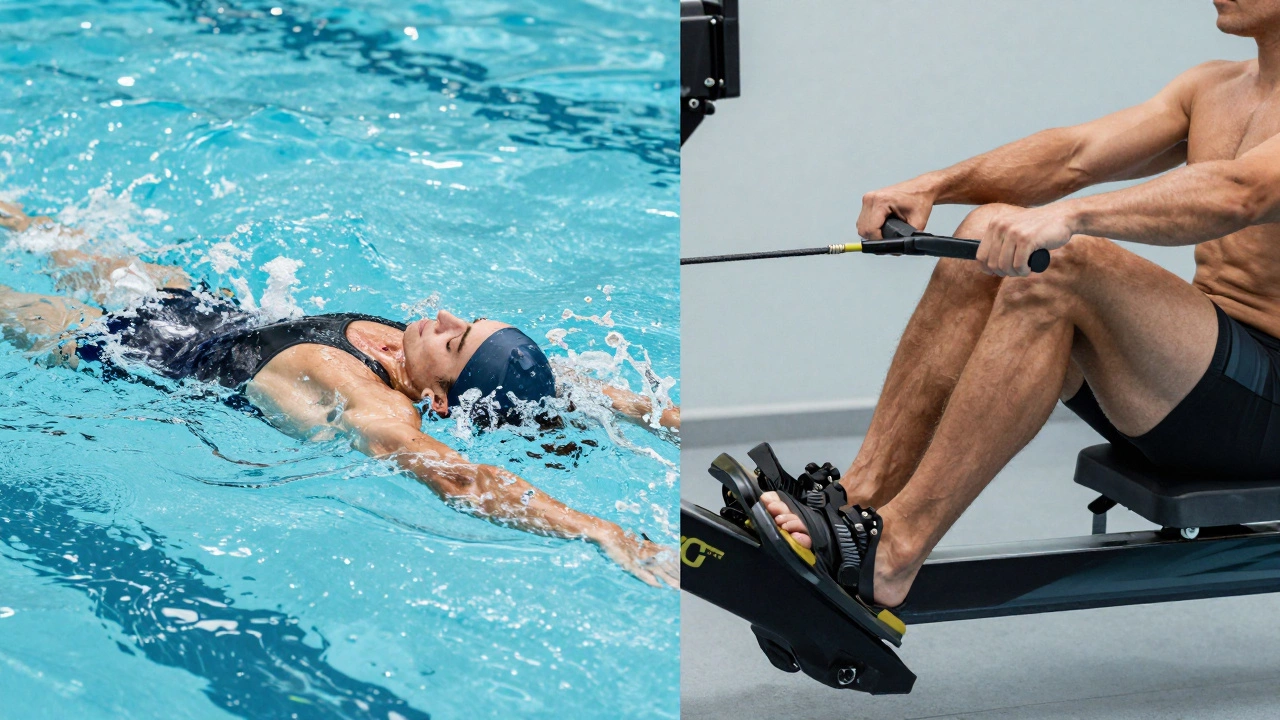
Not everyone can jump into a box jump or a 100-meter sprint. For those with knee issues or people carrying extra weight, Swimming and Rowing offer the best bang for your buck.
Swimming is unique because the water provides constant resistance, meaning you're doing a light strength workout while you're doing cardio. Since your body is buoyant, there's zero impact on your joints. It's the only form of most effective cardio for someone recovering from an injury who still wants to maintain a high heart rate.
Rowing, on the other hand, engages about 86% of your muscles. You're using your legs, core, and back. It mimics the intensity of running but without the pounding on your ankles and hips. If you use a rowing machine, remember that the power comes from the legs-don't just pull with your arms, or you'll exhaust yourself in five minutes.
How to Build Your Cardio Routine
The biggest mistake people make is picking one method and sticking to it until they get bored. The body is an adaptation machine; once you get used to a specific pace, you stop seeing the same results. The secret is a "polarized" approach. This means doing the majority of your work at low intensity and a small amount at very high intensity.
Imagine a week where you have three days of Zone 2 activity-like a 45-minute brisk walk or a light swim-and one day of HIIT, like 10 sets of 30-second sprints. This balance protects your heart and joints while still pushing your metabolic limits. You get the endurance of a hiker and the explosive power of a sprinter.
Avoid the "grey zone." This is the moderate intensity where you're too tired to be in Zone 2 but not fast enough to be doing HIIT. It's a common trap where people feel like they're working hard, but they're actually just creating fatigue without the specific adaptations of either extreme.
Common Pitfalls to Avoid
Many people fall into the trap of "cardio compensation." This happens when you do a grueling hour of cardio and then subconsciously eat an extra 500 calories because you're starving. Since cardio often suppresses appetite temporarily but spikes it later, it can actually stall weight loss if you aren't mindful of your nutrition.
Another issue is the over-reliance on heart rate monitors. While tools like the Apple Watch or Garmin are helpful, they can sometimes be inaccurate during high-intensity bursts. Use the "talk test" as your primary guide. If you can't breathe enough to say a sentence, you're in the anaerobic zone regardless of what the watch says.
Is walking actually effective cardio?
Yes, absolutely. Walking is the foundation of Zone 2 training. While it won't give you the rapid calorie burn of a sprint, it's sustainable, easy on the joints, and incredibly effective for improving insulin sensitivity and burning fat over long periods. For most people, 10,000 steps a day is a more sustainable and effective long-term strategy than two brutal gym sessions a week.
Can I do HIIT every day?
Generally, no. HIIT puts significant stress on your central nervous system and your joints. Doing it daily usually leads to burnout or injury. Most experts recommend 2-3 sessions per week, alternating with low-intensity recovery days to allow your muscles to repair and your heart to recover.
Which cardio is best for losing belly fat?
You cannot "spot reduce" fat from your belly, but a combination of HIIT (for the metabolic spike) and Zone 2 (for fat oxidation) is the most effective approach. The HIIT helps burn calories quickly, while the steady-state cardio teaches your body to use stored fat for energy.
Do I need a gym to do effective cardio?
Not at all. Sprints can be done in a park, walking is free, and bodyweight exercises like burpees or mountain climbers can be used for HIIT sessions in your living room. The only "equipment" you truly need is a pair of supportive shoes.
What is the best time of day for cardio?
The best time is whenever you will actually do it. Some people prefer fasted cardio in the morning to jumpstart their day, while others find they have more power and strength in the late afternoon. Consistency beats timing every single time.
Next Steps for Your Fitness Journey
If you are just starting out, don't try to do everything at once. Start with three 30-minute walks per week in Zone 2. Once that feels easy, add one day of intervals-maybe 30 seconds of fast walking or jogging followed by 90 seconds of slow walking.
If you're an experienced athlete hitting a plateau, try "cross-training." If you always run, switch to rowing or swimming for a month. Changing the mechanical stress on your body forces it to adapt in new ways, which often breaks through weight loss plateaus and improves overall athletic versatility.