What Happens to Your Body After One Month of Working Out?

Workout Progress Milestone Tracker
Where are you in your journey?
Select your current day to see what's happening inside your body.
Phase: The Shock Phase
Your body is adapting to new stressors. Focus on consistency over intensity!
Quick Wins: What to Expect
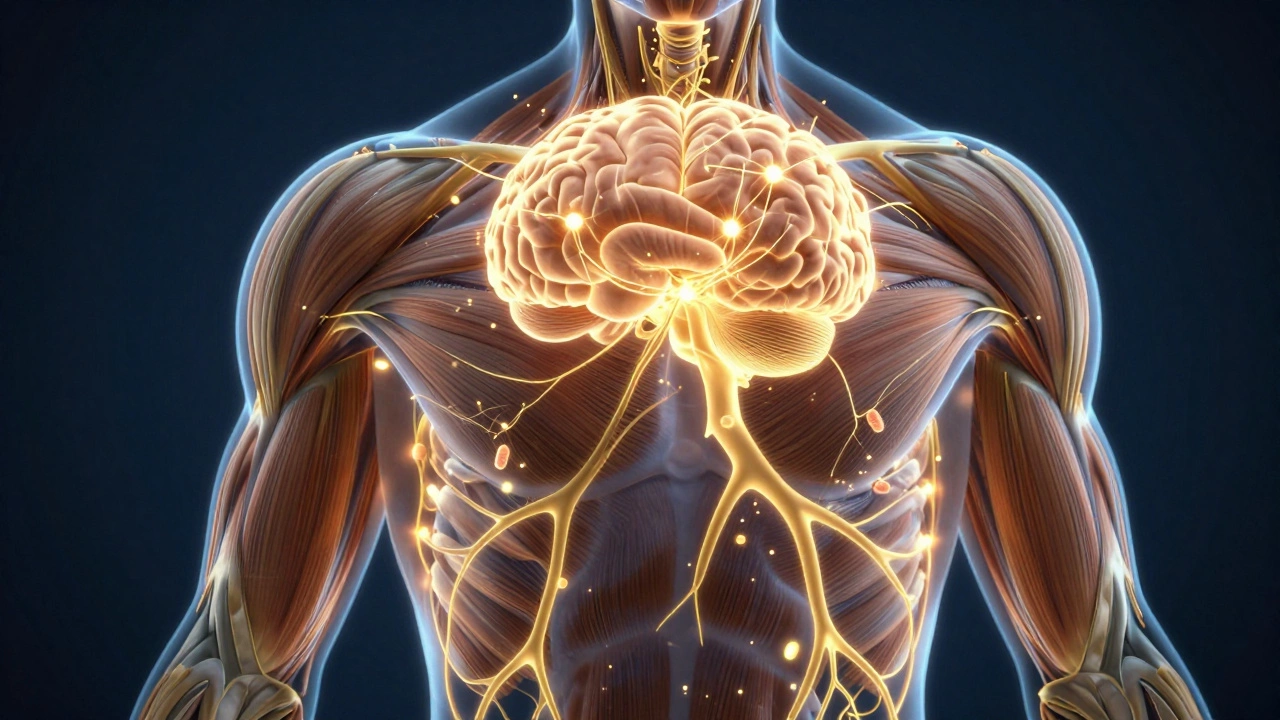
- Neurological Gains: You get stronger fast, not because of muscle size, but because your brain is learning how to use your muscles.
- Metabolic Shift: Your resting heart rate drops and your blood sugar stabilizes.
- Energy Boost: After the initial fatigue, you'll notice a surge in daily stamina.
- Sleep Quality: Deeper REM sleep and faster onset of slumber.
The First Week: The Shock Phase
The first seven days are usually the hardest. If you're starting strength training is the process of using resistance to induce muscular contraction, which builds strength, anaerobic endurance, and size, your body is currently in a state of panic. You'll likely experience DOMS (Delayed Onset Muscle Soreness), which is just your muscle fibers reacting to microscopic tears and inflammation. This isn't a sign that you're doing it wrong; it's a sign that your body is adapting.
During this week, you aren't actually building muscle yet. Most of the "strength" you feel is your central nervous system waking up. Imagine your muscles are a team of workers; in week one, they are all shouting and stepping on each other. By the end of the week, your brain starts coordinating them to pull in the same direction.
Weeks Two and Three: Finding the Rhythm
By the second week, the crushing soreness fades. You'll notice you can lift a few more pounds or do two more reps than you did on Monday. This is where Hypertrophy-the actual growth of muscle cells-begins to kick in, though it's still too small to see. Your body is increasing its glycogen storage, meaning your muscles are holding more fuel (and water), which might actually make the scale stay the same or even go up slightly.
You'll start noticing "non-scale victories." Maybe the stairs at work don't make you winded, or you can carry all the groceries in one trip. This is due to improved Mitochondrial Biogenesis, where your cells create more energy-producing organelles. Your heart is also becoming a more efficient pump, moving more oxygenated blood to your limbs with less effort.
| Timeframe | Primary Feeling | Internal Change | Visible Result |
|---|---|---|---|
| Days 1-7 | Sore and exhausted | CNS Adaptation | Inflammation/Bloating |
| Days 8-14 | Slightly more energetic | Increased Glycogen | Better Posture |
| Days 15-21 | Stronger and focused | Mitochondrial Growth | Slight Muscle Tone |
| Days 22-30 | Routine feels "normal" | Metabolic Shift | Clothes fit differently |
The One-Month Mark: The Psychological Shift
By day 30, the biggest change isn't in your biceps-it's in your head. You've moved from "trying to work out" to "being a person who works out." This is the transition from motivation to habit. Your dopamine receptors have started associating physical effort with reward, meaning you might actually feel restless if you miss a session.
Physically, your strength training results start to manifest as improved muscle tone. While you haven't added ten pounds of lean mass, your muscles are denser and your skin may look tighter due to improved circulation. Your insulin sensitivity has also improved, meaning your body handles carbohydrates better and you're less likely to experience the mid-afternoon energy crash.
What Happens to Your Metabolism?
One of the most misunderstood parts of a 30-day journey is the "afterburn." When you engage in intense resistance training, you trigger EPOC (Excess Post-exercise Oxygen Consumption). This means your body continues to burn calories at a higher rate for hours after you leave the gym while it repairs tissue and restores oxygen levels.
Over a month, this leads to a gradual increase in your Basal Metabolic Rate (BMR). Even if you aren't losing weight rapidly, you are changing your body composition. You're trading fat for muscle, which is a much more valuable trade for long-term health. A pound of muscle burns more calories at rest than a pound of fat, effectively turning your body into a more efficient calorie-burning machine.

Common Pitfalls and Reality Checks
It's easy to get discouraged if you don't look like a fitness influencer after 30 days. Here is the reality: muscle protein synthesis takes time. For most beginners, visible muscle growth usually becomes obvious around the 8 to 12-week mark. If you're staring at the mirror and seeing nothing, stop looking at the mirror and start looking at your logbook. If you can lift 10 lbs more than you did on day one, you are winning.
Another common issue is the "3-week wall." This is when the initial novelty wears off, and the soreness is gone, but the visual results are still lagging. This is where most people quit. The secret is to stop relying on motivation and start relying on the schedule. Treat your workout like a doctor's appointment-non-negotiable.
Optimizing Your First Month
To make the most of your first 30 days, you need to focus on three pillars: recovery, protein, and progressive overload. Without these, you're just spinning your wheels. Recovery isn't just lying on the couch; it's active recovery. Light walking or stretching helps flush out metabolic waste from your muscles.
Your diet plays a massive role. To support Protein Synthesis, you need enough amino acids. A general rule of thumb for those starting strength training is to aim for roughly 0.7 to 1 gram of protein per pound of body weight. This provides the raw materials your body needs to repair those micro-tears you created during your workout.
Lastly, employ progressive overload. This means consistently making your workouts harder. If you used 15-pound dumbbells for a month, your body has already adapted to them. To keep seeing results, you must increase the weight, the number of reps, or decrease the rest time. If the challenge doesn't increase, the progress stops.
Will I see visible abs in one month?
Probably not, unless you were already very lean. Abs are revealed by low body fat levels, not just muscle growth. While you'll strengthen your core, it takes longer than 30 days to shed the fat layer covering those muscles.
Why am I gaining weight even though I'm working out?
This is common. It's usually a combination of water retention in the muscles (inflammation from repair) and a slight increase in muscle mass. Focus on how your clothes fit rather than the number on the scale.
Is it normal to feel more tired in the second week?
Yes. This is often called the "beginner's crash." Your body is using a huge amount of energy to repair tissue and adapt to a new stressor. Ensure you're getting 7-9 hours of sleep to recover.
Can I work out every single day during my first month?
It's not recommended. Muscles grow during rest, not during the workout. Training the same muscle group every day can lead to injury or burnout. Aim for 3-5 days a week with dedicated rest days.
Do I need supplements like creatine or protein powder?
They are helpful but not required. Protein powder is just a convenient way to hit your protein targets. Creatine can help with power output, but for the first month, focusing on consistent form and whole foods is more important.
Next Steps for Your Journey
Now that you've hit the 30-day mark, it's time to evolve. If you've been doing a full-body routine, you might consider moving to an upper/lower split to increase volume. Start tracking your lifts in a dedicated app or notebook; seeing the numbers go up is the best motivation when the mirror isn't cooperating.
If you've hit a plateau where the weights feel easy, don't just add more reps. Experiment with the "tempo" of your lifts-slow down the descent (eccentric phase) to create more tension in the muscle. This will trigger new growth and keep your progress moving forward into month two and beyond.