What Is the Difference Between a Fitness Watch and a Fitness Tracker?
Fitness Tracker vs. Fitness Watch Selector
What Do You Need?
Select your top priorities to find the best device for your lifestyle
Long Battery Life
10-14 days on a single charge
Built-in GPS
Track routes without your phone
Advanced Health Metrics
ECG, VO2 max, recovery time
Smart Features
Calls, messages, music control
Budget Focus
$50-$120 range
When you walk into a store or scroll through online shops, you’ll see dozens of devices promising to help you get fit. Some look like sleek watches. Others are thin bands you strap to your wrist. They all track steps, calories, and sleep - so what’s the real difference between a fitness watch and a fitness tracker? The answer isn’t just about looks. It’s about what they do, how they do it, and what you actually need.
What Is a Fitness Tracker?
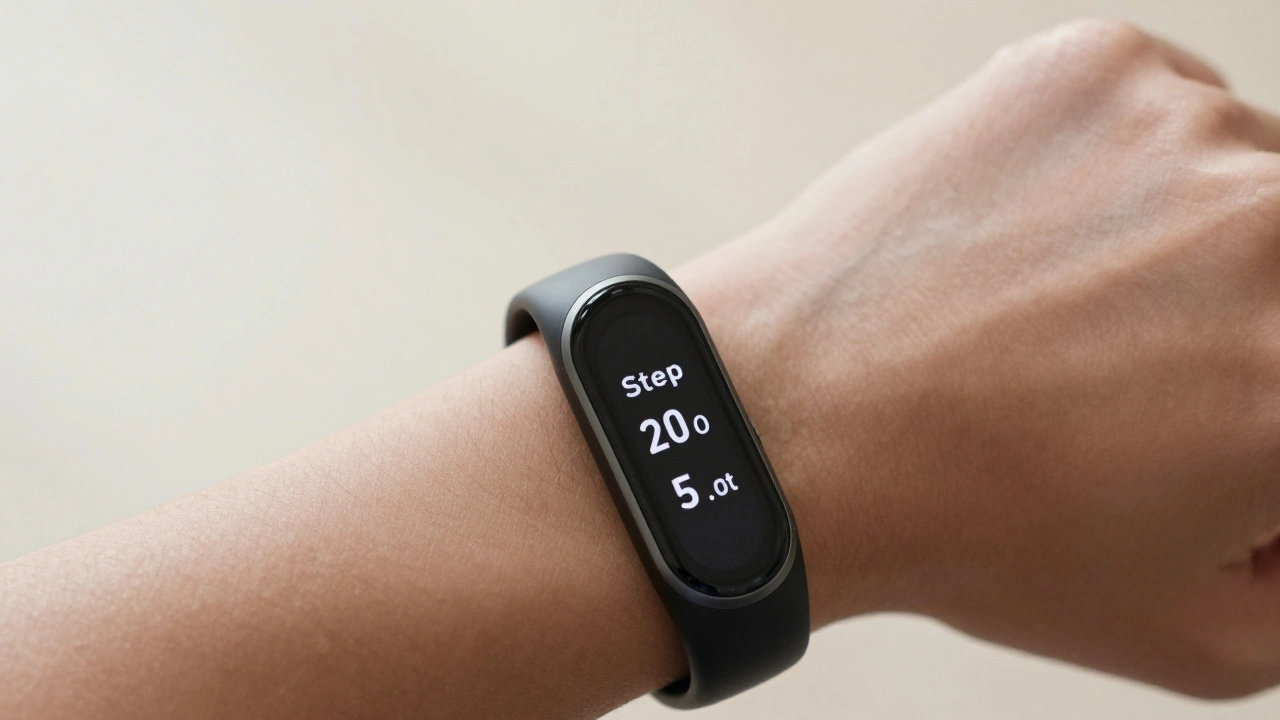
A fitness tracker is a simple, focused device built for one job: monitoring your movement and basic health metrics. Think of it as a digital pedometer on steroids. Most fitness trackers measure steps, distance walked, calories burned, and sleep patterns. Some include heart rate monitoring, but that’s often the limit.
Devices like the Fitbit Inspire 3 or the Xiaomi Mi Band 7 are classic examples. They’re lightweight, last up to two weeks on a single charge, and cost between $50 and $100. You don’t need to touch them often - they just work in the background. If your goal is to hit 10,000 steps a day or see how long you slept last night, a fitness tracker does that perfectly.
But here’s the catch: they’re not designed for anything else. No calls. No apps. No music. No GPS unless it’s built into the device (and even then, it’s basic). You’ll sync data to your phone to see trends, but the screen is tiny, usually just a monochrome OLED. It’s a tool, not a companion.
What Is a Fitness Watch?
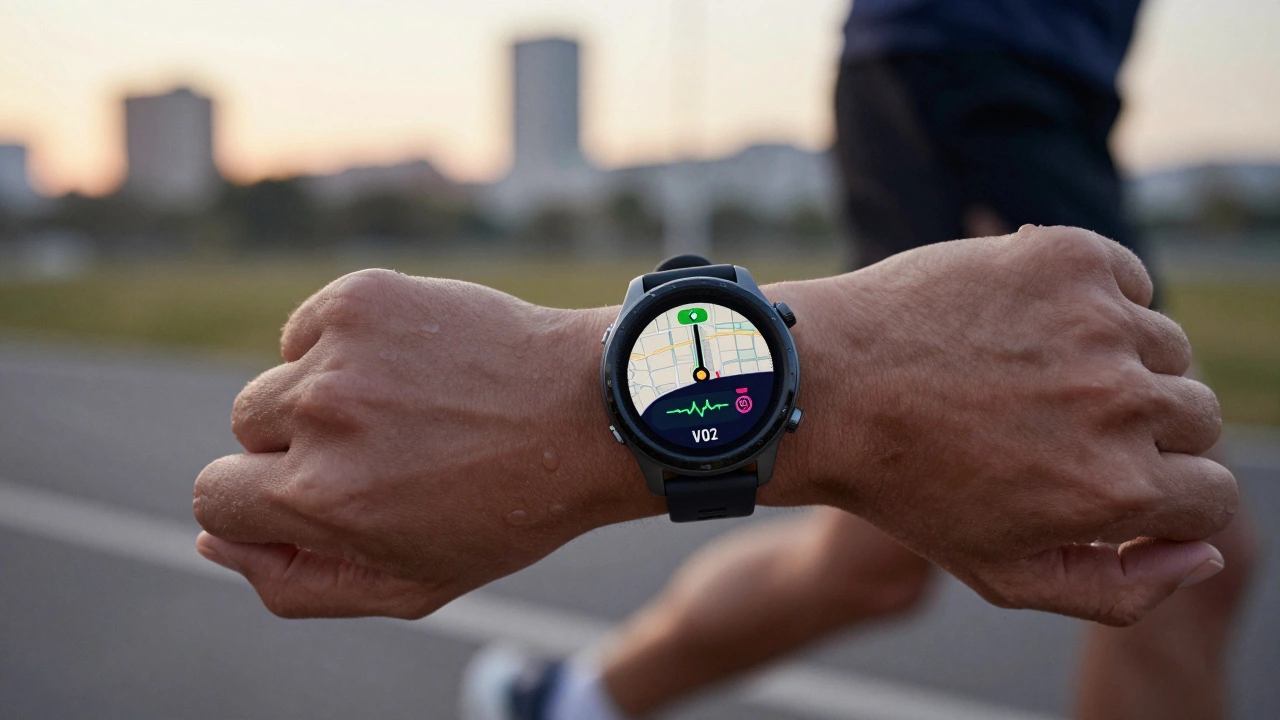
A fitness watch is what happens when a smartwatch takes a gym class. It does everything a fitness tracker does - steps, sleep, heart rate - but adds a whole layer of functionality. You get a larger color screen, full touch controls, GPS for mapping runs, built-in music storage, and even the ability to reply to texts or take calls.
Devices like the Garmin Forerunner 265, the Apple Watch SE, or the Samsung Galaxy Watch 6 Classic fall into this category. These aren’t just trackers - they’re mini-computers for your wrist. They run apps, support third-party workouts, and can connect to Bluetooth headphones or smart home systems.
Garmin’s Forerunner series, for example, tracks not just steps but VO2 max, training load, recovery time, and even hydration reminders. Apple Watch measures ECG, blood oxygen, and can detect irregular heart rhythms. These aren’t gimmicks - they’re clinically validated features used by athletes and doctors alike.
The trade-off? Battery life. While a fitness tracker lasts two weeks, a fitness watch might need charging every day or every other day. And the price? You’re looking at $200 to $500, sometimes more.
Key Differences at a Glance
| Feature | Fitness Tracker | Fitness Watch |
|---|---|---|
| Primary Purpose | Track basic activity and sleep | Track activity + serve as a full smartwatch |
| Screen | Small, monochrome, low-power | Larger, color, touch-enabled |
| Battery Life | 5-14 days | 1-7 days |
| GPS | Often phone-dependent or absent | Always built-in, accurate |
| Heart Rate Monitoring | Basic continuous tracking | Advanced, with ECG and SpO2 |
| Smart Features | None | Text replies, calls, apps, music |
| Price Range | $50-$120 | $200-$500+ |
Who Should Buy What?
If you’re just starting out and want to know if you’re moving enough, a fitness tracker is all you need. It’s affordable, low-maintenance, and doesn’t distract you. Many people use them to build habits - like walking more or sleeping better - and they work brilliantly for that.
But if you’re serious about training - whether you’re running 5Ks, lifting weights, or training for a triathlon - a fitness watch gives you data you can’t get anywhere else. It shows how hard you’re pushing, how well you’re recovering, and even how your body is adapting over time. For athletes, that’s not luxury - it’s critical.
And if you’re the kind of person who doesn’t want to carry a phone on a run but still wants to listen to music or get a notification? A fitness watch is the only option that makes sense.
Common Misconceptions
Many people think a fitness watch is just a fancy fitness tracker. That’s not true. While they overlap in tracking, the underlying tech is different. Fitness trackers use low-power sensors optimized for long battery life. Fitness watches use higher-resolution sensors, faster processors, and more memory - all of which drain power faster but deliver richer insights.
Another myth: that fitness trackers are more accurate. Actually, the opposite is true. Higher-end fitness watches often have better heart rate sensors because they use multiple wavelengths and more advanced algorithms. A 2023 study by the American College of Sports Medicine found that Garmin and Apple devices had 94% accuracy in heart rate detection during moderate exercise, compared to 82% for budget trackers.
Also, don’t assume all-day wear means comfort. Some fitness watches are bulky, with thick bands and heavy materials. If you have a small wrist or hate wearing anything on your arm, a slim fitness tracker might be the better fit - literally.
What You’re Really Buying
At the end of the day, you’re not just choosing between two gadgets. You’re choosing between two lifestyles.
A fitness tracker is for the person who wants to know if they moved today. It’s simple, quiet, and unobtrusive. It doesn’t ask for attention. It just records.
A fitness watch is for the person who wants to understand their body. It’s a coach, a data hub, and a communication tool all in one. It demands more - more money, more charging, more attention - but gives back more too.
There’s no right answer. Only the right fit for your goals. If you’re just starting out, start with a tracker. If you’re already running, lifting, or racing - upgrade to a watch. You’ll know when you’re ready.
Can a fitness tracker replace a smartwatch?
No, a fitness tracker can’t replace a smartwatch. While it tracks steps and sleep well, it lacks features like app support, phone calls, messaging, mobile payments, and GPS navigation. If you rely on your wrist for more than activity tracking, a smartwatch or fitness watch is necessary.
Are fitness watches more accurate than fitness trackers?
Yes, generally. Fitness watches use more advanced sensors, including multi-wavelength optical heart rate monitors and built-in GPS. A 2023 study from the American College of Sports Medicine found that top-tier fitness watches had 94% accuracy in heart rate tracking during exercise, compared to 82% for basic trackers. They also offer more detailed metrics like VO2 max and recovery time.
Do I need GPS on my fitness device?
If you run, bike, or hike outdoors and want to map your routes, then yes. Devices without built-in GPS rely on your phone’s location, which means you have to carry your phone. Built-in GPS lets you leave your phone behind and still track exact distance and pace - a huge advantage for serious athletes.
How long do fitness watches last on a charge?
Most fitness watches last between 1 and 7 days, depending on usage. If you use GPS, music, and notifications daily, expect to charge every 2-3 days. Some models like the Garmin Fenix 7 can stretch to 18 days in battery-saver mode, but that disables most features. Fitness trackers last much longer - often 10-14 days.
Is a fitness tracker good enough for weight loss?
Yes, if you’re consistent. Fitness trackers help you build awareness of daily movement, which is a proven factor in weight loss. Studies show people who track steps daily lose 3-5% more body weight over six months than those who don’t. You don’t need advanced metrics to benefit - just consistency.