What Is the Most Useful Gym Equipment? A Realistic Guide to Essentials
Home Gym Builder & Budget Calculator
Select Your Equipment
Adjustable Dumbbells
EssentialVersatility, unilateral strength. Replaces an entire rack of weights.
Squat Rack
Heavy DutyFoundation for heavy compound lifts (squats, bench, press).
Kettlebell
FunctionalBlends strength, cardio, and mobility. Great for swings and goblet squats.
Pull-Up Bar
BudgetFixes posture imbalance. Essential for back development and vertical pulling.
Jump Rope
CardioHighly efficient cardiovascular tool. Portable and extremely affordable.
Your Setup Summary
Walk into any commercial gym, and you are greeted by a forest of shiny machines. There is a device for your glutes, another for your hamstrings, and a third that looks like it belongs on a spaceship. It is easy to feel overwhelmed. You might think you need every single one of these contraptions to build muscle or lose weight. But here is the truth: most of them are redundant.
If you are building a home gym in your Bristol garage or just trying to decide what to focus on at the local leisure center, you do not need everything. In fact, cluttering your space with specialized machines often leads to less consistent training. The real question is not which machine looks coolest, but which piece of equipment gives you the highest return on investment for your time, money, and floor space.
The King of Versatility: Adjustable Dumbbells
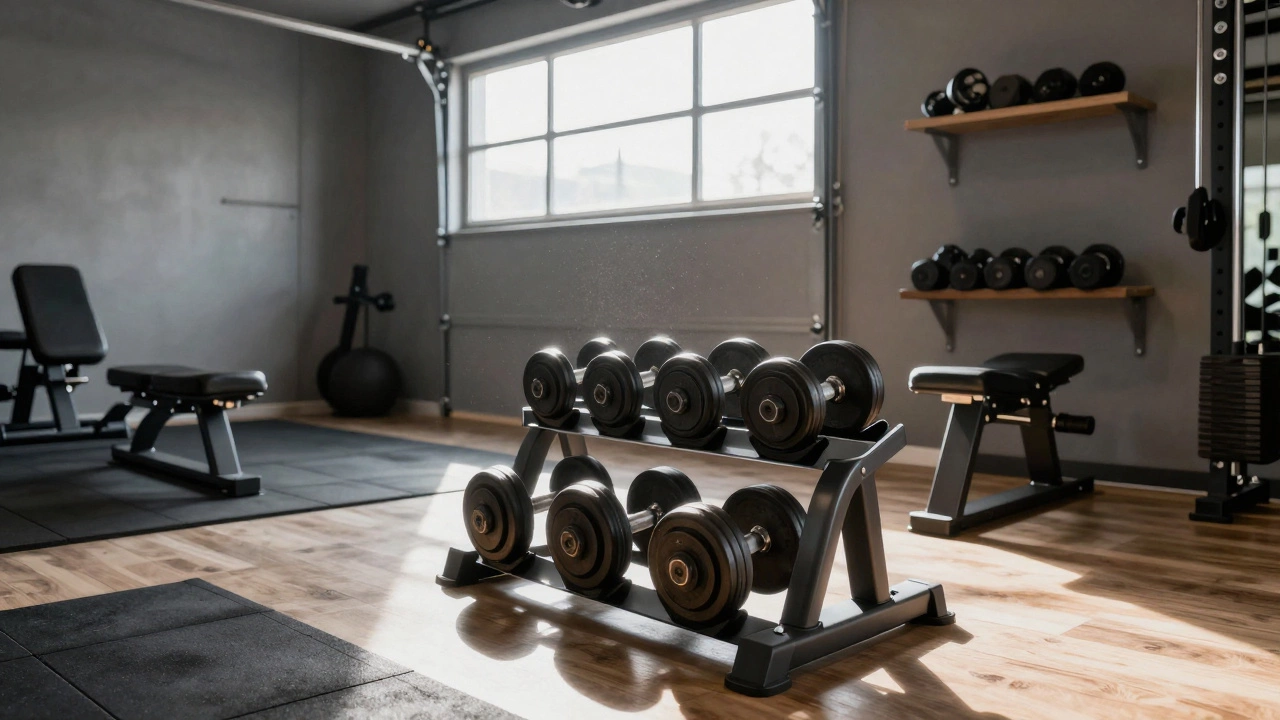
If I had to pick only one item to take to a desert island, it would be adjustable dumbbells. They are the undisputed champions of efficiency. Unlike fixed-weight plates that require a massive rack and hundreds of pounds of steel, a high-quality set of adjustable dumbbells can replace an entire library of weights. With a simple twist or dial, you can switch from 5 lbs for shoulder warm-ups to 50+ lbs for heavy chest presses.
Why are they so effective? Because they allow for unilateral training. When you lift with a barbell, your dominant side can cheat and help out the weaker side. Dumbbells force each arm to work independently, correcting imbalances that could lead to injury later. Plus, they offer a greater range of motion. On a bench press, you can lower dumbbells deeper than a barbell, stretching the pectoral muscles more fully. This stretch-mediated hypertrophy is a key driver of muscle growth.
For a home setup, brands like Bowflex or Nuobell offer compact solutions that fit on a small stand. For a commercial gym user, simply prioritizing the free-weight section over the circuit machines will yield better results. The learning curve is minimal; if you can hold something and move it, you can train with dumbbells.
The Foundation of Strength: The Squat Rack
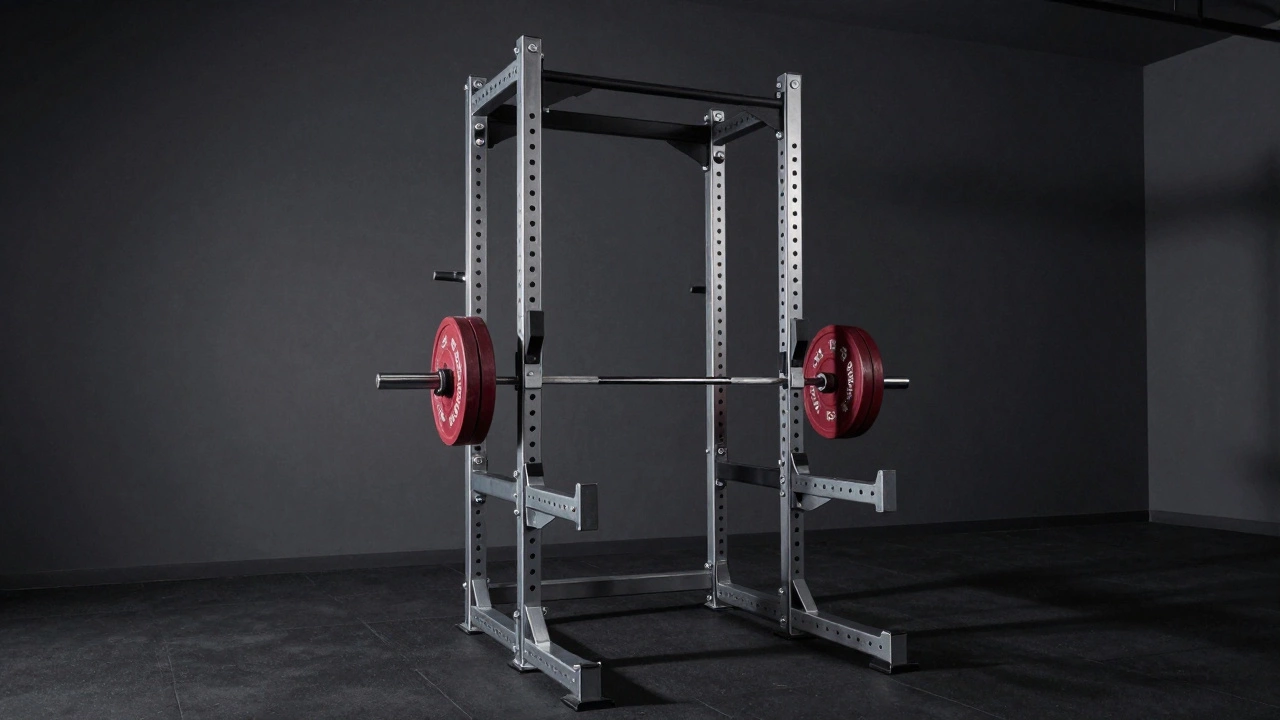
While dumbbells handle isolation and moderate loads, the squat rack is the essential anchor for heavy compound lifting is non-negotiable if you want to get strong. Specifically, we are talking about a power rack or a sturdy half-rack. This structure enables the "Big Three" lifts: squats, bench presses, and overhead presses.
These exercises are multi-joint movements that recruit the maximum amount of muscle mass possible. Squats engage your quads, glutes, hamstrings, and core simultaneously. Bench pressing hits the chest, shoulders, and triceps. Overhead pressing builds shoulder stability and upper body strength. No machine can replicate the systemic stress and hormonal response triggered by loading a barbell on your back or chest.
Safety is the other major factor. A proper rack comes with safety bars or spotter arms. If you fail a heavy squat, the bar catches on the safeties rather than crushing you. This psychological safety net allows you to push closer to your true limits without fear. For home gyms, look for racks made from 11-gauge steel or thicker. Cheaper, thinner metal can wobble under load, which kills confidence and increases risk.
Functional Power: The Kettlebell
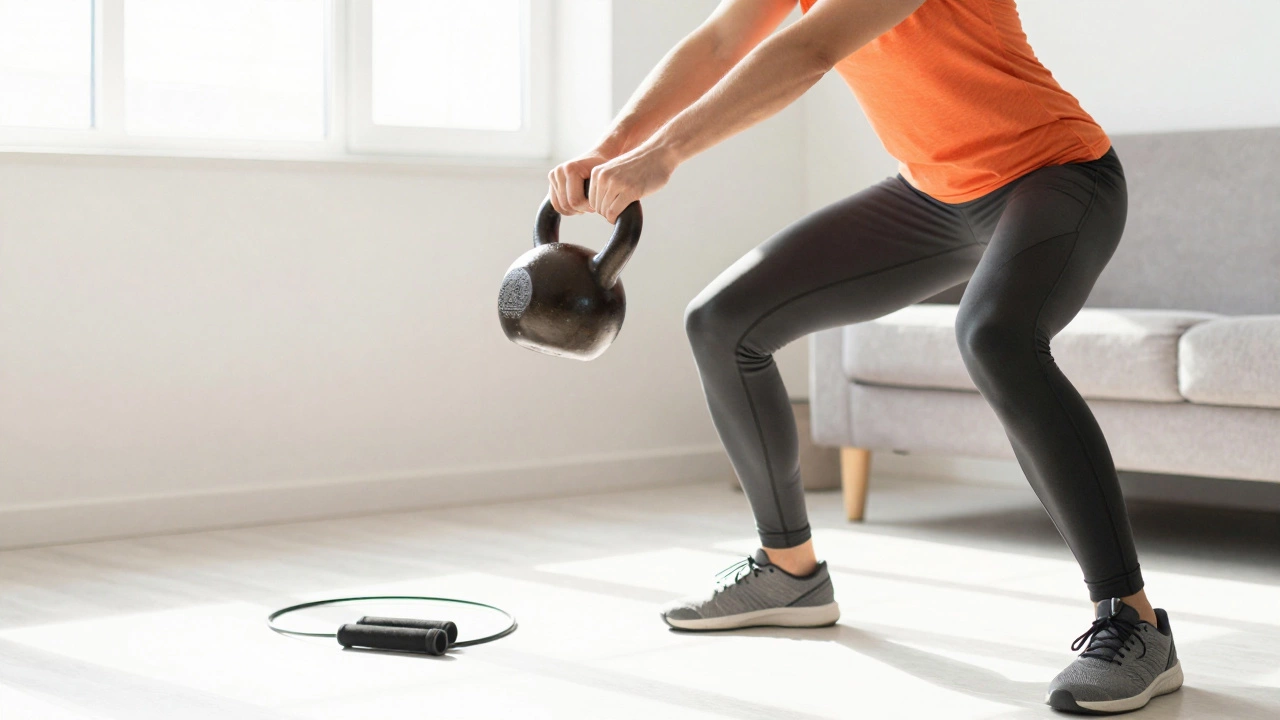
Do not underestimate the humble kettlebell a cast-iron weight with a handle attached to its top. Originating from Russia, this odd-shaped object is arguably the best tool for blending strength, cardio, and mobility into one workout. Its offset center of gravity changes how your muscles fire compared to a dumbbell.
The king of kettlebell moves is the swing. It teaches you hip hinge mechanics-using your powerful posterior chain (glutes and hamstrings) to generate force rather than pulling with your lower back. Mastering the hinge is crucial for everyday life, from picking up groceries to playing sports. Beyond swings, kettlebells are excellent for goblet squats, Turkish get-ups (which improve total body coordination), and carries (which build grip strength and core stability).
Kettlebells are also incredibly space-efficient. One or two bells of different weights can provide a full-body workout. They are durable, requiring no maintenance, and they are cheap compared to motorized equipment. If you have limited space, a pair of kettlebells is a smarter buy than a treadmill you will eventually use as a clothes hanger.
The Unsung Hero: Pull-Up Bar
We spend our lives pushing things-pushing ourselves out of bed, pushing keyboards, pushing shopping carts. We rarely pull. This imbalance leads to rounded shoulders and poor posture. A pull-up bar a simple fixture mounted in a doorframe or ceiling joist fixes this asymmetry. It allows you to perform vertical pulling movements, which are critical for developing a balanced back and healthy shoulders.
Pull-ups and chin-ups are among the most effective bodyweight exercises available. They target the latissimus dorsi (lats), biceps, and forearms. Variations like wide-grip pull-ups emphasize the lats, while chin-ups (palms facing you) bring the biceps into play more heavily. If you cannot do a full pull-up yet, you can use resistance bands for assistance or perform negative repetitions, where you jump up and lower yourself slowly.
Installation is straightforward for most homes. Doorway mounts require no drilling, though ceiling-mounted bars are more stable for advanced users doing kipping or weighted pulls. Regardless of the type, having a dedicated place to hang and pull is vital for counteracting the sedentary, forward-hunched posture of modern life.
Cardio That Sticks: Jump Rope
When people think of cardio equipment, they imagine expensive treadmills or ellipticals. These machines take up huge amounts of space and cost thousands. Enter the jump rope a simple cord used for skipping exercises. It costs less than £10 and provides a cardiovascular workout that rivals running. Skipping rope elevates your heart rate quickly, improves coordination, and strengthens your calves and ankles.
The beauty of the jump rope is its portability. You can take it anywhere. Ten minutes of intense skipping can burn as many calories as thirty minutes of jogging. It also trains fast-twitch muscle fibers, making you more agile. For boxers, dancers, and athletes, it is a staple. For the average person looking to shed fat, it is a highly efficient tool.
Start with a basic vinyl rope. Beaded ropes are good for counting rotations, and speed ropes are for advanced tricks, but a standard wire-core vinyl rope is perfect for beginners. Learn the basic bounce first, then progress to double-unders (where the rope passes under your feet twice per jump). It requires practice, but the payoff in fitness is immense.
| Equipment | Primary Benefit | Space Required | Cost Estimate |
|---|---|---|---|
| Adjustable Dumbbells | Versatility, Unilateral Strength | Low (Small Stand) | £200 - £600 |
| Squat Rack | Heavy Compound Lifts, Safety | High (Ceiling Height) | £300 - £1000+ |
| Kettlebell | Functional Movement, Cardio-Strength Hybrid | Very Low | £20 - £50 each |
| Pull-Up Bar | Back Development, Posture Correction | Minimal (Doorway/Ceiling) | £15 - £40 |
| Jump Rope | Cardiovascular Health, Coordination | Negligible | £5 - £15 |
What About Machines?
You might wonder why I did not mention leg press machines, cable crossovers, or seated row stations. These machines have their place, particularly for rehabilitation or for isolating a stubborn muscle group when you are too tired for free weights. However, they are not the *most* useful for the general population. They limit movement to a fixed path, which does not always match your natural biomechanics. Free weights require stabilization, engaging smaller stabilizer muscles that machines ignore. This makes free weights superior for functional strength-the kind of strength that helps you live your daily life with ease.
If you have the budget and space for a cable machine after you have acquired the essentials above, it is a great addition. Cables provide constant tension throughout the movement, unlike free weights where gravity dictates the resistance curve. But it should never be your first purchase.
Building Your Setup Strategically
Start with the basics. Buy a pair of adjustable dumbbells and a jump rope. Train consistently for three months. Once you find yourself needing heavier weights for squats or presses, invest in a squat rack and a barbell. Add a kettlebell if you want variety in your conditioning work. Install a pull-up bar to balance your pushing volume. This phased approach prevents buyer's remorse and ensures you actually use what you buy.
Remember, the best gym equipment is the one you use. A £2,000 treadmill gathering dust is worse than a £20 jump rope used every day. Focus on tools that allow you to move your body through its full range of motion, lift heavy things safely, and challenge your heart. Stick to these fundamentals, and you will build a physique and health profile that lasts a lifetime.
Is a home gym worth it compared to a commercial gym membership?
Yes, if you value convenience and consistency. Commercial gyms offer variety and social atmosphere, but home gyms eliminate travel time and waiting for equipment. For most people, the barrier of "going to the gym" is the biggest reason they quit. Having equipment at home removes this friction. While the upfront cost of a home gym can be higher than a monthly membership, it pays off within a few years and has no recurring fees.
Can I build muscle without a squat rack?
Absolutely. Many bodybuilders built impressive physiques using only dumbbells and bodyweight. Goblet squats with dumbbells or kettlebells are highly effective for leg development. Lunges and step-ups also provide significant resistance. While a rack allows for heavier absolute loads, progressive overload can still be achieved with dumbbells by increasing reps, slowing down tempo, or reducing rest times.
What is the minimum budget for a functional home gym?
You can start very cheaply. A pull-up bar (£20), a jump rope (£10), and a single adjustable kettlebell (£40) totals around £70. This setup allows for full-body strength and cardio training. To expand to a more comprehensive strength program, add adjustable dumbbells (£200+). So, a solid starter kit ranges from £70 to £300 depending on quality and brand preferences.
Are adjustable dumbbells as good as fixed weights?
For 95% of users, yes. They save immense space and money. The main downside is the slight delay in changing weights between sets, which can reduce intensity during superset workouts. Some users also find the shape slightly awkward for certain exercises like close-grip bench presses. However, modern designs have improved ergonomics significantly, making them a viable alternative for almost all exercises.
Do I need cardio equipment if I lift weights?
Cardio is important for heart health and recovery, but you do not need expensive machines. Walking, running outside, cycling, or using a jump rope are sufficient. Weightlifting itself provides some cardiovascular benefit, especially with short rest periods. Prioritize functional cardio that complements your strength goals rather than buying a stationary bike you will rarely use.