What Is the Number One Strength Exercise?
Deadlift Progression Calculator
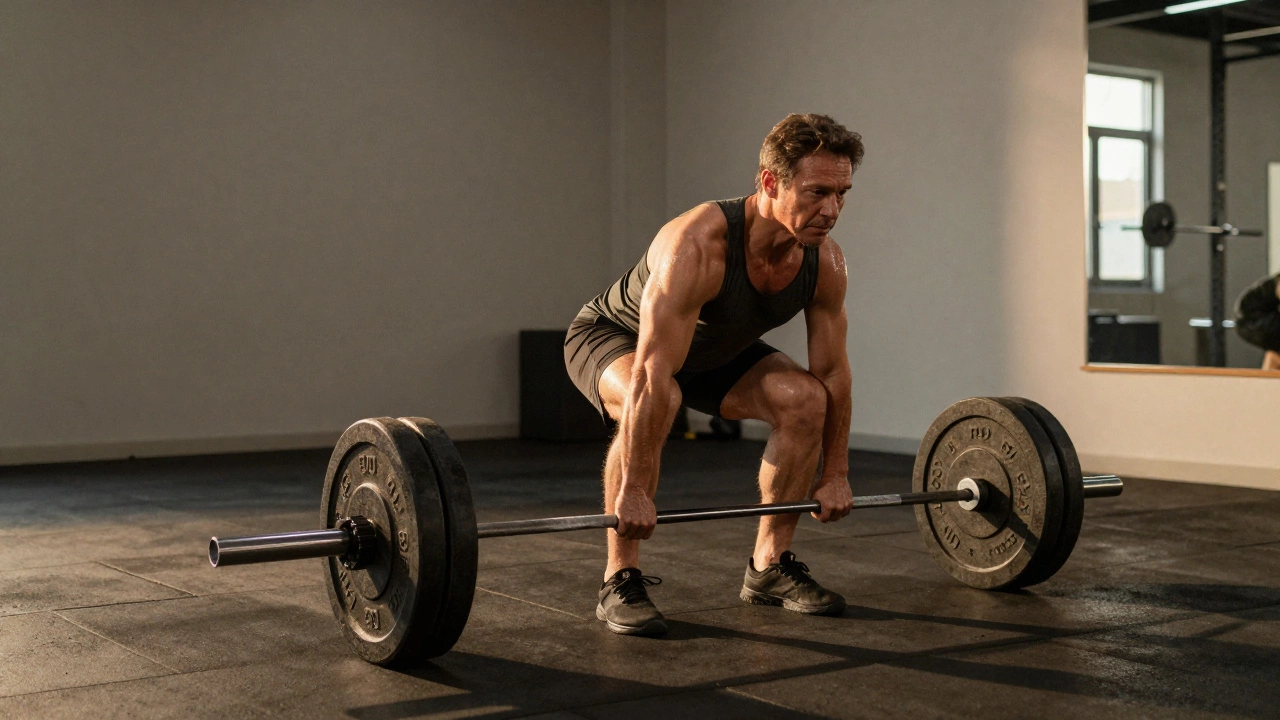
If you could only do one strength exercise for the rest of your life, what would it be? Not the flashiest, not the one that looks cool on Instagram, but the one that gives you the most bang for your buck in terms of real-world strength, muscle growth, and long-term health. The answer isn’t a mystery-it’s the barbell deadlift.
Why the Deadlift Stands Alone
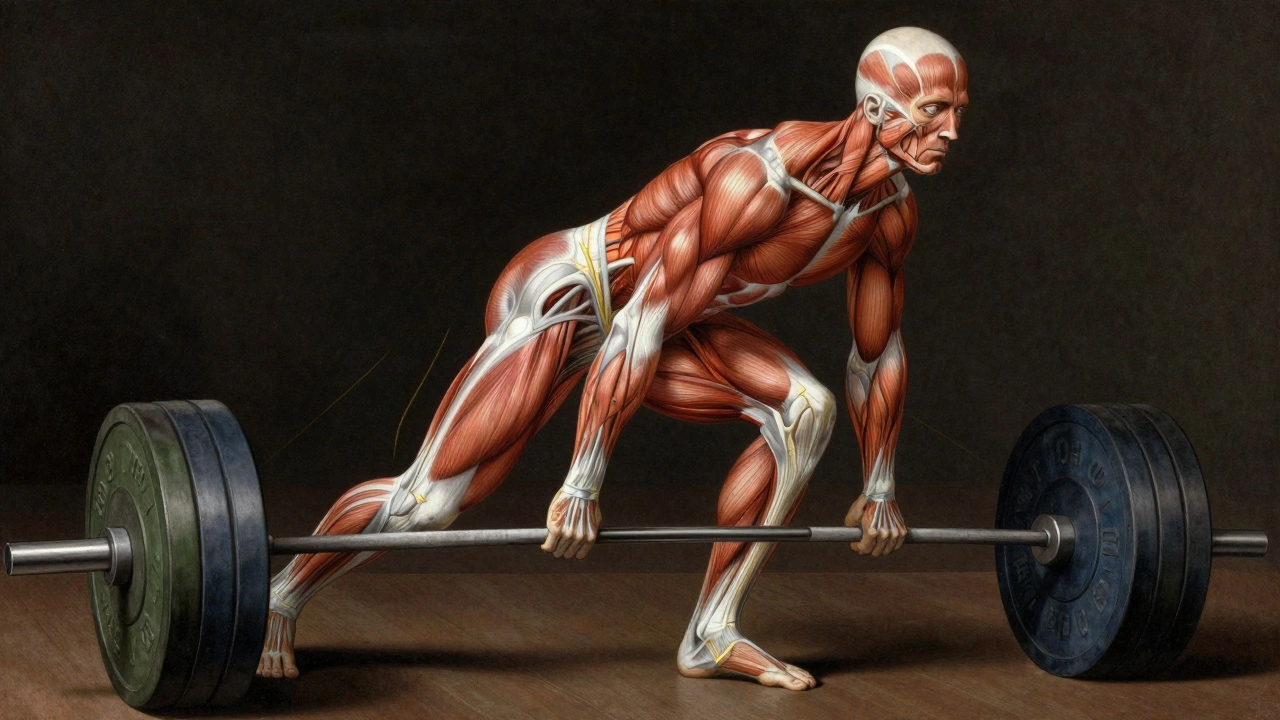
The deadlift isn’t just another lift. It’s a full-body movement that forces your entire posterior chain-your glutes, hamstrings, lower back, traps, and forearms-to work together under load. Unlike machines or isolation moves, it doesn’t let you cheat. If your form breaks down, the bar won’t budge. And when you do it right, you’re not just lifting weight-you’re building a body that can handle real life.
Think about it: picking up a heavy box, lifting a child, hauling groceries, or even just standing up from a chair after sitting too long. All of these rely on the same movement pattern as the deadlift. It’s functional strength in its purest form. No other single exercise trains so many muscles at once while demanding control, stability, and power.
What Muscles Actually Work During a Deadlift?
Let’s break it down. When you pull a barbell off the floor:
- Your glutes and hamstrings extend your hips-this is the main driving force.
- Your erector spinae keeps your spine locked in a neutral position under heavy load.
- Your trapezius and rhomboids pull your shoulders back and keep the bar close to your body.
- Your forearms grip the bar so hard that most people fail not from leg fatigue, but from grip strength giving out.
- Your core acts like a steel belt, preventing your lower back from rounding and protecting your spine.
That’s more than 15 major muscle groups firing at once. Compare that to a bicep curl, which mainly targets two muscles. Or a leg press, which isolates your quads but leaves your back and grip out of the equation. The deadlift doesn’t just build strength-it builds integration.
Real-World Benefits Beyond the Gym
People who deadlift regularly don’t just look stronger-they move better. Studies from the University of Birmingham tracked adults over 50 who did deadlifts twice a week for six months. Their ability to stand up from a chair without using their hands improved by 42%. Their balance scores jumped by 31%. Their bone density in the spine increased measurably.
That’s not just fitness. That’s independence. As you age, losing the ability to stand up from the floor or lift something heavy can lead to falls, injuries, and loss of autonomy. The deadlift fights that. It’s one of the few exercises that directly translates to preventing frailty.
Even athletes swear by it. NFL linemen, Olympic weightlifters, and CrossFit competitors all use the deadlift as a cornerstone. Why? Because power starts from the ground up. If you can’t generate force through your hips and legs, you’re limited-no matter how strong your arms are.
How to Do It Right (Without Getting Hurt)
Bad form on the deadlift is dangerous. Good form is life-changing. Here’s how to nail it:
- Stand with your feet hip-width apart, the bar over the middle of your feet.
- Hinge at your hips, bend your knees just enough to grip the bar. Your shins should lightly touch it.
- Keep your chest up, shoulders slightly in front of the bar. Your back stays flat-not rounded, not arched.
- Take a deep breath, brace your core like you’re about to get punched.
- Pull the bar straight up by driving through your heels and squeezing your glutes. The bar should stay close to your body the whole time.
- At the top, stand tall, hips fully extended, shoulders back. Don’t lean back.
- Lower the bar by pushing your hips back first, then bending your knees. Control the descent.
Start light. Seriously. Even if you’ve lifted before, the deadlift has a steep learning curve. Use a light bar (20kg) and focus on perfect form for 3-4 weeks before adding weight. Record yourself. Watch videos. Get feedback.
Common mistakes? Rounding the back, letting the bar drift away from your body, pulling with your arms instead of your legs, or locking out by hyperextending your lower back. These aren’t just inefficient-they’re injury risks.
Alternatives? Yes. Better? No.
Some people swear by the squat. Others love the bench press. The Romanian deadlift is great for hamstrings. The kettlebell swing builds power. All of them have value.
But none of them match the deadlift’s combination of:
- Full-body muscle recruitment
- Spinal loading that strengthens bone and connective tissue
- Transfer to everyday movement
- Progressive overload potential (you can keep adding weight for years)
Even the trap bar deadlift-often called a “safer” version-still relies on the same hip hinge pattern. It just changes the grip. The barbell deadlift remains the gold standard because it demands more control, more stability, and more discipline.
Who Should Avoid It?
No exercise is for everyone. If you have a recent lower back injury, severe disc herniation, or are in acute pain, skip it-for now. Talk to a physical therapist. You might need to rebuild mobility and core control first with glute bridges, bird-dogs, or hip thrusts.
People with very long torsos or short femurs might find the conventional deadlift awkward. That’s fine. The sumo deadlift or trap bar deadlift can be excellent substitutes. But even then, the movement pattern is still the same: hinge at the hips, drive through the legs, engage the back.
The goal isn’t to force everyone into one form. It’s to find the version that lets you safely build strength. And for most people, that’s still the barbell deadlift.

How Often Should You Do It?
Once a week is enough for most people. Two times a week works if you’re advanced and recovery is on point. But don’t go heavy every session. Alternate between heavy days (3-5 reps at 80%+ of your max) and lighter days (8-12 reps at 60-70%) to build endurance and technique.
Pair it with pulling variations like face pulls or rows to balance out your upper body. And always do core work-planks, dead bugs, farmer’s carries. These protect your spine and make your deadlift stronger.
What Happens When You Stick With It?
After three months of consistent deadlifting, most people see:
- A 20-40% increase in total body strength
- Better posture-no more slouching
- Stronger grip, which helps with everything from carrying bags to opening jars
- More confidence in physical tasks
- Less lower back pain (yes, really-strengthening the muscles around it reduces strain)
One woman in her 60s from Bristol, who started deadlifting with just a 20kg bar after years of avoiding gyms, told me last month: “I can now carry my grandkids up the stairs without stopping. I didn’t think I’d ever be able to do that again.”
That’s the power of the deadlift. It doesn’t just change your body. It changes what you believe you’re capable of.
Is the deadlift the best exercise for building muscle?
Yes, for overall muscle growth, especially in the back, glutes, and hamstrings. It’s one of the most effective compound lifts for stimulating multiple muscle groups at once. While isolation exercises target specific areas, the deadlift builds functional mass that translates to real strength.
Can beginners do deadlifts?
Absolutely-but start with light weight and focus on form. Use a PVC pipe or an empty barbell to practice the hip hinge. Record your sets, watch tutorials, and consider a session with a certified trainer. Don’t rush adding weight. Master the movement first.
Do I need special shoes for deadlifting?
You don’t need fancy gear, but flat-soled shoes help. Running shoes with cushioning make it harder to feel the floor and can cause instability. Converse, minimalist shoes, or even barefoot (on a safe surface) work well. Avoid thick, squishy soles.
Why do my grip fail before my legs during deadlifts?
Your grip is often the weak link because your hands and forearms aren’t as strong as your legs and back. Use chalk to improve friction. Try alternating grip or hook grip. Once you get stronger, use lifting straps on your last set to let your back and legs fatigue without grip limiting you.
Should I do deadlifts on leg day or back day?
It doesn’t matter as long as you’re recovered. Most people do it on leg day because it heavily involves the glutes and hamstrings. But since it also heavily taxes the back, some prefer to pair it with back work. Just avoid doing heavy deadlifts the day after a brutal squat session.
Final Thought: Strength Isn’t About Looking Strong
The number one strength exercise isn’t the one that makes your arms pop or your chest look big. It’s the one that makes you capable. The one that lets you carry your groceries, lift your kid, get up from the floor, and move through life without fear of injury.
The barbell deadlift does all that-and more. It’s not glamorous. It doesn’t trend on TikTok. But for decades, it’s been the quiet hero of strength training. And if you’re serious about building real, lasting strength, it’s the only lift you really need to master.