Which Workout Plan Is Best for You?
Workout Plan Finder
Find Your Perfect Workout Plan
Answer a few questions and we'll recommend a workout plan that matches your goals and lifestyle.
What's your primary fitness goal?
How many days per week can you commit to working out?
What type of workout do you enjoy most?
Do you have any limitations or equipment constraints?
There’s no single best workout plan. Not because there’s no right answer, but because the right answer depends on you. Your goals, your schedule, your energy levels, your injuries, your preferences-all of it matters. If someone tells you their plan is the best, they’re not wrong for them. But they’re not right for you, either.
What Do You Actually Want to Achieve?
Before you pick a plan, get clear on your goal. Most people think they want to "get fit," but that’s too vague. Do you want to:
- Look stronger and more toned?
- Run a 5K without stopping?
- Feel less tired during the day?
- Be able to carry groceries or play with your kids without getting winded?
- Lose fat without losing muscle?
Each of these needs a different approach. Lifting weights builds muscle and changes your shape. Running builds endurance. High-intensity interval training (HIIT) burns fat fast but is hard on the body. If you don’t match your plan to your goal, you’ll either quit out of frustration or waste months doing the wrong thing.
Strength Training: The Foundation Everyone Ignores
Even if your goal is fat loss or endurance, strength training should be part of your plan. Why? Because muscle burns more calories at rest than fat. More muscle means you’ll lose fat easier and keep it off. It also protects your joints, improves posture, and makes daily life easier.
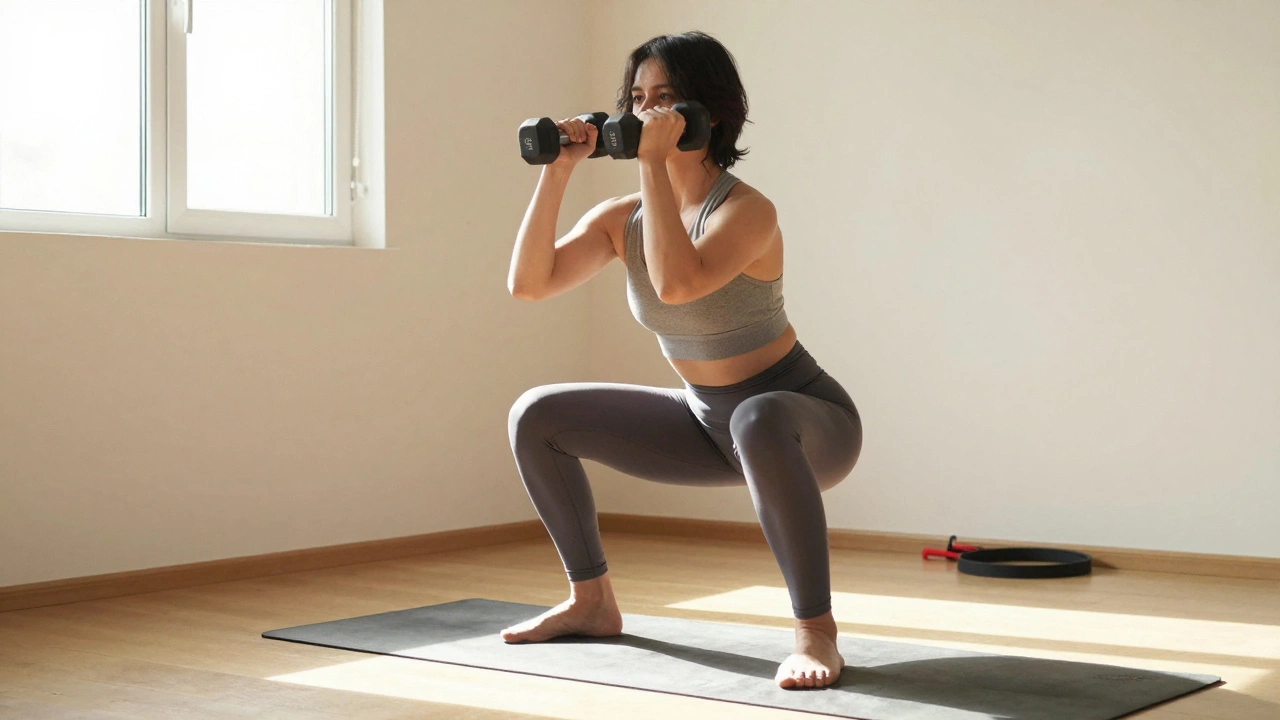
A basic strength plan doesn’t need fancy equipment. Just bodyweight or dumbbells. Start with:
- Push-ups (or knee push-ups if needed)
- Squats
- Rows (using a resistance band or dumbbell)
- Planks
- Glute bridges
Do these three times a week. Two sets of 8-12 reps each. Rest 60 seconds between sets. Increase weight or reps every two weeks. That’s it. No need for 90-minute gym sessions. Consistency beats intensity every time.
Cardio: More Than Just Running on a Treadmill
Cardio isn’t just for people who want to run marathons. It helps your heart, lungs, and mood. But you don’t have to run. If you hate running, don’t do it. Try brisk walking, cycling, swimming, dancing, or even gardening. The key is movement that gets your heart rate up for at least 20 minutes, three to five times a week.
For fat loss, steady-state cardio (like a 40-minute walk) works well. For time efficiency, try HIIT: 30 seconds of all-out effort (jumping jacks, burpees, sprints), then 60 seconds of rest. Repeat 6-8 rounds. One 20-minute HIIT session can burn as much as a 40-minute jog-and you’ll keep burning calories after you’re done.
The Myth of the Perfect Plan
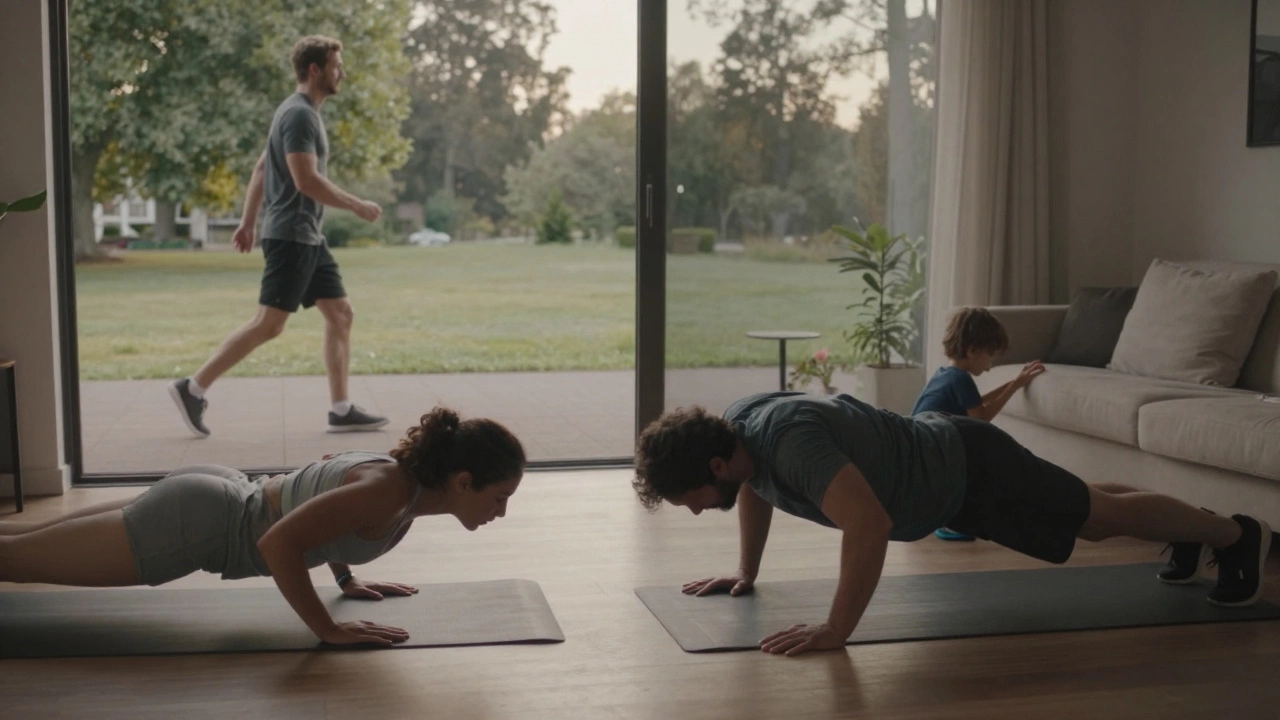
There’s no plan that works for everyone. A bodybuilder’s routine won’t help someone who just wants to feel less stiff. A yoga-heavy plan won’t build the strength needed to lift your toddler. The best plan is the one you’ll stick to.
Here’s what actually works in real life:
- People who train 2-3 days a week consistently lose more fat than those who train 5 days a week for two weeks and then quit.
- Those who pick workouts they enjoy stick around longer.
- People who track progress-whether it’s lifting heavier, walking farther, or fitting into old jeans-are more likely to keep going.
Forget chasing viral TikTok routines. Look for simple, repeatable habits. A plan that takes 30 minutes, three times a week, is better than one that takes two hours and leaves you exhausted.
What About Diet?
You can’t out-train a bad diet. But you also don’t need to eat like a bodybuilder to see results. Most people overcomplicate nutrition. Eat whole foods: vegetables, lean protein, healthy fats, and complex carbs. Don’t obsess over calories unless you’re trying to lose a lot of weight.
Try this: Fill half your plate with veggies at every meal. Add a palm-sized portion of protein. Include a thumb-sized amount of fat (like olive oil, nuts, or avocado). The rest can be whole grains or fruit. That’s it. No tracking, no shakes, no detoxes.
How to Start Today
You don’t need to wait for Monday. Start now.
- Write down your goal in one sentence. Example: "I want to feel stronger so I can play with my kids without getting tired."
- Choose one strength exercise you can do right now-like squats or push-ups. Do 10 reps.
- Go for a 15-minute walk today.
- Drink a glass of water before breakfast tomorrow.
That’s your plan. Small steps. No pressure. Build from there.
Common Mistakes to Avoid
- Doing too much too soon. You’ll get sore, discouraged, and quit.
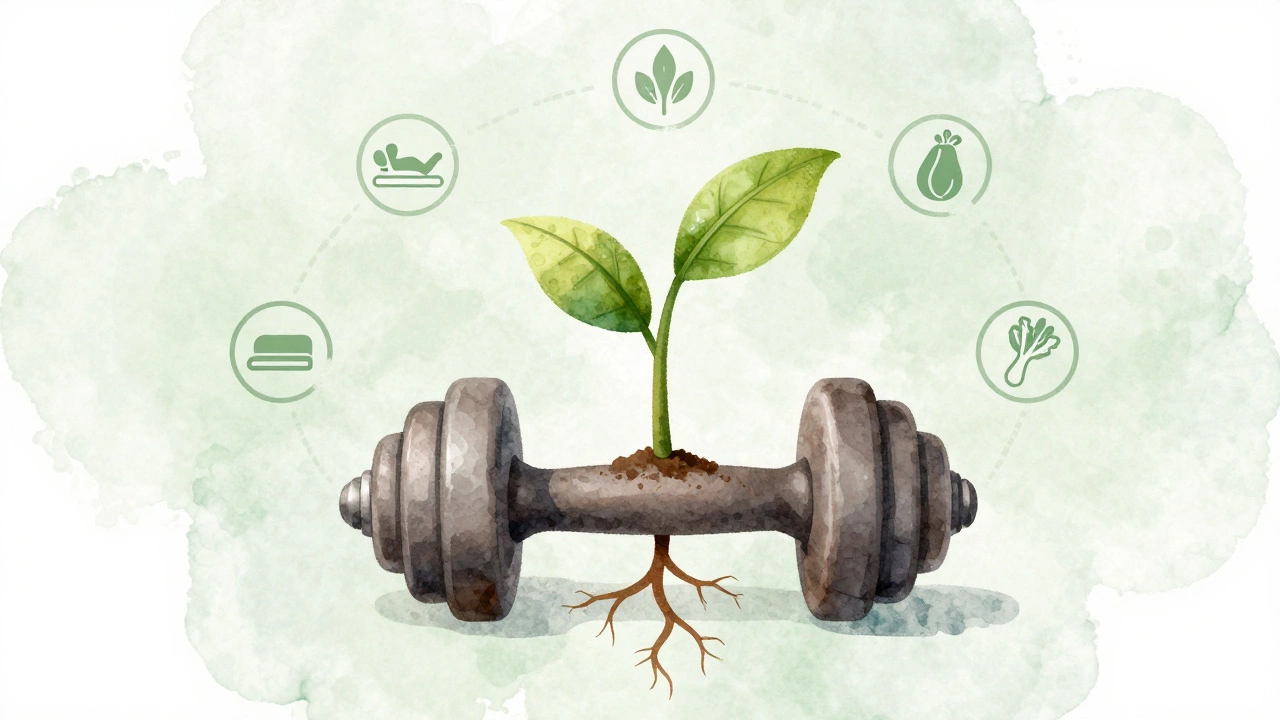
- Ignoring recovery. Muscles grow when you rest-not when you train. Sleep 7-8 hours a night.
- Comparing yourself to others. Social media shows highlights, not the 10 months of boredom in between.
- Thinking you need gear. You don’t need a gym membership, fancy shoes, or supplements. A pair of trainers and a mat are enough.
When to Change Your Plan
Your body adapts. In 4-6 weeks, you’ll notice your workouts feel easier. That’s good. It means you’re progressing. Now it’s time to adjust.
Change one thing:
- Add one more set
- Do one more rep
- Walk 5 minutes longer
- Try a new exercise
Don’t overhaul everything at once. Small tweaks keep things fresh without overwhelming you.
Is a 30-minute workout enough?
Yes, if it’s focused. A 30-minute strength session with compound movements-like squats, push-ups, and rows-can build muscle and burn fat. The key is intensity and consistency, not duration. People who train 30 minutes three times a week often outperform those who train an hour once a week.
Should I do cardio or weights first?
If your main goal is strength, do weights first. Your energy is highest at the start, so you’ll lift heavier and safer. If you’re training for endurance, do cardio first. For general fitness, it doesn’t matter much-just pick a order you can stick to.
Can I workout every day?
You can, but you shouldn’t train the same muscles hard every day. Muscles need 48 hours to recover. Do light activity like walking or stretching daily, but give strength training days off. For example: Monday (upper body), Wednesday (lower body), Friday (full body), and rest or walk on other days.
What if I don’t have time?
You have 10 minutes. Do three exercises: 10 squats, 10 push-ups, 30-second plank. Do that twice a day, five days a week. That’s 100 reps and 5 minutes of core work. It’s not glamorous, but it’s enough to build habits. Progress starts with consistency, not perfection.
Do I need to take supplements?
No. Protein powder can help if you struggle to eat enough protein, but it’s not magic. Most people get enough protein from food-chicken, eggs, beans, yogurt, tofu. Creatine has some science behind it for strength gains, but you won’t notice a difference unless you’re lifting seriously. Focus on food first.
Final Thought: The Best Plan Is the One You’ll Do
There’s no elite workout plan waiting for you. No secret routine that will transform you overnight. What works is showing up, even when you don’t feel like it. It’s doing the simple things, over and over. The best plan isn’t the most intense. It’s the one you’ll still be doing six months from now.